



Key Insights
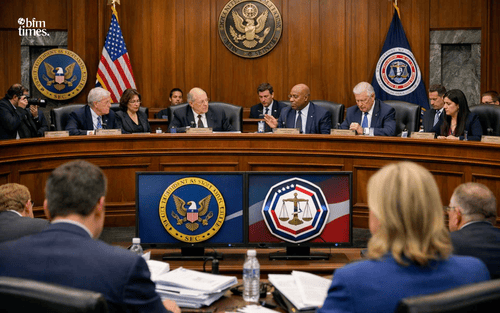
- The Senate Banking Committee has scheduled a vote for January 15 to decide the fate of the CLARITY Act.
- This bill was submitted to stop the battle between the SEC and the CFTC by creating clear legal categories for crypto and other assets.
- A new “Maturity Test” would allow decentralised tokens to move from SEC oversight to the CFTC.
The US crypto industry has spent nearly ten years in a frustrating battle for control.
Two major agencies, the SEC and the CFTC, have fought over who gets to regulate the market. This struggle has confused businesses and investors alike. Now, a major change is finally happening in Washington.
The Senate Banking Committee has officially scheduled a session to vote on the CLARITY Act on January 15.
Related: Why US Oil Company Stocks Jumped After Trump’s Entry Into The Venezuelan Oil Sector
Why the CLARITY Act is Needed Now
The current problem comes from a legal vacuum. Regulators are trying to use laws from the 1930s to govern modern technology.
Since these old laws do not fit digital assets perfectly, the SEC and CFTC often disagree on their roles. This has led to a style of oversight called “regulation by enforcement.”
Agencies now file lawsuits to claim power instead of following a clear rulebook.
The financial cost of this confusion has been massive. Since 2020, the SEC has filed over 100 actions against various firms. These cases have led to billions of dollars in legal fees and fines.
Meanwhile, the digital asset market has grown to a value of over $3.1 trillion. Despite this size, it lacks a unified federal framework for trading and the CLARITY Act was created to patch this.
The Three Pillars of the CLARITY Act
The bill replaces old guesswork with a system for classifying assets. It breaks digital tokens into three specific groups.
This system is expected to stop the constant debate over whether a token is a security or a commodity and each group has a designated leader to manage oversight.
The first group includes assets tied to “mature” blockchain systems. If a system is decentralised and no longer controlled by one group, it becomes a Digital Commodity.
These assets fall under the exclusive control of the CFTC. This part of the CLARITY Act would give a permanent home to Bitcoin and Ethereum. It would also cover many other tokens that have grown beyond their founders.
The second group covers tokens sold to raise money for a central team. These stay under the SEC because they look like traditional investments.
However, the bill creates a path for these tokens to change. As a project becomes more decentralised, it can move from the SEC to the CFTC. This process provides an “exit ramp” that helps developers plan for the future.
The final group involves stablecoins used for payments. After the GENIUS Act’s passage, the CLARITY Act sets strict rules for these assets.
As a starter, they must have 1:1 backing with safe assets like US Treasuries. Federal banking regulators will also supervise the companies that issue these coins to ensure they remain stable.
The New Maturity Test
The most interesting part of the CLARITY Act is the Maturity Test. This section allows a project to prove to the SEC that its network is “mature.”
For context, a network is considered mature if no single person or group has the power to change how it works (Bitcoin instantly passes this test).
Once a project passes this test, the token is legally treated as a commodity. This removes the fear that success will keep a project trapped in a legal loop.
Developers have been asking for this kind of certainty for years because it allows them to focus on building technology rather than hiring more lawyers.
High Stakes for the January 15 Vote
Anoter possible government shutdown could be looming on January 30. If the committee does not act now, the bill might get lost in the chaos once again.
Midterm elections are also coming up later this year. This makes the January window the last real chance for progress.
Senator Tim Scott and Senator John Boozman are currently negotiating to fix some final issues. One major point of debate involves defi protocols. These systems have no board of directors to talk to, which makes them hard to regulate.
Another issue is whether exchanges can offer rewards on stablecoins. Overall, these details must be settled before the final vote.
Disclaimer: BFM Times acts as a source of information for knowledge purposes and does not claim to be a financial advisor. Kindly consult your financial advisor before investing.