



Key Insights
- According to the US government, historical auctions of seized coins resulted in a taxpayer loss of over $17 billion.
- The government recently switched from a liquidation strategy to a permanent holding policy for crypto assets.
- The current federal holdings of 198,000 BTC now serve as a hedge against national debt.
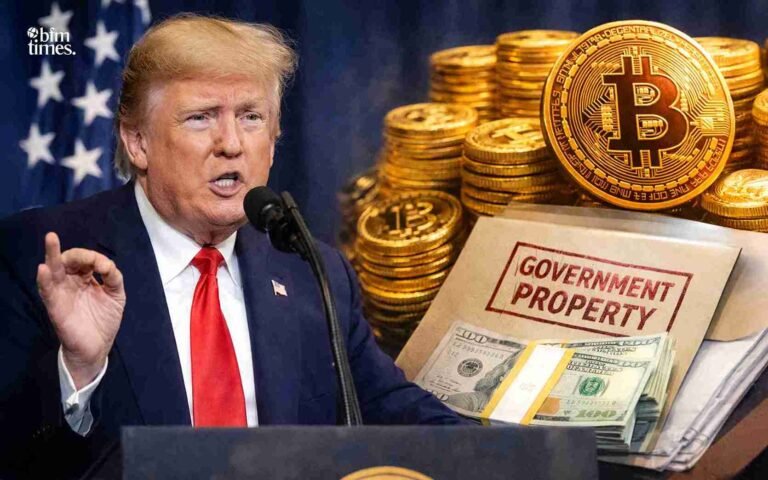
President Donald Trump recently addressed a crowd of crypto supporters sometime last year.
In this address, he criticised the previous federal strategic bitcoin reserve relating to cryptocurrency. He noted that the US government sold tens of thousands of coins that would now be worth billions.
Related: Trump’s Second Term Is Quietly Turning 2026 Into Crypto’s Regulatory Make‑Or‑Break Year
The Financial Reality of the Strategic Bitcoin Reserve
The US government did not become a major holder of digital assets by choice. Instead, law enforcement agencies seized thousands of coins from criminal cases over the last decade.
Since 2014, the US Marshals Service has sold off about 195,000 BTC. These coins came from cases like the Silk Road and various other high-profile hacks. While the goal was to fund government programs with these sales, the timing was a massive financial error.
Total revenue from all these auctions over ten years reached about $366 million.
At the start of 2026, strategic bitcoin reserves are now trading near $93,000. This means that if the government had kept those 195,000 coins, they would be worth $18.1 billion today. This means the federal government effectively lost over $17.7 billion by selling early.
A Strategic Bitcoin Reserve would have prevented this massive error, and the new policy could make sure that the country does not make this mistake again.
Trump-Driven Shift in Bitcoin
Trump driven policy has reshaped how the federal government views Bitcoin in 2026. This approach treats digital assets as strategic reserves rather than disposable evidence. Trump strategic bitcoin reserve public criticism of earlier sales highlighted massive value destruction over time. The shift to permanent holding reduces exposure to poor market timing & slow administrative processes.
Federal strategic Bitcoin reserves now support fiscal stability during periods of rising debt & inflation pressure. This strategy positions Bitcoin alongside gold as a long-term store of value. Agencies gain flexibility by avoiding forced liquidation during weak market conditions. Trump emphasis on sovereignty & financial strength aligns with this reserve-based framework. The policy also signals confidence to global markets & domestic investors.
Institutional trust improves when leadership shows commitment to disciplined asset management. Over the long term this model encourages responsibility transparency & strategic bitcoin reserve patience. By reframing Bitcoin as a national financial tool the government moves beyond short sighted revenue goals. This transition may define how modern states manage strategic bitcoin reserve digital scarcity assets in the future.
Lessons from the Silk Road Liquidations
The Silk Road seizures are a major example of why the old strategy failed.
During auctions in 2014 and 2015, the government sold nearly 30,000 BTC. The average price for those tokens was only $379 each and this move proved to be a multi-billion-dollar gift to private buyers.
Venture capitalist Tim Draper bought a block of 30,000 coins for roughly $18.5 million in one of those auctions. Today, that single purchase is worth nearly $2.8 billion.
This means that the government missed out on a 15,000% gain from that one batch alone. This specific failure helped to drive the demand for a Strategic Bitcoin Reserve among current policymakers.
Building the Digital Fort Knox in 2026
President Trump spent his first few months in office, changing how the government handles its digital holdings.
This order, combined with the GENIUS Act, created the new “Rule of the strategic Reserve,” and the simple instruction for federal agencies is to never sell. This stands as a major transition from merely seeing Bitcoin as evidence to seeing it as a national treasure.
As of mid-January 2026, the US is still the largest state holder of Bitcoin. This is largely because of massive forfeitures that were not sold under the previous administration.
So far, these assets now act as a store of value and the government uses them to hedge against sovereign debt and rising inflation.
This strategy is similar to the role that gold has played for the US for over a century.
Breaking the Administrative Trap
Past administrators often felt they had no choice but to sell. Law enforcement agencies like the FBI and IRS usually view seized assets as property to be disposed of quickly.
This created a trap where the government was forced to sell, regardless of market conditions.
Analysts say that the mistake was the lack of a special asset classification. Bitcoin was not treated as “monetary gold” or a financial security.
In December 2017, agencies tried to sell 513 coins when the price hit $20,000. By the time the paperwork was finished in January, the price had crashed by nearly 50%. This slow administrative process often leads to selling at the worst possible times.
Disclaimer: BFM Times acts as a source of information for knowledge purposes and does not claim to be a financial advisor. Kindly consult your financial advisor before investing.