


Metaverse tokens are virtual assets that drive virtual worlds, online game economies, and virtual world infrastructure. These tokens have utilitarian purposes in virtual land ownership, in-game economies, creator marketplaces, decentralized governance, and 3D environment GPU rendering. With the popularity of interest in always-on virtual spaces, metaverse tokens have emerged as a major means of user interaction with on-chain assets within these ecosystems.
- What are metaverse tokens and how do they work
- Best metaverse crypto: how we selected the top projects
- Top metaverse projects to watch in 2026
- Top Metaverse Tokens at a Glance
- 1. FLOKI (FLOKI)
- 2. The Sandbox (SAND)
- 3. Decentraland (MANA)
- 4. Render (RNDR)
- 5. Axie Infinity (AXS)
- 6. ApeCoin (APE)
- Virtual world crypto tokens: categories & use cases
- Metaverse tokens to buy vs infrastructure tokens
- Metaverse crypto investment: risks & considerations
- How to evaluate metaverse tokens before buying
- Frequently Asked Questions
- What are the best metaverse crypto coins?
- What is the best virtual coin to invest in?
- Which crypto has 1000x potential?
- Conclusion
It is a research-based guide to understanding the functioning of metaverse tokens, the comparative functionality of various classes of projects, and warning signs of sustainable platforms and fads. You will also discover an edited list of the Top-6, evaluation criteria, and an unbiased view of risks, so that readers can understand the best opportunities in metaverse crypto with the perspective of clarity and not hype.
What are metaverse tokens and how do they work
Metaverse tokens represent blockchain-based assets as objects that are intended to help in digital worlds and immersive online environments. These Metaverse tokens include a particular in-world or infrastructure utility as opposed to the general-purpose cryptocurrencies and usually belong to a virtual ecosystem.
The basic capabilities of metaverse tokens are:
- In-game economies: Currency that is used in purchasing items, skins, upgrades, and services within games.
- Virtual land and assets: Allow the ownership and trade of virtual plots of land and on-chain assets, like NFTs.
- Governance tokens: Grant holders a chance to vote on upgrades to the platform, rules, and the use of the treasury.
- Infrastructure payments: Power decentralized metaverse platform support (GPU rendering, storage, or network).
- Creator monetization: Allow creators to monetize experiences and events, as well as digital products.
In 2026, a majority of crypto Metaverse tokens in the virtual world will be functioning across interoperable ecosystems, letting assets and identities be cross-platform. This change has amplified interest in digital identity, on-chain assets, and interoperability as the design principles, not closed and siloed worlds.
Best metaverse crypto: how we selected the top projects
Our framework was based on utility first and pragmatism in order to select the best metaverse crypto projects in 2026, instead of short-term popularity.
Selection criteria used:
- Value in the real world: Use of clear Metaverse tokens within games, worlds, or infrastructure (not just branding).
- Active ecosystem: Continuous development, activity of creators, and updates of the platform.
- Developer traction: Builders SDKs, tools, and integrations.
- Transparency in tokenomics: emissions, supply model, and utility.
- User activity indicators: Indication of further user and creator activity.
- Partnerships & integrations: Cooperation with studios, platforms, or infrastructure partners.
It is evident in the profiles below that projects whose life cycles appear volatile or those of the early stage. The strategy assists in isolating metaverse coins to purchase based on functional value, as opposed to a narrative momentum only.
Top metaverse projects to watch in 2026
The list below contains a selection of six of the best metaverse projects across the virtual worlds, gaming ecosystems, and infrastructure layers. These projects embody various sections of the metaverse stack, social worlds through immersive environment GPU rendering.
Top Metaverse Tokens at a Glance
| Token | Primary use case | Category | Main platform | Token utility | Best for |
| FLOKI | In-game economy & ecosystem access | Game/world | Valhalla | In-game currency, ecosystem utility | Gamers, community-led worlds |
| SAND | Virtual land & creator economy | Game/world | The Sandbox | Land purchases, transactions, governance | Creators, virtual land users |
| MANA | Virtual real estate & events | Game/world | Decentraland | Land, marketplace payments, governance | Event hosts, digital real estate |
| RNDR | Decentralized GPU rendering | Infrastructure | Render Network | Rendering fees, network access | Builders, 3D creators |
| AXS | Gaming economy & governance | Game/world | Axie Infinity | Staking, governance, in-game economy | Play-to-earn ecosystems |
| APE | Ecosystem & social gaming token | Social/gaming | Ape ecosystem | Governance, ecosystem access | Social worlds, community hubs |
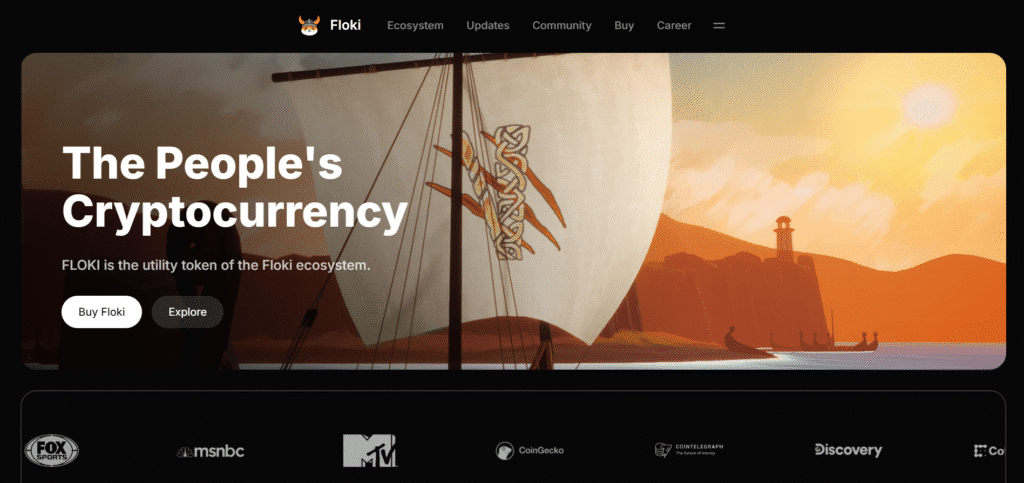
1. FLOKI (FLOKI)
What it is:
Since its meme roots, FLOKI has grown to be an ecosystem centered on games and the metaverse, built around the Valhalla platform.
How the token is used:
FLOKI is a gaming-based currency in Valhalla that can be used to pay for ecosystem services and is linked to the features of DeFi, like staking and rewards.
Ecosystem maturity:
The Valhalla metaverse is actively developed and includes gaming functionality and integrations with NFTs, and it is backed by a massive community base.
Why it’s relevant in 2026:
The shift of FLOKI to the sphere of gaming utility emphasizes the idea of how community-based tokens can become the functioning metaverse resources.
Key risks:
Dependence on the ecosystem and narrative adoption cycle.
Best suited for:
Players in virtual worlds are driven by communities and artists in NFT-driven economies.
Get the real info straight from their official website: https://floki.com/
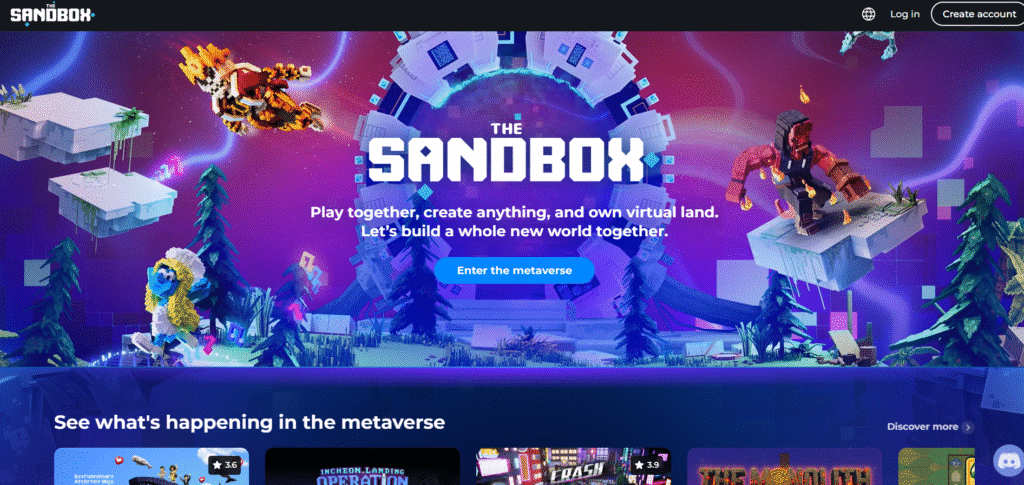
2. The Sandbox (SAND)
What it is:
The Sandbox is a virtual world that is user-created, in which players and creators can create experiences and earn money from digital land.
How the token is used:
SAND is utilized to buy land, carry out marketplace transactions, become a member of the governance, and incentivize creators.
Ecosystem maturity:
The site includes branded content, creator platforms, and continuous content creation.
Why it’s relevant in 2026:
The Sandbox is still used as a benchmark when it comes to owning virtual land and creator-driven metaverse worlds.
Key risks:
The retention of the users lies in the quality of the content and the continuity of the creators.
Best suited for:
Producers, Internet estate proprietors, and brands that have tried immersive experiences.
Get the real info straight from their official website: https://www.sandbox.game/en/
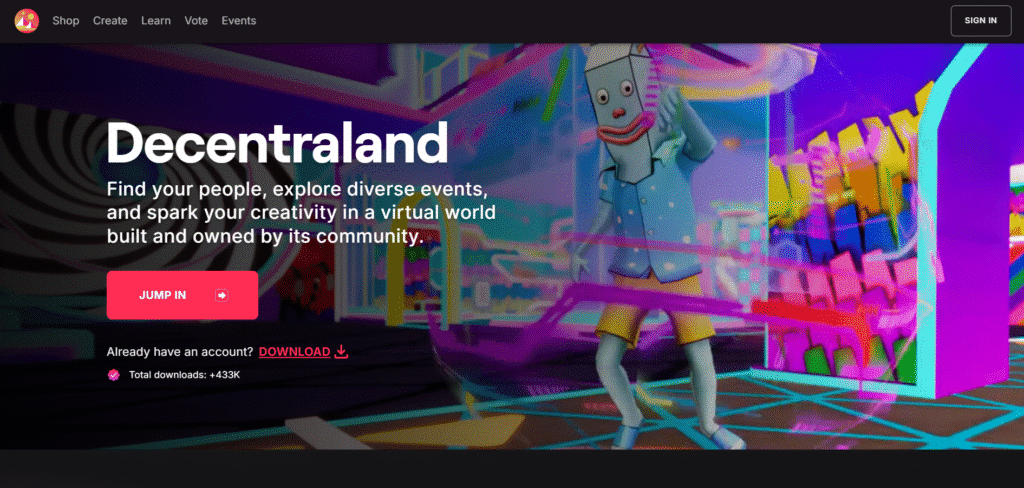
3. Decentraland (MANA)
What it is:
Decentraland is a decentralized virtual world, which is centered on social spaces, events, and virtual real estate.
How the token is used:
MANA authorizes land buying, in-world payments, and government choices.
Ecosystem maturity:
Decentraland facilitates events, creator tools, and ownership of assets on-chain.
Why it’s relevant in 2026:
It is still a social gathering place of events and community-based virtual experiences.
Key risks:
The level of platform activity varies with the macroeconomic cycles.
Best suited for:
Virtual real estate owners, creators, and event hosts.
Get the real info straight from their official website: https://decentraland.org/
4. Render (RNDR)
What it is:
Render is open-source, decentralized 3D graphics and metaverse rendering.
How the token is used:
RNDR is employed in the payment of rendering services and network incentives orchestration.
Ecosystem maturity:
The network helps creators and developers who require immersive content that requires high-performance rendering.
Why it’s relevant in 2026:
Decentralized GPU rendering is one of the important infrastructure layers as metaverse visuals become more complicated.
Key risks:
Its adoption requires a long-term commitment by creators and studios.
Best suited for:
Financiers, three-dimensional artists, and infrastructure-oriented exposure.
Get the real info straight from their official website: https://rendernetwork.com/
5. Axie Infinity (AXS)
What it is:
Axie Infinity is a player-owned economy blockchain and player-owned governance game.
How the token is used:
AXS is employed to stake, govern, and incentivize ecosystems.
Ecosystem maturity:
The platform is still developing its gameplay model and economy design.
Why it’s relevant in 2026:
Axie. The game is still a case study of large-scale in-game economies and governance Metaverse tokens.
Key risks:
Balance and retention of users economically.
Best suited for:
Players who were interested in the play-to-earn style ecosystems and governance involvement.
Get the real info straight from their official website: https://axieinfinity.com/
6. ApeCoin (APE)
What it is:
ApeCoin is an ecosystem token that takes care of games and social as well as community experiences within the Ape ecosystem.
How the token is used:
APE is employed to govern, access ecosystems, and in-platform transactions.
Ecosystem maturity:
The ecosystem covers gaming, social experiences, and community-based initiatives.
Why it’s relevant in 2026:
APE is a reflection of cultural convergence, social strata, and gaming in metaverse-like environments.
Key risks:
Adoption was also associated with the execution of ecosystems and community participation.
Best suited for:
Users who are interested in the social worlds and community-based metaverse projects.
Get the real info straight from their official website: https://apecoin.com/
Virtual world crypto tokens: categories & use cases
The virtual world crypto Metaverse tokens can be broadly categorized into three:
1) Gaming & metaverse worlds
Virtual world land, items, and in-game currency. These are in favor of NFTs, virtual land markets, and player-owned assets.
2) Infrastructure & rendering
Metaverse Tokens that drive the process of rendering graphics cards, memory, and technical support to operate immersive worlds.
3) Social & ecosystem layers
The digital identity, governance, and cross-platform interaction between communities are supported by Metaverse tokens.
Knowledge of these classes can be used to distinguish between speculative assets and Metaverse tokens that are bound to functional infrastructure in the metaverse stack.
Metaverse tokens to buy vs infrastructure tokens
In-world currencies are commonly called metaverse coins that are used both by players and creators. By comparison, infrastructure tokens facilitate the technical support of virtual worlds.
In-world tokens:
- Gameplay of power, virtual world, and in-game money.
- Highly reliant on the adoption of platforms.
Infrastructure tokens:
- Prepare graphics cards, disks, or interoperability.
- Not so attached to the popularity of one virtual world.
Exposure to the two categories can be balanced, and thereby dependence on the success of a particular platform could be minimized.
Metaverse crypto investment: risks & considerations
The investment in the metaverse crypto is fraught with unique risks, which are not directly related to the fluctuations on the market:
- Adoption risk: Platforms will not be able to get sustained users.
- Token inflation: This may lead to poor tokenomics to dilute the long-term utility.
- Platform dependency: A lot of tokens are dependent on the prosperity of one virtual world.
- Technical complexity: GPU rendering and interoperability pose execution risk.
- Regulatory uncertainty: The changing regulations of digital assets and NFTs.
Such reasons render due diligence a critical aspect when analyzing virtual world crypto tokens in 2026.
How to evaluate metaverse tokens before buying
Evaluate metaverse tokens outside hype using this checklist:
- Utility of turning tokens: Does the ecosystem need real actions with the token?
- Supply model: Open emissions and constrained or foreseeable supply?
- Development activity: Continuous development and tooling?
- Community health: Producers and consumers?
- Roadmap realism: History of delivery milestones?
- Governance: Significant participation on-chain?
The relevance is more likely to be sustained in projects that have a real-life usage example in virtual land, in-game economy, and on-chain assets.
Frequently Asked Questions
What are the best metaverse crypto coins?
Top metaverse crypto coins in 2026 include The Sandbox (SAND), Decentraland (MANA), FLOKI (FLOKI), Axie Infinity (AXS), Enjin Coin (ENJ), and Render (RENDER,) powering virtual worlds and economies.
What is the best virtual coin to invest in?
Among the best virtual crypto coins to invest in 2026 are Bitcoin (BTC), Ethereum (ETH), Solana (SOL), and large-cap altcoins that combine liquidity with robust use cases.
Which crypto has 1000x potential?
Cryptos with potential for 1000x returns in 2026 include early presale or low-market-cap projects like Kyuzo’s Friends (KO), ZEROBASE (ZBT), aPriori (APR), and JupUSD (JupUSD) rather than established mainstream assets.
Conclusion
The economies and infrastructure of the virtual worlds, game worlds, and immersive digital experiences are powered by metaverse tokens. These tokens in 2026 are designed for a wide range of utility, including in-game currencies and governance tokens, for decentralized GPU rendering of metaverse graphics. The awareness of categories, level of platform maturity, and tokens will allow differentiating between sustainable ecosystems and trends with a short lifespan.
In this guide, the most popular metaverse projects, notable applications, and assessment criteria were identified to aid in the research.
Disclaimer: BFM Times acts as a source of information for knowledge purposes and does not claim to be a financial advisor. Kindly consult your financial advisor before investing.