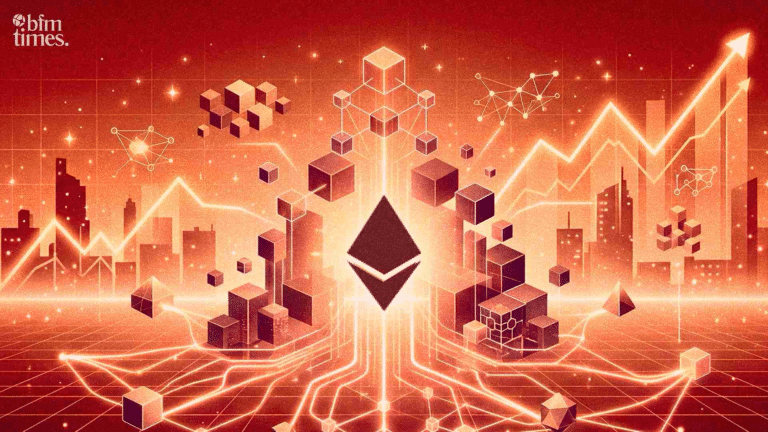
- Mike Novogratz, the CEO of Galaxy Digital, has publicly reiterated his argument that Ethereum has by far the largest developer activity in the blockchain ecosystem.
- This assertion is backed by recent statistics released by Electric Capital, which indicate Ethereum had more than 16,000 new contributors in the past year, surpassing competitors such as Solana and Bitcoin.
- Although bearish price action was observed through most of 2025, network indicators like the number of daily active addresses have soared to new highs of over 2 million daily users.
- Industry leaders are dismissing the “Ethereum Foundation FUD,” citing the upcoming upgrades, namely the Hegota and Glamsterdam, in 2026, as evidence of further innovation.
- According to analysts, there is a colossal gap between the actual use of Ethereum and its current market value, which is still more than 50 percent less than its value in 2025.
Deep Dive: The Developer Flywheel — Why Mike Novogratz is Betting on Ethereum as the Base Layer of Trust
In the fast-changing environment of digital assets, narrative and raw data are often in conflict. In the case of Mike Novogratz, the founder and CEO of Galaxy Digital, the Ethereum story is straightforward: it is the place where builders are. In a series of recent interviews, Novogratz has redoubled his belief that Ethereum is the unchallenged leader in the number of developers working, a metric that he believes is a leading indicator of long-term value. According to a recent broadcast by Novogratz, Ethereum has the highest number of developers. He claimed that other blockchains, such as Solana, have taken off with speed and reduced costs, but the sheer breadth of the Ethereum ecosystem, including its Layer 2 scaling solutions such as Base, Arbitrum, and Optimism, forms a moat that is becoming harder and harder to cross.
The Facts Behind the Dominance
The arguments of Novogratz are not just anecdotal. According to the most recent data from the Electric Capital Developer Report, the Ethereum ecosystem is by far the largest. The data shows that Ethereum hosted more than 31,000 active developers in 2025, and that over 16,000 new contributors to the network came in the first nine months of the same year. Comparatively, Solana was in the second position with about 11,500 new developers, and Bitcoin was in the third position with about 7,500. The influx of talent is mostly centered on decentralized finance (DeFi), real-world asset (RWA) tokenization, and scaling infrastructure. Novogratz notes that Ethereum’s toolset is mature and well-documented, making it the default point of entry for engineers into the Web3 space.
Price Dislocation and Network Expansion
The most confusing aspect of the current market is that the usage of Ethereum is not associated with its price performance. Bitcoin and Solana have had tremendous rallies at the start of 2026, whereas Ether (ETH) has been unable to do the same.
According to on-chain data, the price of ETH has since declined more than 55 percent since it hit the cycle highs of $4,956 in August 2025, yet network activity has risen. The Ethereum network recorded over 2 million daily active addresses in February 2026. This fluctuation suggests the possibility that speculators are moving elsewhere, yet the actual utility of the network is at a record high.
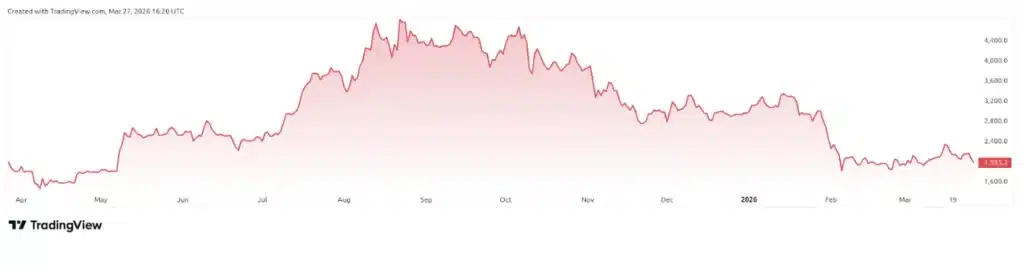
Novogratz remains optimistic that this expansion will be captured in the price at some time. He has stated that upon passing the resistance level of Ethereum at 4,000, it will be in the price discovery phase. He sees the current bearishness as a contrapositive signifier, which implies that the market is not valuing the true value of the protocol.
Background: The Layer 2s and Institutional Adoption
The Ethereum, which Novogratz is referring to, is no longer a single chain; it has grown to be a multi-layered economy. The development of Layer 2 (L2) networks is one of the key aspects that attracts the attention of developers. Base and other networks like Coinbase have received thousands of developers within their initial years of operation. There is also a change in institutional interest. Novogratz focused on the emergence of companies called Ethereum Treasury. Just like MicroStrategy was an effective proxy of Bitcoin, other companies like SharpLink and GameSquare Holdings are beginning to hold ETH as a productive asset. Unlike Bitcoin, which is largely a passive store of value, Ethereum is yielding through staking and participation in DeFi protocols, which Novogratz believes will be attractive to a new generation of corporate capital. The next round of upgrades (the so-called Glamsterdam and Hegota) is bound to entrench this lead further, as it will contribute to the tightening of the L2 integration and throughput. Ethereum needs these technical accomplishments to continue being the foundation of trust of the decentralized web.
Frequently Asked Questions
Why should developer activity be of price concern?
The increase in developers results in increased applications, enhanced security, and increased tools for users. This utility will ultimately cause the demand for the underlying token (ETH) to pay for network transactions.
Does Solana match Ethereum in the number of developers?
Solana is gaining the most new developers per second, but Ethereum has a colossal advantage in the number of cumulative developers with years of experience and existing code libraries.
What was the comment of Novogratz on Bitcoin developers?
Although Novogratz admires the “Digital Gold” story of Bitcoin, he points out that its developer base is less generalized and larger, and is centered on security and Layer 2 scaling, such as the Lightning Network or Ordinals.
Disclaimer: BFM Times acts as a source of information for knowledge purposes and does not claim to be a financial advisor. Kindly consult your financial advisor before investing.