

If you have been in sales for even a few years, you already know how different things feel today. There was a time when sales meant long spreadsheets, endless cold calls, and guessing what might work. You followed up manually, tracked leads in messy systems, and hoped your timing was right.
- What Are AI Tools for Sales Automation?
- Why Businesses Are Adopting AI Sales Automation Tools in 2026
- Categories of AI Tools for Sales Automation
- Best AI Sales Automation Tools for Outreach and Engagement
- AI CRM Tools and Conversation Intelligence Leaders
- 1. HubSpot Sales Hub
- 2. Salesforce Einstein
- 3. Gong
- 4. Clari
- 5. Fireflies.ai
- 6. Zoho CRM
- Key Benefits of AI Tools for Sales Automation
- How AI Is Transforming the Sales Funnel
- Choosing the Right AI Sales Tools for Your Business
- Challenges of Using AI Sales Automation Tools
- Conclusion
- Frequently Asked Questions
Now step into 2026.
Sales is no longer about working harder. It is about working smarter with the help of AI tools for sales automation. These tools are not just helping sales teams. They are quietly running entire pipelines in the background.
I remember speaking with a sales manager last year who said something interesting. He told me, “We used to chase leads. Now leads come to us already warmed up.” That shift did not happen by accident. It happened because of smarter AI sales automation tools.
In today’s world, if you are not using AI tools for sales automation, you are already behind. The good news is that getting started is easier than ever.
Let’s break it all down in a way that actually makes sense.
What Are AI Tools for Sales Automation?
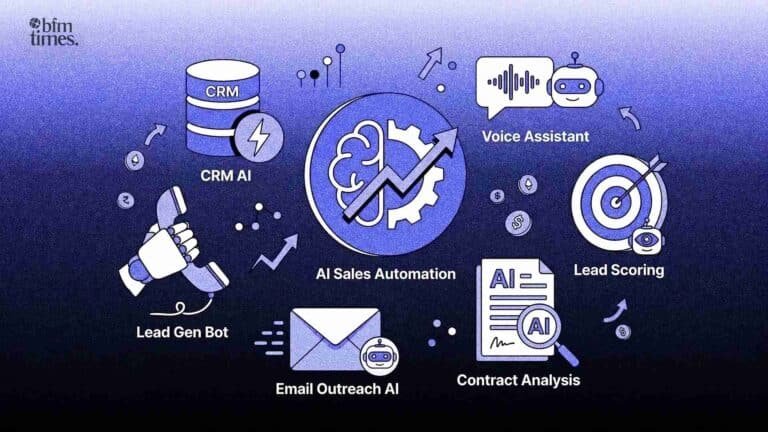
In simple words, AI tools for sales automation are software platforms that use artificial intelligence to handle repetitive sales tasks, analyze data, and improve decision-making.
Think of them as your smart assistant that never sleeps.
They can find leads, send emails, track conversations, predict outcomes, and even suggest what you should say next. That is the power of sales automation AI.
Now compare this to traditional CRM systems. Earlier, CRMs were mostly storage tools. You added data, updated records, and manually tracked everything. They were helpful, but they depended completely on human input.
Modern AI CRM tools are very different. They do not just store data. They understand it. They learn from it. They act on it.
Instead of asking, “What should I do next?” Your system now tells you, “Here is your next best action.”
That is the real shift.
Why Businesses Are Adopting AI Sales Automation Tools in 2026
There is a reason why companies across industries are investing heavily in AI tools for sales automation.
First, time-saving is massive. Tasks like follow-ups, scheduling, and lead sorting used to take hours. Now they happen automatically.
Second, targeting is much sharper. With AI-led automation, businesses can identify high-intent prospects instead of reaching out blindly.
Third, conversion rates are improving. When your messaging is personalized and timely, people respond better.
And finally, your pipeline never sleeps. Even when your team is offline, your AI sales tools are working in the background.
This is not just about convenience. It is about survival in a competitive market.
Categories of AI Tools for Sales Automation
Let’s explore the major categories of AI tools for sales automation and some of the most popular platforms in each.
Prospecting and Lead Generation
Finding the right leads is half the battle. These tools make it smarter and faster.
1. Apollo.io
Apollo.io combines a massive B2B database with built-in sequencing tools. You can search millions of contacts and launch outreach without switching platforms.
Key features:
- Advanced filters for precise targeting
- AI-powered email sequences
- Chrome extension for quick data capture
Pricing starts with a free plan and scales up for teams.
Pros include its all-in-one nature and ease of use. The downside is that data accuracy can vary in some regions.
I tested Apollo last month and closed two deals from one sequence. That alone paid for the tool.
2. ZoomInfo
ZoomInfo is known for its intent data. It tells you which companies are actively researching solutions like yours.
Key features:
- Buyer intent signals
- Deep company insights
- Integration with major CRMs
It is on the premium side, but the insights are powerful.
Sales teams love the accuracy. Some find it expensive for small teams.
3. UpLead
UpLead focuses on verified leads. It claims high accuracy rates, which reduces bounce issues.
Key features:
- Real-time email verification
- Clean and simple interface
- Pay-as-you-go pricing
It is great for smaller teams that want reliable data.
4. Cognism
Cognism is strong in Europe and compliance-friendly markets.
Key features:
- GDPR-compliant data
- Mobile number access
- Intent data integration
It is ideal if you sell in regulated regions.
5. SyncGTM
SyncGTM is one of the newer AI sales tools gaining traction in 2026.
Key features:
- Waterfall enrichment
- Multi-source data merging
- Real-time updates
It helps ensure your lead data is always fresh and complete.
These AI tools for sales automation make prospecting faster and smarter. Instead of guessing, you are working with real signals.
Which of these would you try to improve your lead quality?
Best AI Sales Automation Tools for Outreach and Engagement
Once you have leads, the next step is outreach. This is where many deals are won or lost.
1. AISDR
AISDR acts like a virtual sales rep. It handles email and LinkedIn outreach automatically.
Key features:
- Autonomous messaging
- Multi-channel outreach
- Smart follow-ups
It feels like having an extra SDR on your team.
2. Overloop
Overloop focuses on personalized sequences.
Key features:
- Email finder and sender
- Workflow automation
- CRM integrations
It is easy to use and great for small teams.
3. Regie.ai
Regie.ai is built for enterprise teams using AI agents.
Key features:
- AI-generated messaging
- Playbook automation
- Deep analytics
It is powerful but requires some setup.
4. HeyReach
HeyReach is designed for LinkedIn outreach at scale.
Key features:
- Safe automation
- Multi-account management
- Campaign tracking
Perfect if LinkedIn is your main channel.
5. Instantly.ai
Instantly.ai is popular for cold email campaigns.
Key features:
- Unlimited email sending
- Inbox rotation
- Deliverability tools
Growth-focused teams widely use it.
When using these AI sales automation tools, always connect them with your CRM and email accounts properly. This ensures smooth workflows.
The right outreach tool can multiply your response rates. Which one matches your current strategy?
AI CRM Tools and Conversation Intelligence Leaders
Your CRM is the backbone of your sales process. Let’s explore the top AI tools for sales automation in this space.
1. HubSpot Sales Hub
HubSpot Sales Hub is user-friendly and packed with AI features.
Key features:
- Lead scoring
- Email tracking
- Automation workflows
Great for growing teams.
2. Salesforce Einstein
Salesforce Einstein brings AI into the Salesforce ecosystem.
Key features:
- Predictive analytics
- Opportunity insights
- Automation at scale
Best for large enterprises.
3. Gong
Gong analyzes sales calls and meetings.
Key features:
- Call recording
- Conversation insights
- Deal intelligence
It helps improve sales conversations.
4. Clari
Clari focuses on forecasting and pipeline visibility.
Key features:
- Revenue predictions
- Pipeline tracking
- Risk alerts
Very useful for sales leaders.
5. Fireflies.ai
Fireflies.ai records and summarizes meetings.
Key features:
- Auto transcription
- Meeting summaries
- Searchable notes
Saves hours every week.
6. Zoho CRM
Zoho CRM offers AI through its Zia assistant.
Key features:
- Sales predictions
- Workflow automation
- Affordable pricing
Great for budget-conscious teams.
| Tool | Best For | Key Strength |
| HubSpot | SMB teams | Ease of use |
| Salesforce | Enterprises | Scalability |
| Gong | Sales coaching | Call insights |
| Clari | Forecasting | Accuracy |
| Fireflies | Meetings | Automation |
| Zoho | Budget users | Value |
These AI CRM tools bring everything together. They turn raw data into actionable insights.
If your CRM could talk, what would you want it to tell you?
Key Benefits of AI Tools for Sales Automation
When you start using AI tools for sales automation, the benefits become clear very quickly.
One of the biggest advantages is efficiency. Tasks that once took hours now take minutes. Your team can focus on closing deals instead of managing data. Another major benefit is personalization. With AI sales tools, you can tailor your messaging for each prospect without doing everything manually. This creates a better experience for your audience.
Accuracy also improves. AI reduces human error and helps you make decisions based on real data. This leads to better outcomes.
And then there is continuous lead nurturing. With AI-led automation, no lead gets ignored. Every prospect is followed up at the right time with the right message.
How AI Is Transforming the Sales Funnel
The sales funnel looks very different today.
- At the top, AI tools for sales automation help you find high-quality leads. Instead of reaching out to hundreds of random contacts, you focus on people who actually matter.
- In the middle, AI handles engagement. It sends emails, follows up, and keeps conversations going. This ensures that leads do not go cold.
- At the bottom, AI helps close deals. It provides insights, suggests actions, and even predicts outcomes.
Imagine this scenario.
A potential customer visits your website. Your system identifies their interest. It sends a personalized message. It schedules a meeting. It tracks the conversation. It suggests the best offer. And finally, it helps you close the deal.
All of this happens with minimal manual effort.
That is the power of sales automation AI.
Choosing the Right AI Sales Tools for Your Business
Not every tool is right for every business. Choosing the right AI tools for sales automation depends on a few key factors. If you are a small business, you may want simple and affordable tools like HubSpot or UpLead. They are easy to use and do not require a big team. For larger companies, platforms like Salesforce Einstein or Clari offer deeper insights and more advanced features. Your budget also matters. Some AI sales automation tools are premium, but they can deliver strong returns if used correctly. You should also consider your sales process. If your workflow is complex, you will need tools that can integrate with your existing systems.
The goal is not to use every tool. It is to use the right combination.
Challenges of Using AI Sales Automation Tools
While AI tools for sales automation are powerful, they are not perfect. There is a learning curve. Teams need time to understand how to use these tools effectively. Data dependency is another challenge. AI works best when it has clean and accurate data. Poor data can lead to poor results. Over-automation is also a risk. If everything feels automated, it can lose the human touch. Sales is still about relationships. And then there are privacy concerns. Businesses need to ensure they use data responsibly and comply with regulations. These challenges are real, but they can be managed with the right approach.
Conclusion
Looking ahead, AI tools for sales automation will become even more autonomous. We will see fully independent agents managing entire sales cycles. Human reps will focus on strategy and relationships. The tools will handle execution.
Sales is not getting replaced. It is getting upgraded.
Are you ready to evolve with it?
Frequently Asked Questions
What are AI tools for sales automation?
Tools that use AI to automate tasks like lead generation, emails, follow ups, and forecasting.
Are they good for small businesses?
Yes, many tools are affordable and easy to start with.
Will AI replace salespeople?
No, it supports you by handling repetitive work.
How fast can I see results?
Usually within a few weeks, with better leads and replies.
Which tool is best for lead generation?
Apollo.io for all in one, ZoomInfo for intent data, UpLead for verified leads.
Disclaimer: BFM Times acts as a source of information for knowledge purposes and does not claim to be a financial advisor. Kindly consult your financial advisor before investing.