

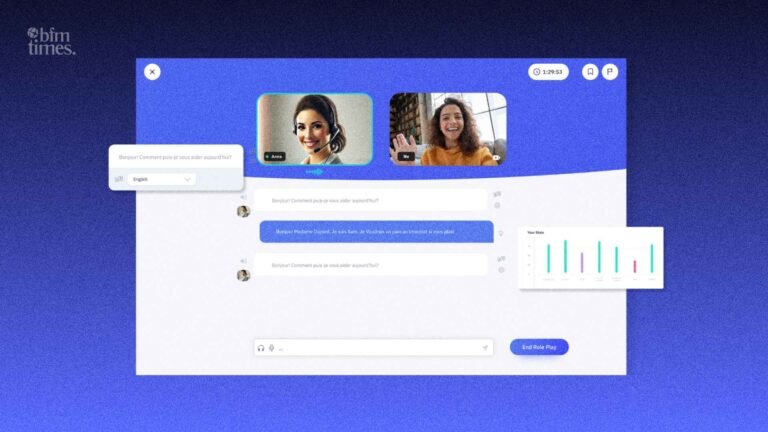
The way people learn languages has never been more exciting than it is right now. Over the decades, English learners were confined to physical classes, costly personal tutors or boring textbooks that provided minimal interactive feedback. With the emergence of Artificial Intelligence (AI) today, high-quality education has been democratized, and anyone with a smartphone can now have a personalized, 24/7 English tutor.
- Why AI is a Game-Changer for English Learners
- 1. The Removal of “Language Anxiety”
- 2. Hyper-Personalization
- 3. Constant Availability
- The State of the Market in 2026
- The Best Conversational AI Tools for 2026
- 1. Langua: The Most Human-Like Experience
- 2. TalkPal: Scenario-Based Mastery
- 3. ChatGPT and Google Gemini: The General-Purpose Giants
- Top AI Tools for Pronunciation and Accent Reduction
- 1. ELSA Speak: The Gold Standard for Phonetics
- 2. Loora: Conversational Pronunciation
- Gamified AI Platforms for Daily Habits
- 1. Duolingo Max: The AI Evolution
- 2. Memrise AI (MemBot)
- AI for Writing and Professional English
- 1. Grammarly: More Than a Spellchecker
- 2. DeepL Write
- Specialized AI Tools for Exam Preparation (IELTS/TOEFL)
- 1. IELTS Speaking Coach AI
- 2. Write & Improve with Cambridge AI
- AI for Business English: The Corporate Advantage
- 1. Preply Business AI
- 2. Speexx
- How to Build a “Perfect” AI Learning Routine
- Morning: The “Sound Lab” (10 Minutes)
- Commute/Break: The “Habit Builder” (5-10 Minutes)
- Afternoon: The “Scenario Drill” (15 Minutes)
- Evening: The “Deep Dive” (20 Minutes)
- Weekend: The “Writing Review” (30 Minutes)
- The Psychology of AI Learning: Why it Works
- Potential Pitfalls: What AI Cannot (Yet) Do
- The Future: What to Expect Beyond 2026
- Conclusion
Also Read: AI in Loan Approval: How Banks Use Machine Learning for Credit Scoring (2026 Guide)
By 2026, AI technology has evolved far beyond simple chatbots. They have now added emotional intelligence, ultra-realistic voice synthesis, and predictive analytics to enable students to achieve fluency more quickly than ever before. This article will discuss the most effective AI tools on the market, their functionality, and how you can use them together to learn the English language.
Why AI is a Game-Changer for English Learners
Three things make AI fundamentally different from any learning method that came before it. Conventional approaches fail to work as they do not possess the three pillars of rapid learning: personalization, consistency, and a low-anxiety environment. According to recent research in 2025 and early 2026, AI-based personalization has the potential to increase engagement and retention rates by 70 percent over traditional, one-size-fits-all curricula.
1. The Removal of “Language Anxiety”
Making mistakes in front of others holds back millions of English learners every single day. This language ego can easily leave students unable to speak, which is the last thing they should do to get better. AI tutors are tireless, unjudging, and impatient. Ask an AI to define the difference between affect and effect 50 times, and it will give you 50 clear and helpful answers. A 2026 survey found that 80 percent of students said that using AI alleviated their anxiety about speaking, enabling them to experiment with more complex sentence structures than they would otherwise use in front of an audience.
2. Hyper-Personalization
Every learner has a unique set of strengths and gaps and AI is built to address exactly that. AI, on the other hand, becomes accustomed to your weaknesses. When your data indicates that you have a problem with the present perfect tense but are strong with vocabulary, the AI will automatically tailor your lessons to emphasize grammar without sacrificing your vocabulary through natural conversation. This is called Adaptive Learning, so that you do not waste time on something you have already mastered. If you want to explore tools that take personalization even further, check out this guide on the top AI productivity tools for professionals.
3. Constant Availability
Fluency belongs to those who practice consistently, not just occasionally. With an AI English partner, you can train your speaking at 2:00 AM in your pajamas or on a 10-minute commute. This uniformity is what makes the difference between intermediate and advanced levels. The trend of Micro-Learning in 2026 highlights the importance of having five 10-minute sessions per day as opposed to one 50-minute session per week.
The State of the Market in 2026
Language learning has quietly grown into one of the biggest industries in the world. Online language learning will exceed 27 billion dollars by 2026, and English is still the most popular language to learn. This is driven by Generative AI and Immersive Technologies. We are no longer merely reading words on a screen; we are communicating with 3D avatars in virtual worlds that mimic the pressure of the real world.

The Best Conversational AI Tools for 2026
Nothing accelerates fluency faster than real conversation practice. These are tools that rely on Large Language Models (LLMs) to mimic conversations in real life.
1. Langua: The Most Human-Like Experience
Langua stands out from the crowd for learners who want something deeper than a basic chatbot. It is concerned with comprehensible input and quality feedback.
- Characteristics: Langua speaks voices that are usually indistinguishable to humans. It provides a hands-free practice mode by way of Call Mode and a powerful correction system. When you correct a mistake, it does not simply correct the text; it will tell you the finesse of the correction.
- The Layer of Human Context: Langua is New in 2026, but it includes a layer of emotional intelligence. It can also tell when you sound annoyed or exhausted and will change the subject of conversation to a lighter or more positive one.
- Best For: Intermediate students who would like to fill the gap between their current level and native-level fluency.
- Pricing: Begins at approximately 12 dollars a month, with a free version that can be used to a limited extent.
2. TalkPal: Scenario-Based Mastery
Real-world confidence comes from practicing real-world situations — and that is exactly what TalkPal delivers. TalkPal helps you create the atmosphere, whether you are about to have a job interview, a first date or a technical business meeting.
- Major Strengths: Its strongest strength is its Roleplay mode. You may discuss issues, explain pictures, or role-play. It also supports more than 57 languages and is a handy tool to polyglots.
- Best For: Hands-on, real-world training and development of situational confidence.
- Pricing: Has a very generous free version, and the premium plans begin at around $14.99/month.
3. ChatGPT and Google Gemini: The General-Purpose Giants
Some of the most powerful language learning tools were never designed as language learning tools at all. ChatGPT (OpenAI) and Gemini (Google) are, perhaps, the most potent tools in the arsenal of a learner when used appropriately. If you are already familiar with how to get the best from these tools, pairing them with a solid understanding of prompt engineering will take your practice sessions to an entirely new level.
- Key Features: Now you can have zero-latency, flowing conversations with the introduction of Advanced Voice Mode in ChatGPT and Gemini Live. You may tell these models to be like severe grammar teachers, or like tolerant gossipers.
- Procedure: You have the option to post a PDF of a challenging English article and request Gemini to paraphrase it in Simple English on your level. Or, have ChatGPT come up with a list of 50 typical idioms in New York City.
- Custom Instructions: In 2026, power users can convert these AIs into particular personas using System Prompts. An illustration: To be a grumpy taxi driver in London. Test my instructions and Cockney rhyming slang.
Top AI Tools for Pronunciation and Accent Reduction
Grammar alone will not get you far if people struggle to understand how you speak. These devices serve as a voice laboratory for your voice.
1. ELSA Speak: The Gold Standard for Phonetics
When it comes to pronunciation training, no tool has earned more trust than ELSA. In 2026, its AI is more accurate than ever, and it can track the slightest movement of the tongue.
- How it Works: It gives you a graphic map of your mouth, and it is a visual representation of where you went wrong. It concentrates on the three major components of the English speech intonation, stress, and rhythm.
- Special Features: In the 2026 version, there are certain Career Tracks of professionals in medicine, engineering, and IT to enable them to master industry-specific terms. It has been found that the ELSA users may enhance their pronunciation scores by 40 percent within four weeks.
- Best For: The person who wants to minimize his or her native accent and sound more like a native English speaker.
2. Loora: Conversational Pronunciation
Where ELSA drills individual sounds, Loora focuses on how your voice holds up in a flowing conversation.
- Main Characteristics: It analyzes your speaking and pronunciation in real-time when you are chatting about your day. It is not so much about drills, but rather about flow. The algorithm of Loora is specifically created to interpret the non-native accents of the English language (Global English) without being too punitive.
- Best: Students who are bored with the traditional drills and need to practice their speech by telling stories.
Gamified AI Platforms for Daily Habits
The hardest part of learning any language is simply showing up every day. These apps use psychological triggers to keep you coming back.
1. Duolingo Max: The AI Evolution
Duolingo has quietly transformed itself into one of the most sophisticated AI learning platforms available. This level will deal with the widespread criticism that Duolingo is too easy to be taken seriously by learners.
- Explain My Answer: You can have a chat with a mascot (such as Duo or Lily), and it will explain to you exactly why your answer was incorrect, and not just a red X.
- Video Call Feature: Duolingo Max was launched in late 2025, and now it has the feature of AI Video Calls, where you can practice visual cues and body language in addition to spoken English.
- Best: Novices who want to have a light, no-stakes method of forming a daily practice.
2. Memrise AI (MemBot)
Memrise takes vocabulary building to a completely different level by combining AI with real human video.
- The main Characteristics: MemBot will enable you to practice the newly acquired vocabulary in a simulated and safe chat. When you hear information about Coffee, the bot will automatically begin a dialogue on how to order a latte.
- Spaced Repetition (SRS): The AI is able to know when you are likely to forget a word and then reintroduces the word at the most opportune time to ensure long-term retention.
- Best For: Vocabulary retention and listening to the actual usage of words by real people in different dialects.
AI for Writing and Professional English
Speaking confidently is only half the battle your written English matters just as much. These are AI tools that assist in polishing your emails, essays, and reports.
1. Grammarly: More Than a Spellchecker
In 2026, Grammarly has evolved into something far more powerful than a grammar checker. It not only corrects their and there, it also makes you change your tone to make it more professional, convincing, or friendly.
- Notable Characteristics: It has an AI capable of rephrasing complete paragraphs to make them easier to understand. To the English learners, it gives explanations to its recommendations, making any correction a mini-grammar lesson.
- Tone Detection: It applies to your email the “Sentiment Analysis” to inform you how your email can be understood by a native speaker. E.g.: This sentence may be considered as a bit aggressive to the US audience.
- Best For: Students and professionals who should be able to communicate in written English.
2. DeepL Write
DeepL has long been trusted for translation quality, and its writing tool carries that same precision. It is extremely successful in converting English that sounds translated into natural, idiomatic expression.
- Nuance Selection: You can switch among the various styles, such as Academic, Simple, and Casual, to explore how the same idea can be conveyed in various social settings.
- Best For: Leaving behind the literal translations in favor of a more natural feel of writing, or native.
Specialized AI Tools for Exam Preparation (IELTS/TOEFL)
To a large number of people, learning English is an end in itself: passing a high-stakes test. The main method of student preparation for the speaking and writing parts is now AI.
1. IELTS Speaking Coach AI
New systems such as IELTS.ai are based on the official grading rubric to mark your practice sessions. They give you an approximation of a Band Score, and they tell you precisely why you failed to score a Band 8.
- Predictive Scoring: This AI examines your hesitations, filler words (such as um and uh), and lexical resources to provide you with a very precise score prediction.
2. Write & Improve with Cambridge AI
This is a writing assessment tool that gives you immediate feedback on your writing according to the Common European Framework of Reference for Languages (CEFR). It is among the few instruments that were created in cooperation with real linguists and analysts.
AI for Business English: The Corporate Advantage
AI is becoming more popular among global companies in terms of upskilling workforces.
1. Preply Business AI
Preply has outgrown its human tutor-matching business. Their in-house AI applications now recap your tutoring sessions and create personalized “Flashcards” depending on the errors you committed in the live call.
2. Speexx
Speexx is an AI-based application that helps corporate learners get relevant content based on their job roles. An accountant will be informed about such concepts as fiscal quarters and audits, and a marketing manager will be preoccupied with such concepts as brand equity and consumer segments.
How to Build a “Perfect” AI Learning Routine
You cannot afford to use a single tool to learn English faster. Rather, make a Stack that encompasses all four skills: Speaking, Listening, Reading, and Writing.
Morning: The “Sound Lab” (10 Minutes)
Wake up with ELSA Speak. Even 10 minutes of pronunciation exercises when your brain is not tired will put your speech in English into the right tone throughout the day. Pay attention to one sound at a time (e.g., the sound of th).
Commute/Break: The “Habit Builder” (5-10 Minutes)
Maintain your streak with Duolingo Max or Memrise. These short lessons make the language active in your mind without having to strain your mind much. It is concerning Frequency over Intensity.
Afternoon: The “Scenario Drill” (15 Minutes)
Simulate a real-life scenario that you may encounter in the near future using TalkPal or Praktika. In case you have a meeting in a week, inform the AI: I am afraid of my presentation. Let’s practice the Q&A session.” This develops Functional Fluency.
Evening: The “Deep Dive” (20 Minutes)
This is where you can use ChatGPT or Langua. Have a long-form discussion on a subject that you are interested in, like space exploration, cooking, or football. Since you are interested in the topic, you will be more encouraged to research new words and challenge your limits.
Weekend: The “Writing Review” (30 Minutes)
The weekend is your chance to look back at your written English with fresh eyes. Put one text you wrote during the week through DeepL Write or Grammarly. Study the modifications proposed by the AI and ask yourself: “Why did it choose that word over mine?” For more structured writing support, the top AI writing tools for bloggers can be equally useful for learners polishing their written expression.
The Psychology of AI Learning: Why it Works
When a student is stressed or bored, the traditional language learning provokes the so-called Affective Filter, which is a psychological barrier that arises. In case the filter is high, the brain is unable to absorb the language. Artificial Intelligence establishes a Low-Filter Environment.
- The Socratic Method: Advanced AI tools in 2026 use the Socratic method is used by advanced AI tools in 2026, which will not simply provide you with answers, but will ask you questions instead. This causes your brain to build the language, and this creates a lot deeper neurological associations.
- Gamification and Dopamine: The Streak systems of apps such as Duolingo are not only gimmicks. They cause small releases of dopamine, which strengthen the habit of learning. AI goes further to give Micro-Rewards upon using a new, complex word in context correctly.
Potential Pitfalls: What AI Cannot (Yet) Do
Although AI is a powerful tool, it is not flawless. The learners are to know about several limitations:
- Cultural Subtlety: AI is able to describe a culture, but not to experience it. British irony or American optimism can only be fully comprehended by meeting actual human beings and reading their media.
- The Correction Trap: Certain AI applications are too corrective, and this may damage your fluency (the skill to speak fluently). It is worth remembering that perfection is less significant than communication.
- Hallucinations: Sometimes an AI may come up with a false fact regarding English grammar. Very complicated rules should always be checked with a reliable source such as the Oxford English Dictionary.
The Future: What to Expect Beyond 2026
The future of AI in language learning indicates that we are drifting towards “Invisible Learning”. The introduction of AR (Augmented Reality) is already underway. Think about having smart glasses, which can give you real-time English subtitles when someone speaks to you, or an AI, which whispers the right word in your ear during a real-life conversation. To understand the broader direction this technology is heading, explore what the future of generative AI looks like through 2030.
Predictive Analytics will be even more accurate. In 2027, your AI will tell you: With the current progress you are making, you would achieve a Band 7 in IELTS in precisely 42 days, provided that you practice 20 minutes a day.
Conclusion
It does not matter how much money you can afford to pay a tutor anymore, but rather how well you can use the AI tools at your fingertips to learn English faster. With the accuracy of pronunciation of ELSA, the naturalness of conversation of Langua, and the overall smarts of ChatGPT, you can make your own immersion environment that was unattainable only five years ago.
The 2026 learner is a technologically enhanced learner. You are not swapping your brain with AI; you are simply providing your brain with the best environment to develop. The first step is the most significant one. Today, choose two tools on this list and set a 15-minute timer, and start your mastery of the English language. The AI is ready when you are.
Disclaimer: BFM Times acts as a source of information for knowledge purposes and does not claim to be a financial advisor. Kindly consult your financial advisor before investing.