


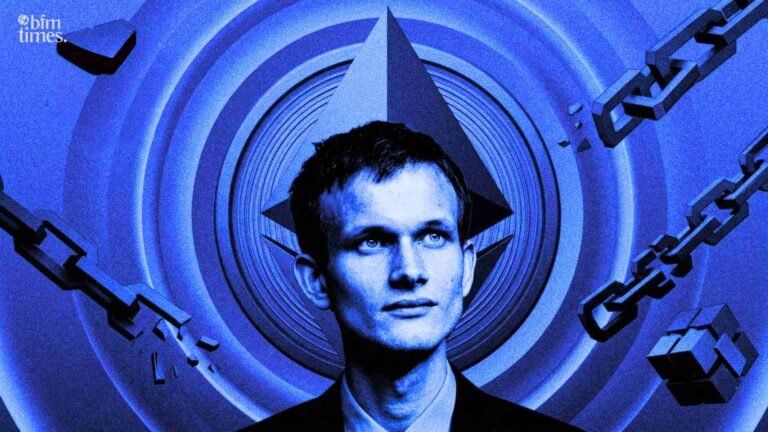
In a speech at the inauguration of the 2026 Hong Kong Web3 Carnival, Ethereum co-founder Vitalik Buterin made it clear to the world developer community that Ethereum is not in a speed war.
Buterin took his keynote to draw a line in the sand as newer Layer 1 blockchains keep selling themselves on the strength of gigantic throughput and millisecond finality. He stressed that the identity of the network is in the fact that it is the most secure, decentralized, and reliable infrastructure in the world, even though it might be slower than its rivals.
Key Lessons in Hong Kong Keynote.
- Philosophical Position: Ethereum is formally withdrawing from the TPS race to become a secure, decentralized worldwide settlement layer.
- Security Over Speed: Buterin made it clear that the protocol was not designed to be competitive with high-frequency trading platforms.
- Technical Roadmap: Short-term objectives are the implementation of zkEVM and gas limit expansions, and medium-term objectives are 10 to 20 second finality.
- The Walkaway Test: One of the objectives is to ensure that Ethereum can withstand the failure of 49 percent of nodes, which would make it as resilient as Bitcoin.
- Quantum Readiness: The network is getting ready to go post-quantum with new cryptographic signature research.
The Trading Engine vs The World Computer.
The speech of Butterin comes at a time when the speed at all costs narrative has taken over blockchain talk. Although hardware acceleration has been pursued by chains such as Solana and other high-performance forks, to achieve hundreds of thousands of transactions per second, Buterin claimed that these directions tend to result in centralized “corposlop” or fragile architectures.
It is supposed to be the chain of safety, the decentralized chain, the chain that you can trust, Buterin told the audience. He referred to Ethereum as a world computer, but not a payments network. This is an important distinction: a payment network requires raw speed, whereas a world computer requires verifiability.
The co-founder’s vision is for any device, including smartphones and basic IoT hardware, to be able to verify the chain. This avoids a future in which only large data centers can be involved in the consensus of the network, which he called backsliding on the initial promises of blockchain technology.
Price Action and Market Reaction.
The reaction of the market towards the emphasis of long-term stability by Buterin has been that of cautious optimism. With the maturity of the industry, institutional investors are seeking more and more so-called sanctuary technologies that can survive systemic shocks as opposed to high-speed speculative engines.
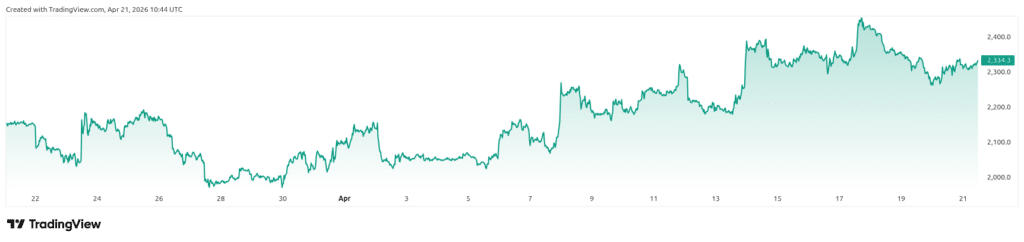
The price of Ethereum has been resilient in the face of a wider market downturn. Traders are observing that although Ethereum may not provide the adrenaline rush of high-frequency trading chains, its position as the base layer to SocialFi and secure digital assets offers another form of value floor.
The 292 Million Wake Up Call.
The time of Buterin’s comments was important. Only 48 hours before the incident, a large-scale DeFi bridge hack led to the loss of $292 million, triggering a 6.6 billion liquidity leak out of the most popular protocols. This event was a real-life example of how complex and fast prioritization can lead to serious security issues.
Buterin did not refer to the particular project, but he pointed out that the modular construction process of Ethereum should be reinforced to avoid such failures. The idea is to ensure that the protocol is completely quantum-safe and resistant to the class of bridge logic errors that have afflicted the industry during 2025 and early 2026 by concentrating on formal verification and ZK-proofs.
The Way of 10 Second Finality.
Speed is not the main objective, but efficiency is. The roadmap of the Strawmap in Hong Kong shows the change of the current 16-minute finality to the much faster 10 to 20-second window. This will be done by single-slot finality, a technical reform that makes the process of validators attesting to blocks simpler.
This upgrade will not only enhance the user experience but will also decrease the “MEV” (Maximal Extractable Value) risks that are currently enabling advanced bots to front-run regular users. Ethereum will invert the centralization of block building by making the base layer light enough to be runnable on consumer-grade hardware
Also Read: Ethereum Hits All-Time High Network Activity in 2026
Frequently Asked Questions
Is Algorand an Ethereum Token?
The answer to this is no. Algorand is not an Ethereum token. Although a number of mainstream cryptocurrencies are based on the Ethereum network as ERC-20 tokens, Algorand is a Layer 1 blockchain, independent and standalone, with its own native cryptocurrency, ALGO.
How might Ethereum impact the overall crypto market cycle?
As a leading blockchain, Ethereum’s performance often sets trends that affect altcoins and the wider crypto ecosystem. Read more.
Disclaimer: BFM Times acts as a source of information for knowledge purposes and does not claim to be a financial advisor. Kindly consult your financial advisor before investing.