


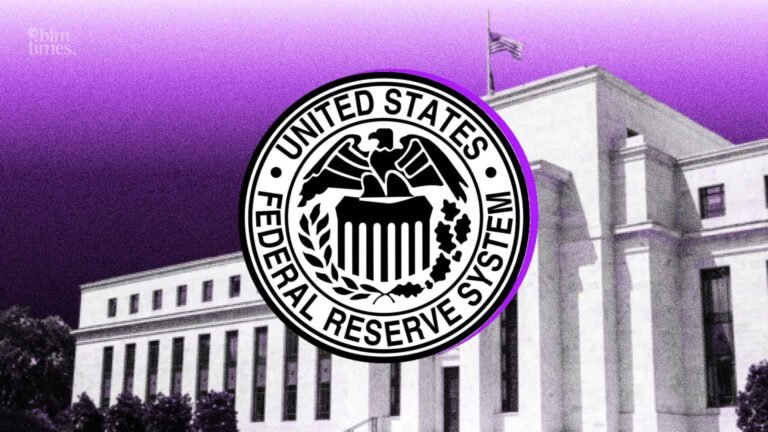
The US Federal Reserve, which is also referred to as “the Fed”, is a very powerful player in the world. Although many people see it in the news, in issues related to inflation, interest rates, or economic crises, for example, we do not see what they are involved in. In basic terms, the Federal Reserve is the core of the US financial system, which they do by running the economy at an even keel, getting prices under control, and seeing to it that banks run smoothly. Also, the scope of the Federal Reserve’s decisions goes beyond the U.S. to also play a role in the global markets.
Definition
The US Federal Reserve, which is the central bank of the U.S., was founded in 1913 to put in place a more secure, flexible, and stable monetary and financial system for the country. Also, unlike commercial banks, which serve retail customers’ needs, the Fed’s role is to manage the money supply, regulate banks, and, at large, direct the economic activity.
The Federal Reserve has a distinct structure, which includes the Board of Governors and 12 regional Federal Reserve Banks, as well as the Federal Open Market Committee (FOMC), which puts forth key interest rate and monetary policy decisions.
Significance
The role of the US Federal Reserve is that they are able to impact economic conditions. When the economy is overheating, the Fed steps in to cool it off. When growth is weak, or unemployment is high, the Fed will put out stimulus.
As the US dollar is the world’s preeminent reserve currency, what the Fed does affects global markets, exchange rates, stock prices and also emerging economies. A single Fed announcement may cause financial markets to move within minutes.
Importance
The Federal Reserve is a key player in that it helps to maintain economic stability. In the absence of a central authority that oversees money and banking, we see financial systems fall into chaos. The Fed puts forth to achieve what is known as its dual mandate which is to do the following
- Maximum employment
- Stable prices (low inflation)
Also, it’s a role that plays out in the safety of the banking system by way of supervision of banks and intervention as a lender of last resort in times of financial crisis. That role was very much in the forefront during events like the 2008 financial crisis and the COVID-19 pandemic.
Usage
The Federal Reserve has at its disposal many tools which are put to use in the conduct of what is known as monetary policy:.
- Interest Rates: Modifying the federal funds rate which in turn affects borrowing and spending.
- Open Market Operations: Purchasing and selling of government securities to control the money supply.
- Reserve Requirements: Setting what amount of money banks must put into reserve.
- Quantitative Easing (QE): Injecting money into the economy during crises.
- These instruments, which the Fed uses to control inflation, stimulate investment, and stabilise financial markets when uncertainty increases.
Examples
When the Fed steps in, it does so by raising interest rates, which in turn makes borrowing more of a penalty, which in turn reduces spending and brings down the inflation rate. Also, at the drop of a hat, when inflation rises high, the Fed will raise interest rates, which in that action also raises the cost of loans, which in turn cuts back on growth, which in turn brings inflation back in check.
In the case of an economic downturn, we see, for example, the action that was taken in the 2020 Great Lockdown. The Fed reduced interest rates to near zero and also bought large quantities of government debt to support which businesses and which households.
Benefits
The U.S. Federal Reserve also provides:
- Economic Stability: Helps to avoid extreme inflation or deflation.
- Crisis Management: Rapid response in financial emergencies.
- Banking System Safety: Improve banks to prevent their collapse.
- Global Confidence: Strengthens faith in the US dollar and financial markets.
- Through fine-tuning monetary policy, the Fed sets the stage for long-term economic growth and financial confidence.
Disadvantages
Though we see it as a key player, the Federal Reserve also is a subject of criticism:.
- Delayed Impact: Monetary policy changes take time.
- Risk of Mistakes: Poor policy decisions may also see an increase in inflation or cause recessions.
- Limited Transparency: Some think the Fed’s decisions are too in over their heads.
- Unequal Effects: Policies are in favour of financial markets at the expense of the average household.
- These issues bring to light the issue of running a large and diverse economy.
Conclusion
The Federal Reserve is a key player in the American and global economy. From the task of controlling inflation to that of stabilising financial markets, what they do touches on everything from mortgage rates to stock markets. Although it is a subject of criticism and has its limits, the Fed is still very much a player in the maintenance of economic balance. As we go forward in a more connected world, what we as individuals, investors and businesses know about the Federal Reserve’s functions is important.
Disclaimer: BFM Times acts as a source of information for knowledge purposes and does not claim to be a financial advisor. Kindly consult your financial advisor before investing.