


Key Insights
- Solana is cheaper and highly scalable. However, it lacks in dApps, DeFi and decentralization.
- Ethereum has a higher security, decentralization, and dApp ecosystem. However, it is a bit more expensive and slower than Solana.
Introduction
Ethereum or Solana, both have been competing since the launch of the Solana chain. The competition covers multiple aspects, including blockchain scalability, security, available liquidity, on-chain dApps, stablecoin volumes, and more.
This article aims to provide a clear comparison of these two chains, focusing on identifying the top chain that meets all user needs.
Also Read: Most Popular Chains in 2025 Have an Unusual Winner, Not Ethereum, Nor Solana
Cost of Transactions
A typical transaction on Ethereum can still cost up to $0.25 even after the Dencun and Pectra Upgrades. However, for Solana, this is even less than 1 cent.
This favours small transactions, which make up the bulk of any crypto network.
Blockchain Scalability
Ethereum is the least scalable blockchain besides Bitcoin, which makes it difficult to transact during rush hours such as early morning and evening in Eastern Time. As a result, Layer-2 chains have become popular among users. However, a risk of using layer-2s is that they are not as secure as Ethereum. Also, there is an additional cost of bridging funds between them.
On the other hand, Solana provides a highly scalable layer-1 blockchain capable of 65,000 transactions per second. Not only does this help bring costs down, but it is also critical when certain DeFi platforms and dapps see an unexpected surge in transactions.
DeFi Ecosystem
Ethereum’s DeFi ecosystem is much larger and more mature than Solana’s.
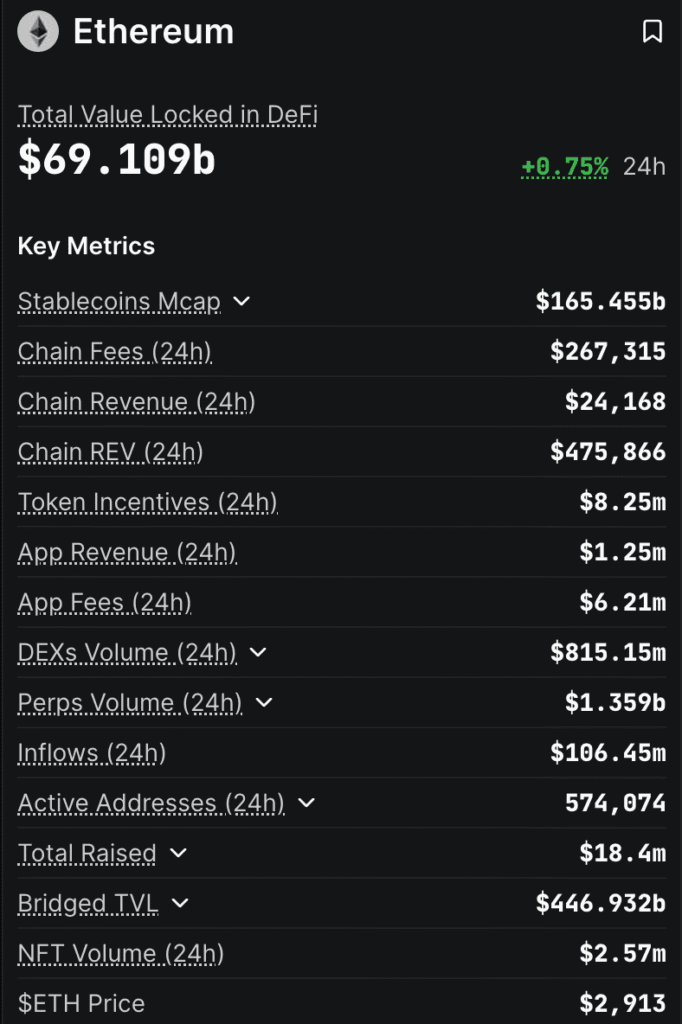
Ethereum has a net TVL of $69 billion, as compared to Solana’s meager $8.4 billion. This vast difference exists because most Ethereum users engage in Yield Farming, Staking, Lending-Borrowing, and other DeFi-native activities; however, Solana’s rise to fame was driven more by memecoins than by its DeFi ecosystem.
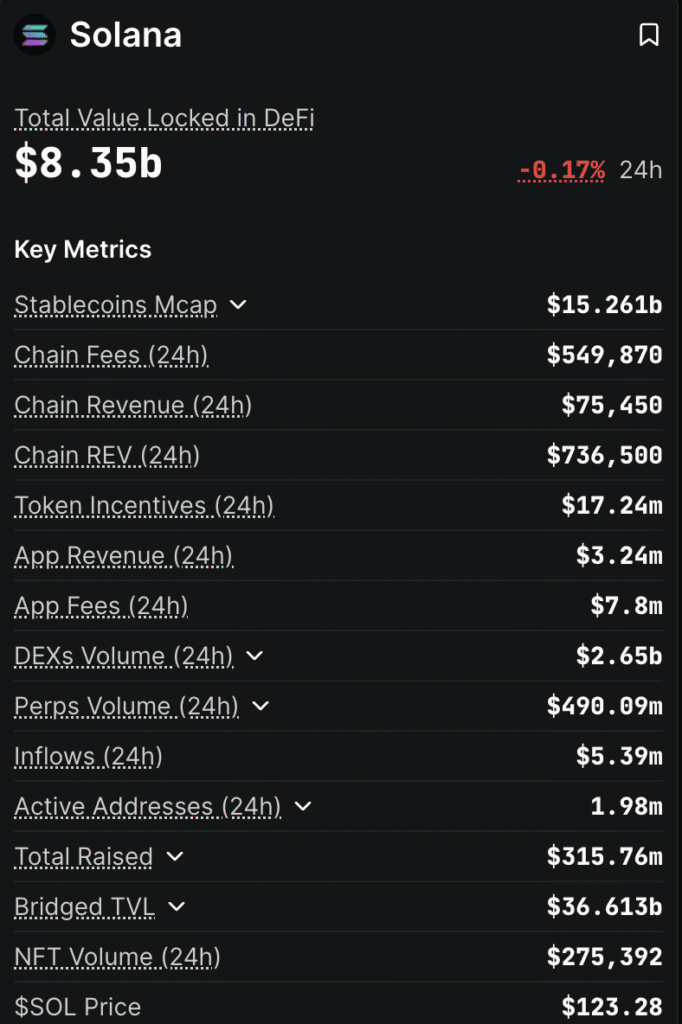
However, as the latter matures, users have begun accepting Solana’s DeFi ecosystem.
dApp Friendliness
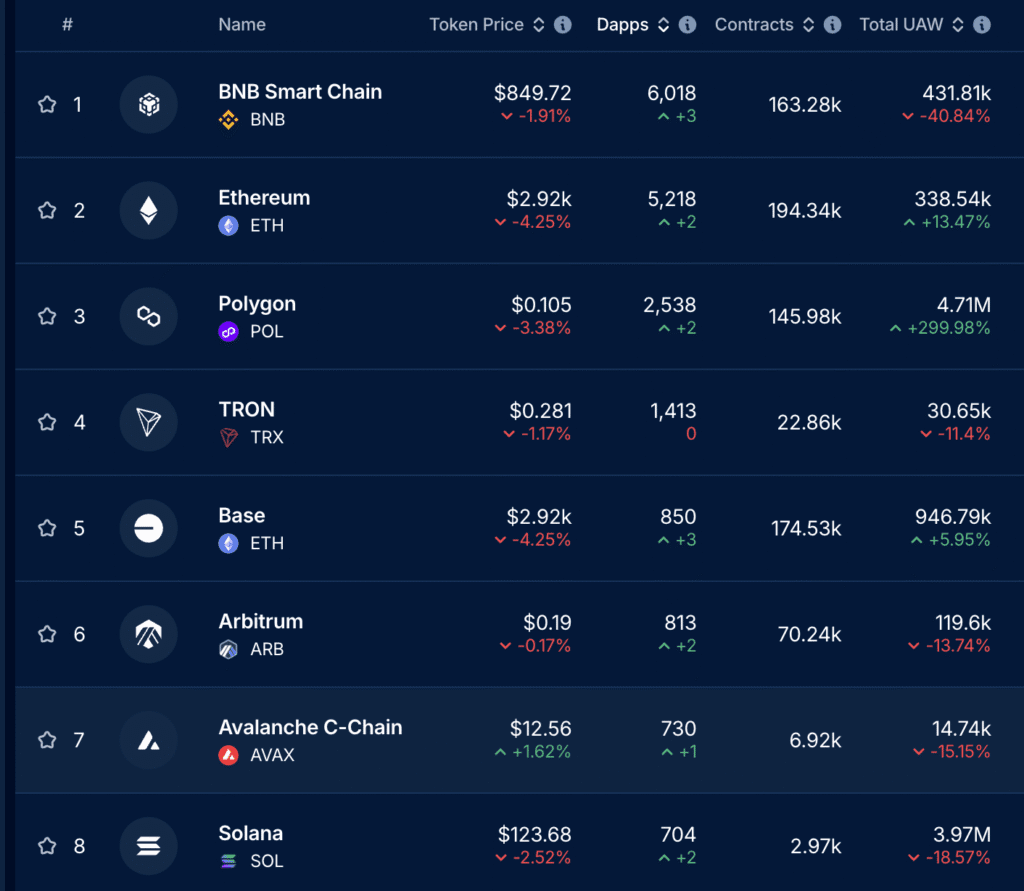
Ethereum has a much higher number of dApps because it started much earlier and therefore was able to build a much larger ecosystem. With over 5000 dApps on its blockchain, this not only has one of the most developed chains, but it also has much wider services available via dApps.
However, Solana has been catching up, too. Lately, Solana’s DeFi-related dApps, such as Raydium DEX, have been clocking transactions equal to that of Ethereum, if not greater.
On-Chain Liquidity
Liquidity is a prime driver of growth on any blockchain. The higher the amount of liquidity on that chain, the easier it is for users to avail different services. On-chain liquidity is calculated by the total amount of stablecoins present in that chain.
Currently, Ethereum has around $165 billion in stablecoins and Solana has just $8 billion. Please refer to the DeFi comparision image before for more details.
Decentralization
ETH is far more decentralized than Solana with over 1 million validators as compared to around 380 validators for Solana. A high number of validators can easily track anomalies in transactions and therefore provide much greater security.
With the upcoming series of upgrades, ETH is expected to lower down staked ETH for validators to a minimum of 1 ETH form current minimum of 32 ETH. This move could further decentralize the blockchain consensus.
Disclaimer: BFM Times acts as a source of information for knowledge purposes and does not claim to be a financial advisor. Kindly consult your financial advisor before investing.