


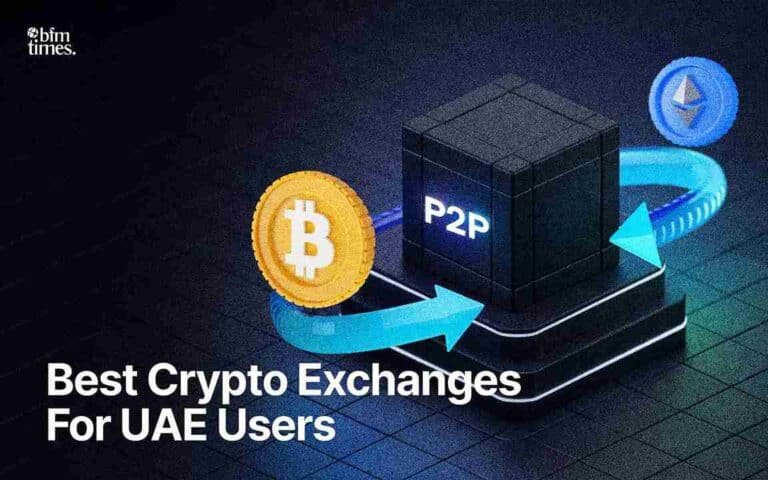
Crypto exchanges are digital platforms that bring together traders to trade crypto assets. To begin with, users create an account on the exchange and, if required, complete basic verification. Afterward, they deposit funds into their exchange wallet, which may be in fiat or crypto. Once the account is funded, users place orders for what they want to buy or sell based on present market prices or particular price points they set.
- Centralized and Decentralized Exchanges.
- Trading, Charges, and Withdrawals.
- Crypto Exchange Control in the UAE.
- Security, Liquidity, and User Protection (High Intent).
- How do I choose a crypto exchange in the UAE?
- Crypto Wallet and Exchange Storage explained.
- Crypto Trading Safe in the UAE? Security and Risks.
- Crypto Exchange Regulation in the UAE.
- UAE vs Global Exchanges (Comparison Intent).
- Crypto Exchange Adoption by Institutions in the UAE.
- Crypto Exchange Q&A (Featured Snippet Section)
- What is the best crypto exchange for new investors in the UAE?
- Can I trade on crypto exchanges?
- Is it compulsory for UAE crypto exchanges to do KYC?
- Conclusion
- Frequently Asked Questions
Most exchanges use a book order system for trade matching. An order book reports all open buy and sell orders, which, at the time of trade, are executed immediately. Some platforms, in particular decentralized ones, use automated market makers (AMMs), which have liquidity pools and algorithms that determine prices. In the background, exchanges run large-scale infrastructure to ensure fast trade execution, accurate pricing, and platform stability during periods of high market volatility.
Centralized and Decentralized Exchanges.
Centralized exchanges (CEXs) and decentralized exchanges (DEXs). In the case of CEXs, we have companies that run the platform and manage user accounts and security systems. These exchanges are widely used because they offer high liquidity, advanced trading tools, responsive customer support, and easy fiat integration via bank transfers or cards. For new users just getting into things, CEXs are a go-to for their easy-to-use interfaces and guided experience.
Decentralized exchanges, by contrast, have no central authority. They enable peer-to-peer trade directly on the blockchain, facilitated by smart contracts. Users have full control over their funds, which, in turn, improves transparency and reduces counterparty risk. At the same time, DEXs present greater complexity for users, often requiring external wallets and a basic understanding of blockchain operations. Although they offer better privacy and control, as a whole, they are less so for beginners than centralized platforms.
Trading, Charges, and Withdrawals.
When it comes to crypto exchange trading, users should note that there is a variety of fees to consider. Most platforms charge trade fees based on the size of the user’s trading volume and whether the order is a maker or taker order. Large-scale traders tend to receive reduced fees, while new users pay the full rate. Also, some exchanges put forth the option of paying fees in the platform’s own token, which in turn gives the user a break.
Withdrawal is also a key issue to look at. Withdrawal fees vary by blockchain network and current network congestion. At peak times, we see confirmation that takes longer, thus resulting in delays. Also, each crypto has different processing rates, which in turn means that withdrawal can take from a few minutes to over an hour. Of great importance is that these factors be known to ensure smooth trade and fund management.
For greater insight, users may look to our resources, such as How Crypto Exchanges Work and Crypto Trading Basics, which will strengthen their knowledge base before they trade.
Crypto Exchange Control in the UAE.
The UAE has taken a forward-thinking approach to crypto regulation. In Dubai, which is the home of VARA, and in Abu Dhabi, which has ADGM, the authorities issue licenses and oversee compliance.
Regulated exchanges must adhere to strict KYC and AML rules, which in turn help ensure user safety. We see this regulatory structure as a draw for international exchanges and as a means of building trust among users.
Crypto-oriented policies that also foster innovation and protect investors. In the UAE, regulation is on point for transparency, security, and financial integrity.
Security, Liquidity, and User Protection (High Intent).
Security is of great importance when choosing an exchange. Top platforms use cold storage, encryption, insurance funds, and two-factor authentication.
Liquidity in the system means better flow of assets, which in turn means minimal slippage at trades and faster execution times on high-liquidity exchanges. We see that liquidity issues create transaction delays and wide price ranges, but with high-liquidity exchanges, we notice improved prices and speed.
User care also includes customer support, dispute resolution, and transparent policies.
How do I choose a crypto exchange in the UAE?
Factors that include regulation, fees, supported assets, liquidity, and ease of use. For beginners, we make sure it is simple; for the trading community, we ensure we have advanced tools in place.
KYC issues, fiat transaction support, and customer service also play a role.
Crypto Wallet and Exchange Storage explained.
Crypto wallets are at the core of what users do with their digital assets, which includes storage, management, and security. When trading on a crypto exchange, users are given custodial wallets. These wallets, which are run by the exchange itself, mean that the platforms hold the private keys, while users access them through their accounts. Custodial wallets are a hit for frequent traders, as they enable fast transfers, instant trades, and easy use of exchange features.
However, at present, we do not always recommend using exchange wallets, particularly in the long term. Exchanges are at risk of security breaches, technical issues, or regulation changes. For this reason, many users opt to withdraw their funds from exchanges and into personal wallets, where they have more control over their assets.
There is a variety of crypto wallets out there for different purposes. Hot wallets, which are online, are used for day-to-day transactions, trading, and interacting with decentralized apps. They are easy to use but are more prone to online attacks. Cold wallets, such as paper wallets or offline software wallets, keep assets off the internet, making them more secure for long-term holding. Hardware wallets are a very popular form of cold storage that use physical devices to keep private keys offline, while still allowing secure transaction signing.
Another key category is non-custodial wallets, which give users full control over their private keys and funds. As opposed to exchange wallets, which use a third party, non-custodial wallets do not. This means the user is fully responsible for their security, which includes the protection of recovery phrases and private keys. Although this does place more responsibility on the user, it also greatly reduces the risk of third-party interference.
To improve the security of your exchange wallet, we recommend that you do what is suggested below. For long-term holding of coins, take them out of the exchange into your own personal wallet. Also, do not leave a large balance of crypto on an exchange that may be targeted. Also, we suggest you use strong, unique passwords, turn on two-factor authentication, and keep your software updated. Also, pay attention to phishing attempts and avoid accessing your wallets or exchanges from unsecured networks.
Understanding what goes into each type of crypto wallet and exchange storage will help you make informed decisions. We can have our cake and eat it too by using exchanges for convenience and personal wallets for security, thus protecting our assets, which at the same time allows us to have a smooth and efficient crypto.
Crypto Trading Safe in the UAE? Security and Risks.
In the UAE, crypto trading is reported to be fairly safe compared to many other parts of the world, largely due to the present and growing regulatory structure. In Dubai’s Virtual Assets Regulatory Authority (VARA) and Abu Dhabi’s Abu Dhabi Global Market (ADGM), we see the introduction of licensing requirements that force exchanges to meet very high standards of compliance, security, and transparency. Also, these regulations, put in place by the authorities, are meant to show that they are protecting users, and at the same time, we see a reduction in the operation of fraudulent platforms in the country.
Despite the fact that we have very strong regulations in place, crypto trading does not operate in a risk-free zone. Of which the primary risk is exchange hacks, in which cybercriminals launch attacks that exploit platform or user account weaknesses. While large exchanges have invested heavily in security infrastructure, they do not see this as a total solution. Also, we see a great deal of crypto scams, including phishing attacks, fake investment schemes, and identity theft. These scams often target the inexperience user via social media and messaging apps.
Market fluctuation is a key issue to note. Crypto prices may jump or drop in the short term, which in turn may cause loss. In the regulated environment of the UAE, price movements are influenced by global market sentiment, news, and liquidity. Traders must be ready for sudden changes and not put in what they can’t afford to see go.
In the UAE, crypto trading security is a priority, which we have built up with multiple layers of protection. Regulated exchanges are required to conduct regular audits, implement robust Know Your Customer (KYC) and Anti-Money Laundering (AML) programs, and report on secure asset storage. Also, many platforms use cold storage, insurance coverage, and advanced monitoring to protect user funds.
The user at large plays a key role in safety. Traders who apply for two-factor auth, use robust and distinct passwords, and check website URLs before signing in. We educate ourselves through resources like a Crypto Security Guide and stay in the know about Common Crypto Scams, which in turn greatly reduces risks.
In the end, crypto trading in the UAE is, for the most part, safe when using licensed exchanges and following good security practices. With regulation, platform safeguards, and informed users that play a team effort role, risks are which may be put in check.
Crypto Exchange Regulation in the UAE.
Crypto trade is a go in the UAE via licensed platforms. As tax rules are in flux, compliance is a must.
Regulatory issues are those of global coordination and investor education.
UAE vs Global Exchanges (Comparison Intent).
Local exchanges have better compliance and AED support, which global exchanges have in terms of liquidity and variety.
UAE users, at times, use either one, which is also based on what they need.
Crypto Exchange Adoption by Institutions in the UAE.
In institutions, we are seeing a shift towards crypto through regulated exchanges. Also, we are to report that ETFs, custody services, and corporate trading desks are driving adoption.
Risk Issues Compliance Issues.
Challenges include market volatility, regulatory change, and cybersecurity issues. Also, we see that compliance is key to sustainability.
Crypto Markets to come in the UAE.
The future looks very bright for regulation, innovation, and adoption. UAE aspires to become a global crypto hub.
Crypto Exchange Q&A (Featured Snippet Section)
Crypto exchanges in the UAE are allowed if they are licensed by our regulatory bodies, which in turn are VARA in Dubai and ADGM in Abu Dhabi. That which has brought about this legal certainty has put the UAE at the forefront of crypto friendliness, which, in turn, we see reflected in the attraction of global and local exchanges.
What is the best crypto exchange for new investors in the UAE?
In the UAE, beginner-oriented platforms like Coinbase and BitOasis are very popular. They have user-friendly interfaces, walk you through the process, provide educational materials, and offer great customer support. These features, which we see as very important for new users, do a great job at making the crypto world less daunting.
Can I trade on crypto exchanges?
Yes, we see that many crypto exchanges in the UAE support AED for deposits and withdrawals. This, in turn, allows users to buy and sell cryptocurrencies right away with their local currency, removing the need for currency conversion, and we see how that makes the transaction more convenient and cost-effective.
Is it compulsory for UAE crypto exchanges to do KYC?
Yes, we have that in the UAE-regulated platforms, which require Know Your Customer (KYC) verification. KYC is a measure put in place to prevent fraud, money laundering, and other illegal activities, while also improving the platform’s overall security. We know it may be a little time-consuming, but it is an extra layer of protection for our users.
Conclusion
Crypto exchanges are at the core of what is building the UAE’s digital asset space and are key to any player in the crypto space. They serve as the primary platform for the purchase, sale, and management of digital assets, offering great liquidity, easy access, and a range of tools for new and seasoned traders. Also, thanks to clear regulatory frameworks put in place by the authorities, which they are very much part of, the UAE has developed a safer and more transparent environment for crypto trading.
For UAE-based users, we see this regulatory structure, which reduces uncertainty and builds trust, thus making it easy to get in and out of the crypto market with confidence. As adoption grows and more global exchanges set up shop in the region, we see users’ access to better services, improved security, and innovative features. What you choose for a crypto exchange is key, as it directly affects your safety, transaction speed, and overall trading experience. In a very dynamic digital economy, UAE users who play it safe and go with reliable and compliant platforms are in the best position to see growth in the crypto space.
Frequently Asked Questions
Which crypto exchanges are best for UAE users?
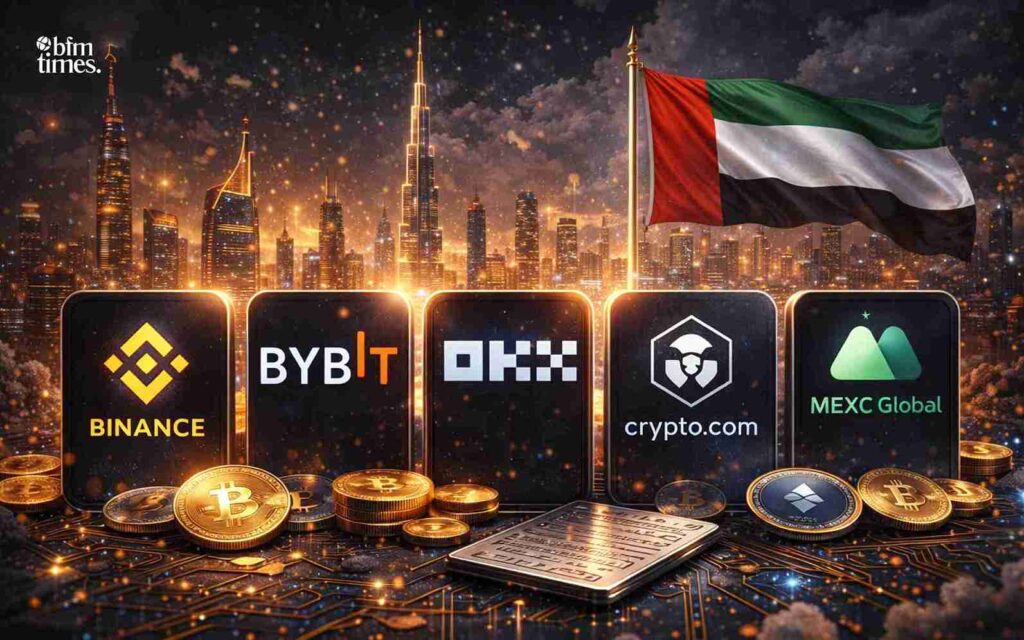
Popular crypto exchanges for UAE users include Binance, Bybit, Rain, OKX, and BitOasis.
Are crypto exchanges legal in the UAE?
Yes, several crypto exchanges operate legally in the UAE under regulations from authorities like VARA and ADGM.
Which exchange is beginner-friendly for UAE crypto traders?
Rain and BitOasis are often considered beginner-friendly due to local regulation and easy AED deposit options.
Disclaimer: BFM Times acts as a source of information for knowledge purposes and does not claim to be a financial advisor. Kindly consult your financial advisor before investing.