


The question of whether Bitcoin would ever hit zero has been in existence ever since the first block was mined in 2009. Although the asset has grown to be a multi-trillion-dollar market, the hypothetical potential of an overall collapse is a debatable issue among economists, technologists, and investors. To know whether a zero scenario can still be possible in the year 2026, it is important to balance the structural safeguards that are currently in existence with the risks that might still destroy the network.
The Institutional Safety Net
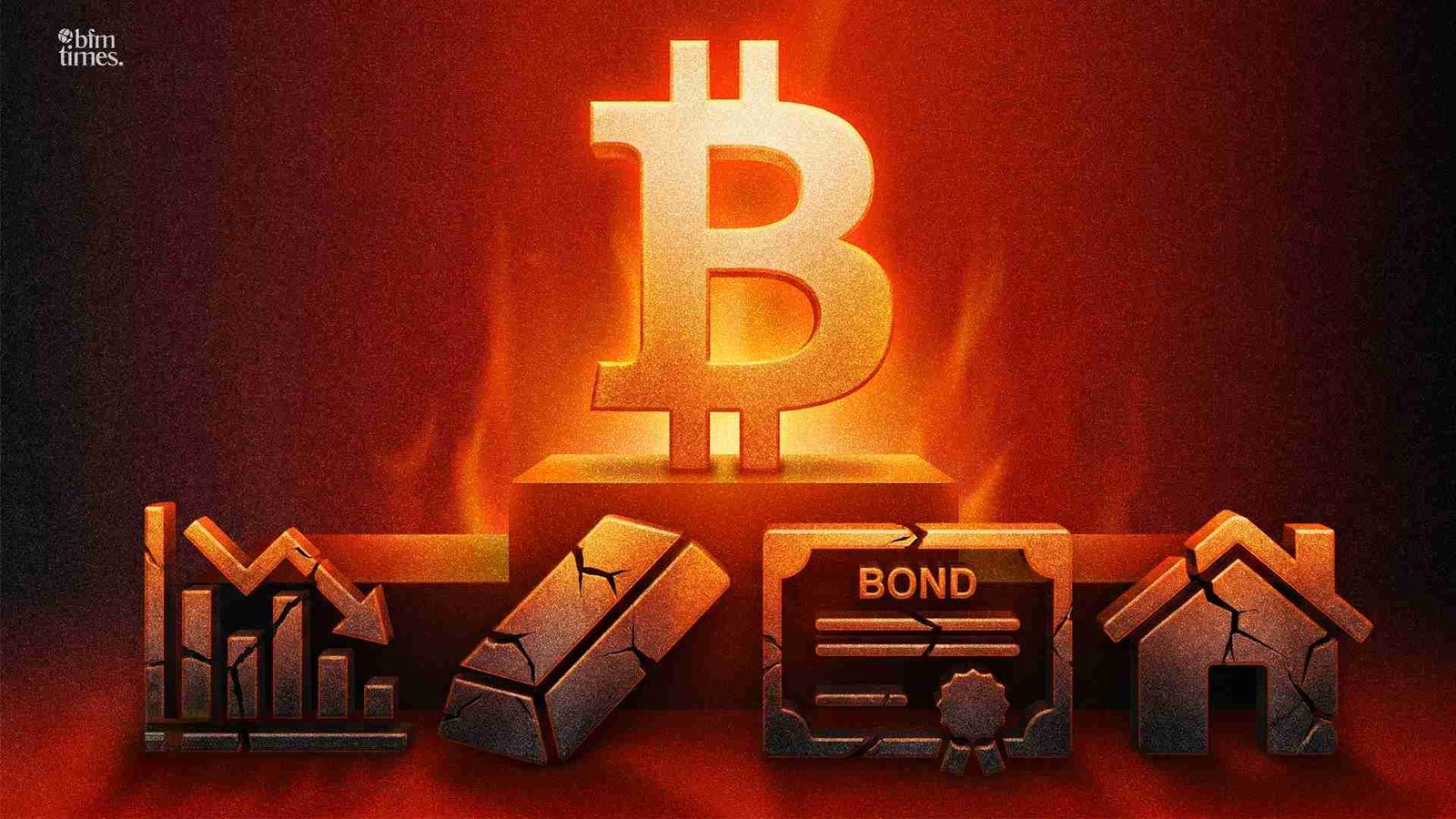
The institutionalization of BTC is one of the main factors that makes a crash to zero less and less probable. The current market is not only pegged by huge corporate treasuries and exchange-traded funds (ETFs) as opposed to the previous cycles, which were driven by retail speculation. Firms such as MicroStrategy have already acquired more than 1 percent of the entire supply, and BTC has become part of the retirement portfolio of millions of people in spot ETFs.
To reach zero, all these holders would have to sell, and most importantly, no new buyers would have to intervene at any price. A price decline to near-zero would probably cause a tidal wave of so-called dip-buying by high-net-worth individuals and nation-states that now consider Bitcoin as a form of digital gold in a market in which high-net-worth individuals and nation-states are now considering Bitcoin as digital gold.
The “Lost Supply” Factor
Bitcoin technically can never reach zero since a large part of its supply is technically taken out of the market. It is estimated that approximately 20 percent of all Bitcoin that has ever been mined is lost either through lost passwords, hardware that has been thrown away, or through the death of the owner. Since these coins will never be moved or sold, they will give a permanent ghost market cap. These stagnant coins would technically have a non-zero value on paper even if all the active traders dumped the asset.
The Critical Risks: Q-Day and Regulation
The way to zero is not closed completely despite these safeguards. Two black swan events that may ruin the value of the asset are commonly identified by analysts:
- The Quantum Threat: The biggest technical threat is the emergence of the so-called Q-Day, the day when quantum computers become powerful enough to crack the elliptic curve cryptography that secures Bitcoin wallets. In case a quantum breakthrough enabled bad actors to empty any wallet on demand, trust in the network would be gone in a flash, and the price would be driven to zero as the security premise is broken.
- Global Coordination: Although single bans (as in China) have not killed Bitcoin, a global crackdown by the G20 countries would suffocate the on-ramps and off-ramps to the point of irrelevance. By making it illegal to own or trade BTC in all the major economies, the utility of BTC as a financial instrument will be hampered.
Conclusion
Can Bitcoin crash to nothing? Theoretically, yes. It could be done by a complete cryptographic failure, or by an international ban that has never been seen before. Nevertheless, at the present adoption rate and the buy-the-dip mentality of the most enthusiastic proponents, a zero crash is no longer a market volatility issue. It would need the basic annihilation of the technology itself or the world’s internet. To the majority of investors in 2026, the question is no longer whether it will disappear or not, but “how much volatility can I bear?”
Frequently Asked Questions
What are ways to earn Bitcoin as passive income?
You can earn Bitcoin through methods like lending, staking, mining, or interest-earning platforms.
Is earning Bitcoin passively safe and reliable?
It can be profitable but involves risks like market volatility, platform security, and changing returns.
Do I need a large investment to earn Bitcoin passively?
No, you can start small, but higher investments usually generate better returns.
Disclaimer: BFM Times acts as a source of information for knowledge purposes and does not claim to be a financial advisor. Kindly consult your financial advisor before investing.