


The Web3 fundraising landscape will have achieved the successful transition of the speculative chaos of the early 2020s into a disciplined, institutionalized, and utility-driven Industrial Era by March 2026. The era of raising tens of millions of dollars on the basis of a sixteen-page whitepaper and a pseudonymous staff is practically in the past. Instead, they have developed an advanced ecosystem of venture capital (VC), decentralized physical infrastructure networks (DePIN), and real-world asset (RWA) tokenization that has established a stringent set of conditions in which the two most important terms in any founder pitch deck are traction and compliance.
- 1. The Macro State of Web3 Venture Capital in 2026
- 2. The Rise of High-Utility Verticals
- Decentralized Physical Infrastructure Networks (DePIN)
- Real World Asset (RWA) Tokenization
- The AI-Crypto Convergence
- 3. The Regulatory Filter: Compliance as a Competitive Advantage
- 4. Modern Fundraising Instruments: From SAFE to SAFE-T
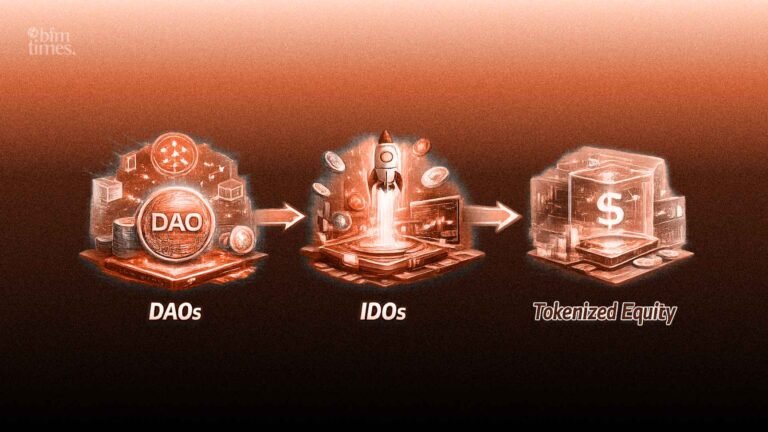
- 5. The Role of DAOs and Modular Funding Stacks
- Retroactive Public Goods Funding (RPGF)
- Quadratic Funding and Conviction Voting
- Sovereign DAO Treasuries
- 6. Geographic Shifts and the Global Talent War
- 7. Conclusion: The “Origination” Phase
- Frequently Asked Questions
Looking at the data of the first quarter of 2026, it is obvious that the total volume of deals has declined compared to the 2021 levels, but the quality and size of separate rounds have improved. Investors are no longer spraying and praying, but they are making high-conviction bets on projects that will bridge the digital ledger technology and the physical economy.
1. The Macro State of Web3 Venture Capital in 2026
The venture capital recovery, which started in late 2024, has become a stable growth period. As per the latest industry reports, Web3 venture funding in 2025 was about 7.9 billion dollars, which is a high increase of 44 percent compared to the year before. The inner workings of these deals have, however, changed. Total capital is on the increase, but the number of deals has reduced by almost a third. It means that there is a flight to quality, and the median size of a check in a seed round has increased to 5 million dollars.
At the beginning of 2026, the VC market is dominated by such giants as a16z, Paradigm, and Pantera, but they are gradually being followed by more traditional financial institutions. Banks and asset managers are not merely exploring blockchain anymore, but they are taking the lead in Series A and Series B rounds of startups that are developing financial infrastructure. The current market requires this crossover capital since it offers the regulatory and operational bridges that are required to on-chain trillions of dollars in traditional assets.
2. The Rise of High-Utility Verticals
The most successful startups that raise funds in 2026 will fall into three main categories: DePIN, RWA Tokenization, and Decentralized AI. These industries receive the greatest amount of venture attention due to their provision of so-called defensible value that does not rely on the volatility of the crypto market in retail.
Decentralized Physical Infrastructure Networks (DePIN)
DePIN is the star of the year 2026. These networks employ token incentives to organize the placement of physical hardware, e.g., GPU clusters, wireless hotspots, or energy sensors. In the case of VCs, it is the so-called DePIN Flywheel effect: token incentives will bring hardware providers, which will enhance network coverage, which will bring paid usage, which will then generate value back into the token to finance further growth.
Median funding rounds of 70 million to 112 million dollars are being seen in startups in the compute space, such as those offering decentralized GPU rendering or AI training modules. These are seen as infrastructure plays and not speculative bets by the investors. This capability to identify thousands of active hardware nodes around the world offers some form of proof of work that is difficult to duplicate by traditional software startups.
Real World Asset (RWA) Tokenization
The securitization of stocks, bonds, and real estate has ceased to be a pilot project and has become a regular financial product. By 2026, the intertwining of TradFi and DeFi will be finished. Large fund managers such as BlackRock and WisdomTree are currently settling intraday on blockchain rails and automatically redeeming. Web3 startups that enable this process, such as secure custody, compliant on-ramps, or fractionalization protocols, are the most desirable acquisition or late-stage financing targets.
The combined market capitalization of DePIN and RWA tokens has already reached 25 billion dollars this year. This expansion is motivated by the fact that on-chain assets decrease the cost of the back-office and expand the liquidity across the globe. The founders operating in this area should be highly skilled in smart contract security and conventional securities law.
The AI-Crypto Convergence
Assuming that 2023 is the year of AI hype, 2026 is the year of AI execution on the blockchain. Investments are flooding into decentralized AI model markets and privacy-sensitive machine learning. One such hot trend is the so-called AI Agent economy. VCs are supporting startups that develop systems to allow autonomous on-chain agents to negotiate, trade, and execute smart contracts without human involvement. Such agents need decentralized compute and Know Your Agent (KYA) protocols, which form a huge secondary market in terms of infrastructure funding.
3. The Regulatory Filter: Compliance as a Competitive Advantage
The regulatory environment is no longer gray in 2026. It is a filter. The introduction of the Markets in Crypto-Assets (MiCA) regulation by the European Union has completely transformed the playbook of fundraising. Any Europe-based startup aiming to raise funds or launch a token now has to comply with a rigid whitepaper format, disclosure policies, and governance policies.
In the same way, in the United States, the introduction of the so-called CLARITY Act and later SEC regulations have necessitated the distinction between the so-called utility tokens and security tokens. This implies that compliance is no longer a post-thought to founders. A large part of seed-stage financing is currently directed towards legal architecture. It is hard to imagine that investors will ever sign a term sheet in 2026 without having a detailed legal opinion by a leading crypto-native law firm.
The choice of jurisdiction has also been turned into a strategic decision in funding. The Crypto Valley in Switzerland, the Virtual Assets Regulatory Authority (VARA) in Dubai, and the Monetary Authority in Singapore have emerged as the places where startups prefer to be regulated. Startups that are located in such jurisdictions are usually in a better position to raise institutional capital since the legal rules of the road are well spelled out.
4. Modern Fundraising Instruments: From SAFE to SAFE-T
The legal documents that are used in raising money have also changed. Whereas the Simple Agreement for Future Equity (SAFE) is the norm in traditional tech, in 2026, the Web3 startups use virtually nothing but the SAFE-T (Simple Agreement for Future Equity and Tokens).
The SAFE-T will solve the token-equity tension that characterized previous startups. It enables investors to get equity in the development company and, at the same time, have a warrant to a pro-rata share of any future tokens issued by the protocol. This design is such that the interests of the investors are harmonized in both the traditional corporate entity and the decentralized network.
Moreover, there is the emergence of the so-called Revenue Sharing Smart Contracts, which are an alternative non-dilutive funding. Existing on-chain revenue startups can tokenize a share of their future revenue to raise capital in the present without equity or a highly speculative utility token. This has been especially popular in the DeFi and DePIN industries, where cash flow can be predicted and programmed.
5. The Role of DAOs and Modular Funding Stacks
The participation of communities in terms of funding has also grown. Modular Funding Stacks have been adopted in place of the ICO era of 2017 and the Liquidity Mining craze of 2020. Instead of a single large sale to the public, 2026 startups combine mechanisms to raise their treasury.
Retroactive Public Goods Funding (RPGF)
Massive programs of retroactive grants are now run by ecosystems such as Ethereum, Solana, and Optimism. The startups that develop the needed infrastructure or tools for the community may get millions of dollars in funding once they have demonstrated their usefulness. This rewards-based system has played a big role in alleviating the pressure on founders at an early stage to prematurely monetize.
Quadratic Funding and Conviction Voting
Community-based funding systems are more advanced. Evaluation tools based on AI have been incorporated into projects such as Gitcoin to exclude the so-called Sybil attacks (fraudulent accounts). This can be more democratically shared capital, with small donations by many users being matched by big matching pools by foundations and VCs.
Sovereign DAO Treasuries
Numerous developed Decentralized Autonomous Organizations (DAOs) are now venture funds of their own. These DAOs are involved in seed and private rounds of startups that intend to develop in their ecosystem, with treasuries frequently containing hundreds of millions of dollars in stablecoins and native assets. This not only gives startups access to capital, but it also gives them an in-built user base and instant technical integration.
6. Geographic Shifts and the Global Talent War
Funding in 2026 is truly global. According to a recent report about the Indian Web3 landscape, growth-stage capital is coming back to emerging markets at record levels. India, Southeast Asia, and Latin America are no longer simply the outsourcing centers; they are the centers of innovation of mobile-first Web3 applications.
Zurich and Berlin have become the leading startups in Europe where Deep Tech and AI-Web3 are concerned. Talent and capital have been in a vicious cycle due to the proximity to world-class research centers such as ETH Zurich and the practical Swiss DLT Act.
In the meantime, the United States is the leader in the late-stage “Mega Round. Although the regulatory environment of the past years has been highly regulated, the richness of the US capital markets and the existence of the largest asset managers in the world make New York and San Francisco the most important exit points of Web3 companies.
7. Conclusion: The “Origination” Phase
In 2026, Web3 funding is no longer centered on the idea of Tokenization, but on the concept of Origination. Not just placing an existing asset on a blockchain is insufficient anymore; the most valuable startups are the ones that build new kinds of assets and services that cannot exist in a centralized world.
The days of investing by the story are over. Instead, it has an orderly marketplace that rewards technical profundity, regulatory preparedness, and practical utility. In the case of founders, the way to fund in 2026 is a Compliance-First attitude and a solution to a real-world issue. To investors, the prospect is to support the infrastructure of a new global economy that is quicker, clearer, and more inclusive than the one it substitutes.
The capital is there. The technology is ready. The regulations are set. The remaining task is to be constructed by the next generation of founders.
Also Read: BFM Times Launches at AAFT Noida Film City, Unlocking Web3 Opportunities for Creators
Frequently Asked Questions
What are ways to earn Bitcoin as passive income?
You can earn Bitcoin through methods like lending, staking, mining, or interest-earning platforms.
Is earning Bitcoin passively safe and reliable?
It can be profitable but involves risks like market volatility, platform security, and changing returns.
Do I need a large investment to earn Bitcoin passively?
No you can start small but higher investments usually generate better returns.
Disclaimer: BFM Times acts as a source of information for knowledge purposes and does not claim to be a financial advisor. Kindly consult your financial advisor before investing.