


- Introduction of MemWal (Walrus Protocol): MemWal, a special-purpose persistent memory layer, formally introduces a solution to the gap between stateless AI models and autonomous agents.
- Fragmentation: The existing AI systems have a problem of memory fragmentation, where the context is lost between sessions or is spread across unstructured logs; MemWal provides a structured and persistent container of such information.
- Decentralized Architecture: It is a decentralized architecture, which is founded on the Walrus storage protocol and the Sui network, whereby the memory is verifiable, portable, and controlled by its owner.
- Efficiency Gains: With a specialized memory layer, developers can obtain lower token costs, as it is not necessary to re-feed the entire conversation histories into the prompts of LLM.
- Multi-agent collaboration: MemWal allows multiple AI agents to work together in a common memory space and perform complex and coordinated workflows without data silos.
The End of AI Amnesia: Why the New Memory Layer of MemWal is Repairing Fragmented Reasoning
Artificial Intelligence has a memory issue. Although Large Language Models (LLMs) such as GPT-4 and Claude can think in an incredible way, they are stateless. Each time a new session is launched, the AI forgets who you are, what you talked about yesterday, and the details of your particular project unless they are once again typed into its context window. This is what is referred to as memory fragmentation and has become the major bottleneck for developers creating enterprise-grade AI agents.
- The End of AI Amnesia: Why the New Memory Layer of MemWal is Repairing Fragmented Reasoning
- What is AI Memory Fragmentation?
- Technical Architecture: Walrus and Sui Connection
- Real-World Applications: Code Review to Multi-agent Systems
- Background: The Memory Wall within the AI Industry
- Frequently Asked Questions
On March 25, 2026, Walrus Protocol introduced MemWal, a groundbreaking persistent memory layer that will resolve this crisis. By offering a decentralized, verifiable, and long-term storage platform, MemWal aims to make AI an ongoing, living intelligence, rather than a collection of discrete, verifiable, and long-term memory retrievals.
What is AI Memory Fragmentation?
With modern AI, fragmentation happens when essential information is divided into different storage silos or simply lost due to the fact that it is beyond the model’s context window. To maintain an AI, developers frequently employ a method known as RAG (Retrieval-Augmented Generation). But in most cases, standard RAG considers data as fixed documents, not dynamic memories.
When an agent is working on a complex task, such as managing a data pipeline or market research, it produces reasoning traces and checkpoints. In conventional systems, these are usually discarded or saved in unstructured logs that cannot be navigated easily by the AI. MemWal substitutes these fragmented bits with Structured Memory Spaces, in which agents are able to recall, share, and reuse information with surgical accuracy.
Technical Architecture: Walrus and Sui Connection
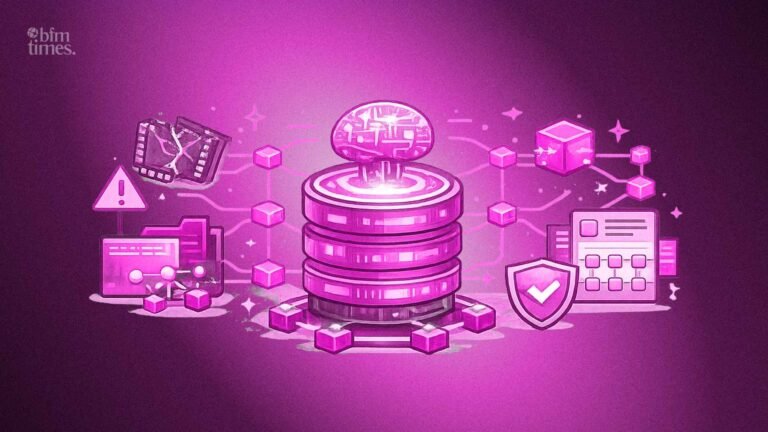
MemWal is a high-tech interface between the physical storage and the AI agent. It uses the Walrus Protocol to provide high-throughput data persistence and the Sui Network to provide ownership and access control.
The system is provided through a relayer SDK and a backend. When an AI agent is communicating with a user, the MemWal SDK will extract salient facts and place them in durable, purpose-built containers. Due to its decentralization, the memory is not confined to a database of one provider. This Enterprise-grade model will guarantee that, in case of a system failure, the agent will be able to restart at the point at which it was last verified on the blockchain.
Real-World Applications: Code Review to Multi-agent Systems
With the introduction of MemWal, a new generation of “always-on” AI systems is possible.
- Constant Code Review: A code-review agent can now keep watching a repository over months, recalling bugs it marked previously and changing its suggestions according to the particular coding habits of a team over time.
- Restartable Data Pipelines: When a data transformation agent fails in the middle of a large job, MemWal can restart it without re-executing the entire dataset, which saves thousands of dollars of compute cost.
- Collaborative Intelligence: In a multi-agent system, one agent is able to collect feedback while another analyzes it, both drawing from a common MemWal memory pool. This generates compounding intelligence such that information is never misplaced in the hand-off between models.
Background: The Memory Wall within the AI Industry
The long-standing debate in the industry is the so-called Memory Wall—the widening divide between the speed at which fast processors (GPUs) can run and how fast they can access data.
Although hardware vendors such as NVIDIA and MemVerge are addressing the physical memory wall, software-defined memory layers such as MemWal and its rivals (such as Mem0 or Letta) are addressing the Cognitive Memory Wall. With the commoditization of AI models, the lock-in of enterprises is no longer on the model but on the memory layer. The one with the most precise, stable, and well-structured memory of the operations of a company will be the most powerful in the next stage of the AI revolution.
Frequently Asked Questions
Is MemWal simply a vector database?
No. Although it may be used with semantic search in conjunction with vector stores, MemWal is an all-inclusive memory engine.
What is the benefit of this in terms of token costs?
MemWal does not send the final 50,000 tokens of a conversation to an LLM (this is costly and time-intensive), but instead only the relevant, specific memories required by the current prompt. This can decrease the use of tokens by 90 percent.
Is it possible to use MemWal with any AI model?
Yes. MemWal is model-agnostic. It is an independent layer that is placed between your agent logic (with GPT, Claude, Llama, etc.) and the storage protocol.
What is the meaning of MemWal being decentralized?
The data is stored in a distributed network since it is based on Walrus and Sui. This eliminates vendor lock-in and gives a transparent and verifiable audit trail of the manner in which the memory of an agent has changed over time.
Disclaimer: BFM Times acts as a source of information for knowledge purposes and does not claim to be a financial advisor. Kindly consult your financial advisor before investing.