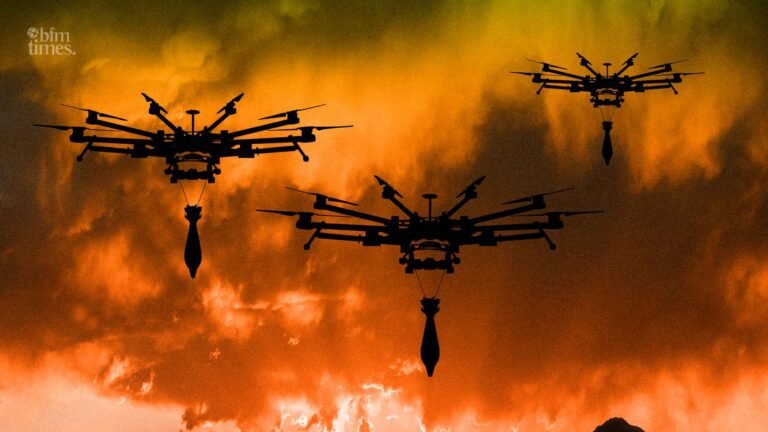
Pointwise Summary
- Rapid Acceleration: The global military powers are shifting from one remotely operated drone to the next stage of completely autonomous swarm drones.
- The “Drone Dominance” Strategy: The Pentagon has announced a $1.1 billion plan to buy 30,000 one-way attack drones. The plan is to take the Replicator program to the next stage.
- China’s “Atlas” Breakthrough: On March 25, 2026, China Electronics Technology Group Corporation announced the achievement of the “full process” autonomous attack with one operator controlling 96 drones with the Swarm-2 vehicle.
- The Kill Chain Revolution: The latency between detecting an enemy and making the decision to strike them has gone from minutes to just seconds with the aid of AI tech integration into the “kill chain”.
- Edge of Mastery: The experts believe that the only thing left to be perfected is the decentralized communication in GPS-denied conditions.
In-Depth Title: Algorithmic Attrition: How AI-Powered Swarms are Rewriting the Rules of Modern Combat
The character of warfare is evolving at a speed that has taken even the most seasoned defense experts by surprise. A new comprehensive military report issued this week reveals the definitive shift in global military strategy. The age of the solitary drone pilot is behind us; the age of the autonomous swarm is upon us.
The “algorithmic superiority” challenge has emerged as the key priority for the US, China, and Russia, according to the latest military intelligence available up to March 2026. This latest iteration of drones is distinguished by the absence of the need for continuous human intervention. Instead, the “swarm intelligence” algorithms, inspired by the patterns of biological organisms such as bee colonies and schools of fish, enable the drones to strike in concert.
The Industrial Scale of Attrition
The scale of this transformation is evident in figures. The ongoing conflict in Ukraine is witnessing an operational tempo that is at fever pitch. It is reported that by early 2026, drone operations will have exceeded 250,000 per month. This is creating a totally new paradigm in the defense industry. Rather than relying on high-cost manufacturers, governments are now awarding “software first” contracts to companies that specialize in edge computing and neural processing units.
According to industry analysts, there is now more focus on the “brain” of the drone than on the airframe. The ability to produce thousands of drones that can be used without needing a satellite connection is now more valuable than stealth.
China’s “Atlas” and Swarm-2 Launch Vehicle
China has recently rolled out its “Atlas” management system, based on the Swarm-2 ground combat vehicle. The vehicle, a mobile launcher, can launch up to 48 fixed-wing drones, launching them at three-second intervals. According to reports from CCTV News on March 25, 2026, a single command vehicle can control up to 96 drones.
Tests of the Atlas system have shown that the drones, in a “full process” autonomous manner, can conduct a coordinated reconnaissance, identify a specific command vehicle from several visually similar targets, and then conduct a coordinated strike. Such a level of coordination, where drones can share information and alter course in mid-air to avoid collisions, while maintaining a formation, represents a significant leap in “system-level” combat.
Pentagon’s “Drone Dominance” Response
Rest assured, the United States is not idle. The Pentagon’s “Drone Dominance” program, a progression of the original “Replicator” program, aims to “swamp” the battle area with “attritable” drones. In March 2026, the Pentagon announced plans to commit $1.1 billion to the program, to be carried out within 18 months, starting with a procurement of 30,000 attack drones for $5,000 apiece.
“The kill chain has shortened enormously,” says Frank Sauer, an AI expert from the University of the Bundeswehr. “Whereas before, evaluation and engagement would take hours or minutes, today it’s only a matter of seconds. In that environment, a machine will always decide before a human can even think of acting.” The U.S. Navy and Air Force are currently testing ‘collaborative combat aircraft’ that may serve as loyal wingmen for manned fighter jets, allowing a single pilot to control a swarm of drones.
The Final Technical Hurdle
While progress is being made at a rapid pace, according to the report, both sides have not “fully mastered” the technology. The main hurdle is still “decentralized edge autonomy.” In a high-intensity conflict, the enemy’s electronic warfare will jam all the GPS and satellite communications. To be effective, the swarm must be able to think locally among themselves without having to “call home” to a central server.
Companies like Palladyne AI and Draganfly have recently announced milestones in “Decentralized Edge Collaborative Autonomy” (DECA), which enables drones to rearrange formation if a “teammate” is shot down. This is known as having “self-healing” in the middle of a jammed environment. This is the “holy grail” of modern autonomous warfare.
Context: The Geopolitical Stakes
The motivation for AI swarms is the imperative of “mass.” In any coming conflict in the Taiwan Straits, the ability to blanket the area with thousands of inexpensive sensors and projectiles could make conventional naval and air defenses irrelevant.
The military drone market is estimated to reach $22.8 billion by 2030. However, the real value is in the software and “embedded AI” that allows for decision-making. As was made clear in the latest spate of defense white papers, the winner of the next war will be the one with the most advanced algorithms, not the one with the most hardware.
Also Read: Best AI Automation Tools for Marketing & Sales in 2026
Frequently Asked Questions
What is a “drone swarm” exactly?
A group of several unmanned aerial vehicles (UAVs) that coordinate together in a swarm via AI to accomplish a mission, like overwhelming an air defense system or searching through a wide area.
Does a human still have to “pull the trigger”?
This is at the heart of an ongoing heated debate. However, due to the speed at which these swarm attacks are conducted, many militaries are moving towards “man on the loop” technology, whereby the drones operate autonomously unless human intervention is provided.
How do you stop a drone swarm?
Counter UAS (Unmanned Aircraft System) technology is an increasingly important market. High-energy lasers, high-power microwave bursts that disable electronics, and “interceptor” drones that ram or net enemy UAVs are available.
Is this technology currently being used in any of the ongoing wars?
We are seeing “proto swarms” in the Ukraine conflict, where dozens of drones are used in a single wave. However, this is still not a swarm where drones “talk” to each other. That kind of swarm is currently in the advanced testing phase of all the major world powers.
Which country is currently winning the race?
It’s a toss-up. The Americans are currently leading in high-end software and AI investments, but the Chinese are leading in manufacturing capabilities, where they can produce hundreds of thousands of airframes for a lower cost.
Disclaimer: BFM Times acts as a source of information for knowledge purposes and does not claim to be a financial advisor. Kindly consult your financial advisor before investing.