




Legal practice is being reshaped by technology in ways that were hard to predict even five years ago. The days when lawyers needed to work long hours analyzing information have gone forever. Thanks to AI legal research tools, the process of research has undergone a revolution. Advanced technology allows using AI research tools to conduct efficient research in several minutes. Moreover, it will increase the effectiveness of research because such tools offer high precision of results. Recently, lawyers started using AI legal research tools actively. Law firms have embraced these tools widely.
- What Are AI Legal Research Tools?
- Why Are Lawyers Switching to Legal AI Software?
- Which Are the Top AI Legal Research Tools in 2026?
- What Key Features Should You Look for in AI Legal Tech?
- Who Should Use Each AI Legal Research Tool?
- What Is the Difference Between Free & Paid AI Legal Research Tools?
- How AI Legal Automation Is Changing Daily Legal Work?
- Are AI Law Research Tools Safe to Use?
- Are AI Law Research Tools Safe to Use?
- Conclusion
- Frequently Asked Questions (FAQs)
In this article, readers will gain insights into the Best AI Legal Research Tools in 2026 featured on BFM Times.
What Are AI Legal Research Tools?
These are purpose-built software solutions designed to harness the full power of artificial intelligence for legal work. With their help, lawyers can conduct quick and effective research of case laws, regulations, and statutes. It isn’t required to formulate queries through the use of complicated Boolean expressions; you just need to ask the question in plain English. It will be processed through natural language processing technology and receive a precise answer.
Besides, it helps to analyze the decision and identify problems. Hence, lawyers will need less effort to complete their work.
These software programs make use of technologies such as NLP, AI, and machine learning. These technologies allow processing legal questions. Also, it will assist in creating a legal document and citing it.
Why Are Lawyers Switching to Legal AI Software?
It means that they are specialized software programs that utilize the capabilities of artificial intelligence. With their help, lawyers can conduct quick and effective research of case laws, regulations, and statutes. It isn’t required to formulate queries through the use of complicated Boolean expressions; you just need to ask the question in plain English. It will be processed through natural language processing technology and receive a precise answer.
Besides, it helps to analyze the decision and identify problems. Hence, lawyers will need less effort to complete their work.
These software programs make use of technologies such as NLP, AI, and machine learning. These technologies allow processing legal questions. Also, it will assist in creating a legal document and citing it. The same AI automation principles driving legal work are also transforming hiring, as seen in how firms now approach candidate shortlisting with AI
Which Are the Top AI Legal Research Tools in 2026?
| Tool | Best For | Key Feature | Pricing Level |
| Lexis+ AI | General legal research | Conversational AI with citations | Mid to High |
| Westlaw Edge | US litigation | Natural language + analytics | High |
| Harvey AI | Large law firms | Contract analysis at scale | Enterprise |
| Casetext CoCounsel | Mid-market firms | Research memos + deposition prep | Mid |
| Bloomberg Law | Corporate & tax law | Financial legal analytics | High |
| LEGALFLY | In-house legal teams | 60+ jurisdiction coverage | Mid |
| Fastcase | Budget-conscious lawyers | Basic AI research | Free/Low |
1. Lexis+ AI
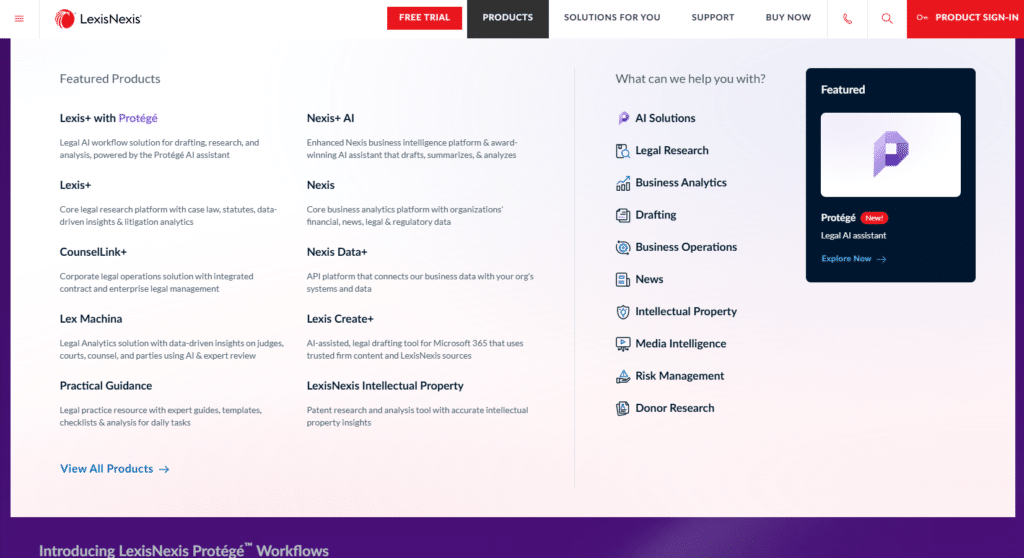
Lexis+ AI leverages the existing Lexis research platform & adds an intuitive conversational layer, allowing lawyers to ask legal questions in natural language & get accurate results supported by citations in actual legal precedents. It is created specifically for legal professionals looking for speed & is constrained to a trustworthy database of research materials. It also introduces Protégé Legal AI, a model with a trained legal perspective.
Best For: General Legal Research & Case Law Analysis
Key Highlight: Conversational AI with verified citations from a trusted legal database.
Ideal Users: Solo practitioners, mid-size firms & large law firms.
Visit Website:lexisnexis.com
2. Westlaw Edge
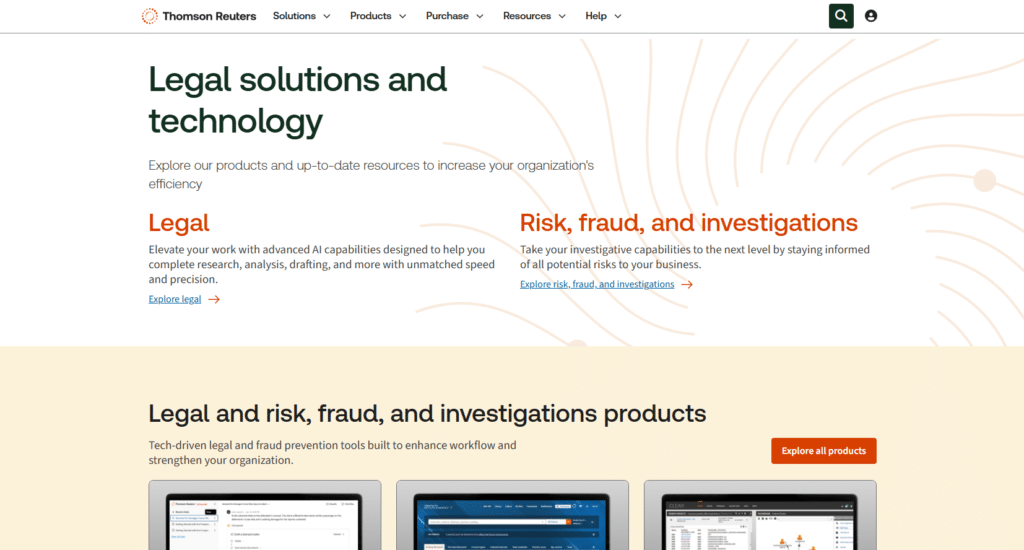
Westlaw Edge is still the gold standard when it comes to litigation research in the US. It combines an extensive database of legal information with an advanced AI layer that helps users find the answers they need fast. Westlaw Edge is a must-have for any US law firm or legal department looking for efficient litigation.
Best For: US Litigation & Case Law Research
Key Highlight: Natural language search with deep US federal & state court coverage.
Ideal Users: Litigators, trial lawyers & law firms focused on US courts.
Visit Website:legal.thomsonreuters.com
3. Harvey AI
Harvey AI is closest to an artificial intelligence attorney that the market has seen in 2026. It is an extensively fine-tuned model designed to perform a wide variety of tasks, including contract analysis, due diligence, regulatory research & document drafting. This is the best tool to use when you have a large number of contracts, as you can analyze an entire deal room for clauses simultaneously. Teams looking to go beyond research will also find value in dedicated AI tools for legal drafting
Best For: Large Law Firms & Enterprise Legal Teams
Key Highlight: Jurisdiction-aware drafting & bulk contract risk analysis at scale.
Ideal Users: Am Law 100 firms, in-house enterprise teams & corporate legal departments.
Visit Website:harvey.ai

4. Casetext CoCounsel
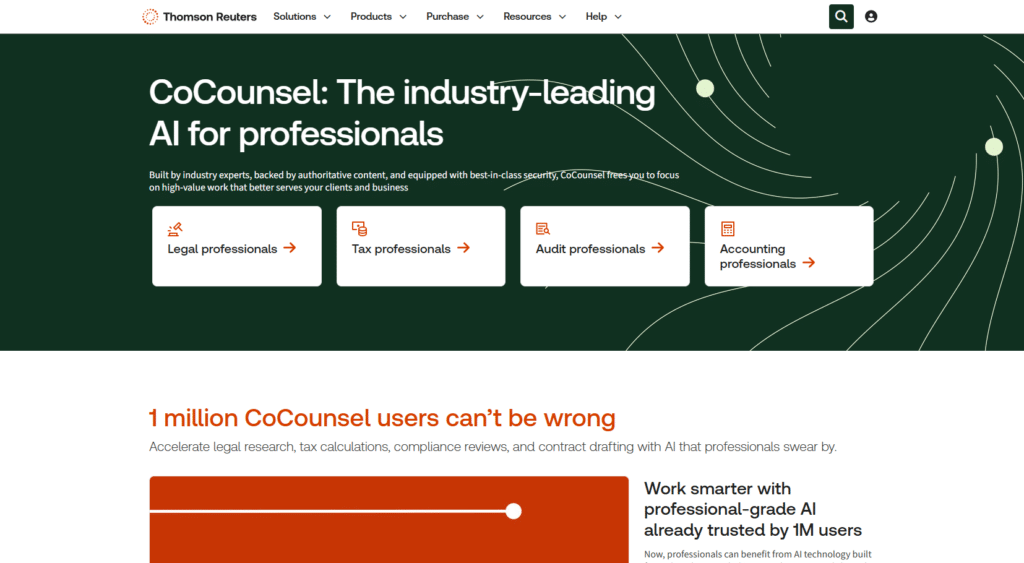
As an AI research assistant, CoCounsel can generate accurate answers to complex questions, provide cited legal research, contract reviews & deposition summaries. Casetext CoCounsel puts capable AI legal research at reach for mid-market legal firms with an affordable subscription.
Best For: Mid-Market Firms & Research-Heavy Practices
Key Highlight: AI-generated research memos with full citations & deposition summaries.
Ideal Users: Mid-size law firms, litigation teams & in-house counsel on moderate budgets.
Visit Website:casetext.com
5. Bloomberg Law
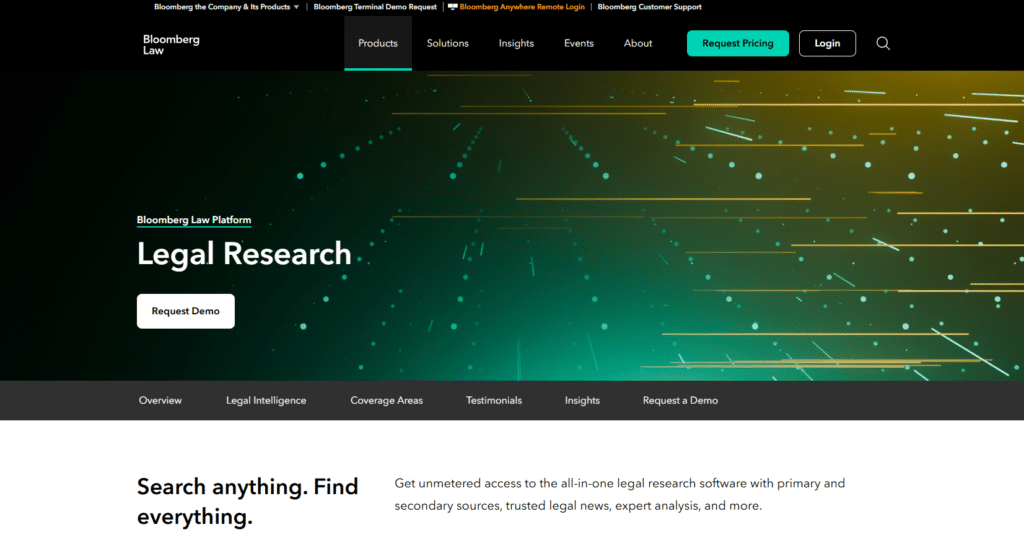
Bloomberg Law is a premium AI research tool focused on providing financial law analysis & research for corporate & tax lawyers. This platform is designed for attorneys working in finance & other economic legal domains.
Best For: Corporate, Tax & Financial Legal Research
Key Highlight: Financial & regulatory analytics combined with deep legal research databases.
Ideal Users: Corporate lawyers, tax attorneys & compliance professionals.
Visit Website:bloomberglaw.com
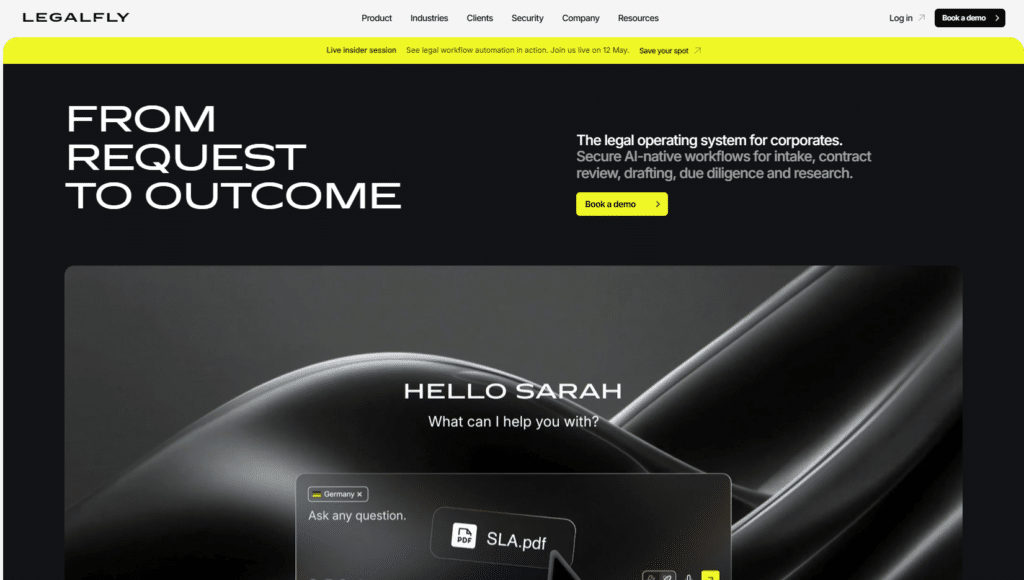
6. LEGALFLY
LEGALFLY directly connects to 500+ official sources & legal publishers & generates insights based on verified legal texts & commentary from barristers. It accesses its pre-built knowledge collections through case law, statutory laws, regulations, & legislation in 60+ jurisdictions. This makes LEGALFLY a perfect fit for in-house legal teams working in international settings.
Best For: In-House Legal Teams & Cross-Border Work
Key Highlight: 60+ jurisdiction coverage with full source transparency & verified legal data.
Ideal Users: In-house legal teams, multinational companies & international law practices.
Visit Website:legalfly.com
What Key Features Should You Look for in AI Legal Tech?
Not every tool suits every firm. You should choose a platform with features that meet your legal department’s needs. The following are some things to consider before selecting an AI legal tech solution.
- Database Coverage – Make sure the platform covers federal, state & specialty courts, as well as provides access to the latest statutory laws & regulations.
- Citation Accuracy – Make sure the platform covers federal, state & specialty courts, as well as provides access to the latest statutory laws & regulations.
- Data Privacy – The AI solution should be able to protect confidential information belonging to the client. Never use it for model training without client consent.
- Integration – The best platforms come with integration tools for linking to case management software.
- Natural Language Search – The search function should allow the user to use regular language to make queries rather than a set of complicated search strings.
Who Should Use Each AI Legal Research Tool?
The selection of appropriate tools depends on the specific type of lawyer and the firm in which it operates.
- Solo Practitioners – For such lawyers, tools like Fastcase and AI Lawyer are the best fit. These tools are affordable and user-friendly; they have minimal learning requirements, and they cover the basics.
- Small to Mid-Size Law Firms – Casetext CoCounsel will be the best tool in this situation. The tool is capable of handling research memos and deposition preparation, among other things. It can also conduct thorough research within a mid-range budget.
- Large Law Firms and Enterprise Teams – Harvey AI is meant for such users. This AI tool is geared towards bulk contract analysis and research spanning multiple jurisdictions. Firms at this scale are also increasingly exploring the broader benefits AI brings to law firm operations
- In-house Legal Teams – LEGALFLY will be the top choice here. The tool covers over sixty countries and integrates seamlessly with legal databases for accurate data retrieval.
- Litigation Lawyers – Westlaw Edge will be the optimal AI legal research tool for such lawyers. This AI-powered platform boasts one of the largest databases for US case law research; it offers an intuitive natural language interface.
- Corporate and Tax Lawyers – Bloomberg Law will meet the needs of such lawyers. The tool is focused mainly on financial law and its regulations.
What Is the Difference Between Free & Paid AI Legal Research Tools?
Both types of tools are available, and each fulfills different purposes.
Free Tools – Fastcase will be the most popular free tool among those that have been reviewed here. Access to this platform can be gained through different bar associations in the United States. This free tool offers basic case law research capabilities. However, the platform’s data coverage is limited compared to its competitors; it also lacks the AI capability of document preparation.
Paid Tools – In this category, we have platforms like Harvey AI, Westlaw Edge, and Lexis+ AI.
| Feature | Free Tools (e.g. Fastcase) | Paid Tools (e.g. Harvey, Westlaw) |
| Database Coverage | Basic | Comprehensive |
| AI Features | Limited | Advanced |
| Citation Verification | Manual | Automated |
| Contract Analysis | Not Available | Available |
| Data Privacy | Basic | Enterprise-Grade |
| Best For | Solo / Students | Firms of All Sizes |
The right choice depends on your budget & the complexity of your legal work.
How AI Legal Automation Is Changing Daily Legal Work?
Legal AI automation is changing every aspect of legal practice, making tasks more efficient & accurate. Document review becomes much easier when the lawyer asks about it. Automated contract analysis saves hours, as does fast research, which now takes less than an hour instead of an entire day.
Using AI to scan numerous documents at once, finding relationships, discrepancies & potential compliance issues & marking up the results is invaluable. It helps the lawyer to ask about information of interest & review documents using saved templates, saving countless hours of tedious work.
By automating such tasks, AI makes more room in the schedule for strategy planning and client interaction. This mirrors what is happening across industries — for instance, AI-powered workflow automation tools are helping professionals in every sector reclaim time for high-value work.
Are AI Law Research Tools Safe to Use?
This is a question any lawyer or law firm needs to ask before adopting legal AI research tools. The simple answer is yes, with a degree of responsibility. Legal professionals need to verify the outputs generated by such solutions, check citations manually, ensure the privacy of information, oversee processes & treat AI as a helper tool.
Using AI for anything else could cause problems with ethical standards.
Are AI Law Research Tools Safe to Use?
Legal AI automation tools are here to stay & will only keep growing. AI legal research tools help surface information much faster, cut down manual review & free up lawyers’ schedules so they can spend more time talking to clients. The legal professionals adopting these AI law tools now will be ahead of others in the next few years.
Conclusion
The legal industry in 2026 runs on speed, accuracy & efficiency. AI legal research tools deliver all three. They help lawyers cut research time, reduce errors & focus on high-value work. Whether you are looking for the best legal AI software for a large firm or a solo practice, there is a tool built for your needs. The comparison table & details shared in this blog make it easier to decide. The best time to adopt these AI legal research tools is right now. The firms that move fast will lead the future of legal practice.
Also Read: How AI Helps in Candidate Shortlisting
Frequently Asked Questions (FAQs)
What are the best AI legal research tools in 2026?
The best AI legal research tools in 2026 include Lexis+ AI, Westlaw Edge, Harvey AI, Casetext CoCounsel, Bloomberg Law & LEGALFLY. Each platform offers unique features suited for different types of law firms & legal teams.
Can AI legal research tools replace lawyers?
No, AI legal research tools cannot replace lawyers. They support legal professionals by automating repetitive tasks & improving research speed. The final judgment, strategy & client interaction still require human expertise & ethical responsibility.
Are AI tools for lawyers safe for confidential data?
Most leading AI tools for lawyers use strong data encryption & privacy protections. It is still important to verify each platform’s privacy policy. Firms should ensure client data is not used for AI model training without proper consent.
Disclaimer: BFM Times acts as a source of information for knowledge purposes and does not claim to be a financial advisor. Kindly consult your financial advisor before investing.