




Key Insights
- Startup Efficiency: Hyperliquid, a decentralized exchange (DEX), is said to have earned more than $900 million in profit in 2025.
- Lean Operations: The platform achieved this with a lean staff of just 11 employees, a world record in terms of profit per employee.
- Independence: Founder Jeffrey Yan notoriously turned down a $100 million venture capital financing to retain 100% community and founder control.
- Market Impact: The protocol has a market share of 37% in the decentralized perpetuals market, competing with large centralized players.
- Innovative Model: In addition to crypto, the platform has also been extended to 24/7 trading on the S&P 500, gold, and crude oil.
The classic startup playbook indicates that to become a billion-dollar company, you must have hundreds of employees, giant office complexes, and venture capital rounds. Jeffrey Yan has just demonstrated that theory wrong. His decentralized trading platform Hyperliquid, which he established only three years ago, has become one of the most lucrative organizations on the planet per capita. The startup, which only had 11 people on a skeleton crew, is said to have made a profit of more than $900 million in 2025.
To put that into perspective, Hyperliquid is making about $81 million in profit per individual on the payroll. This degree of productivity is unimaginable in Silicon Valley, as well as in the traditional financial capitals of London or New York. The success has caused ripples in the fintech sector. Yan has created a system capable of handling trillions of volumes without the bulky infrastructure of a traditional bank.
The Architect of the Code
Jeffrey Yan is not your typical crypto founder. Yan is a former gold medalist at the International Physics Olympiad and a Harvard graduate who started his early career at Hudson River Trading (HRT), an elite high-frequency trading firm. It was here he learned the art of low-latency systems and market-making strategies. When FTX failed in late 2022, Yan perceived a market vacuum for a high-performance, transparent, and decentralized alternative.
Yan and colleagues came up with Hyperliquid, which functions on a Layer 1 blockchain known as HyperBFT in a highly secured, custom-built office based in Singapore. In contrast to other decentralized exchanges that struggle with slow speeds and high “gas” fees, Hyperliquid was built to emulate the experience and feel of a centralized exchange such as Binance, but with the safety of user-owned funds.
Rejecting the $100 Million Check
Among the most striking moments in the Hyperliquid narrative is the rejection of external capital by Yan. Yan turned down a $100 million investment at a $1 billion valuation by the best venture capitalists. His argument was straightforward: in his opinion, VCs tend to create an illusion of progress and, in turn, become a scar on the network by prioritizing exits over users. Yan self-funded the project using the profits of his former trading company, Chameleon Trading, thus keeping Hyperliquid free of investor pressure. This enabled the team to execute a massive token airdrop of up to $16 billion to its users, which rewarded the community that genuinely used the platform rather than silent financial backers.
Beyond Bitcoin: The 24/7 Global Market
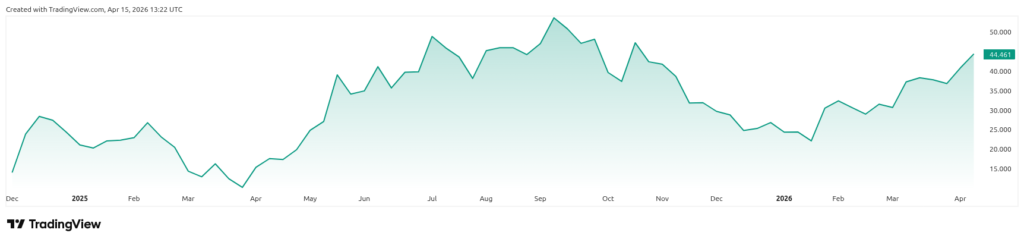
Unlike when Hyperliquid first emerged, it has diversified beyond being a crypto-based market. For example, the platform has introduced perpetual contracts for conventional instruments via its HIP-3. The S&P 500, Gold, and Crude Oil can now be speculated upon 24 hours a day, even on weekends when traditional stock markets are closed. By the end of March 2026, more than $840 million had been traded in oil-related contracts in 24 hours on the platform alone. This shift to “everything trading” implies that the long-term aim of Yan is not only to take control of crypto but also to disrupt the entire financial system of the world.
Earning Strategies in the Hyperliquid Protocol
For individuals wishing to get involved in this profit machine, the protocol provides a number of avenues other than mere speculation.
1. HLP Vaults (Protocol Liquidity)
The easiest way of making money from the platform involves depositing USDC in the Hyperliquid Liquidity Provider (HLP) vaults. These act as the market makers for the whole trading facility. In return for the provided liquidity, users receive a share of the total trading fees and market-making gains of the system.
2. Personal Vaults
The platform allows skilled traders to launch their individual copy trading vaults. When you are a successful trader, you can open a vault, and other users can add funds to your strategy. The vault creator usually retains 10% of the gains as a performance fee, which enables prosperous people to capitalize on their knowledge.
3. Token Staking and Airdrops
Staking HYPE tokens allows users to contribute to the network security and earn rewards. Moreover, the protocol has kept a large share of its token supply (almost 39%) to be used in the future by the community emission and rewards, so that active users can still be stakeholders in the development of the platform.
Frequently Asked Questions
Is Hyperliquid a centralized company or a DAO?
Although constructed by a small team, the platform runs on its own decentralized Layer 1 blockchain. Governance is shifting more towards the community with HYPE token voting, but the founding team continues to lead the technical development.
How can this small team handle billions of volumes?
The trick is in extreme automation and high-quality engineering. The team developed their own blockchain (HyperBFT) for trading, and this allowed them to avoid manual intervention in settlements and liquidations. The system is self-sustaining.
Why are bodyguards necessary for the team?
Security has become a priority because of the huge value entrenched in the protocol and the high personal net worth of the founders. It has been reported that the founders relocated to a secret, unidentified office in Singapore following their identification and being followed in the streets.
Is it possible to trade stocks on Hyperliquid?
Yes, through artificial perpetual contracts. Although you are not actually purchasing the physical shares, you are able to trade the price movement of major indices such as the S&P 500 and commodities such as Gold and Oil 24/7.
Disclaimer: BFM Times acts as a source of information for knowledge purposes and does not claim to be a financial advisor. Kindly consult your financial advisor before investing.