


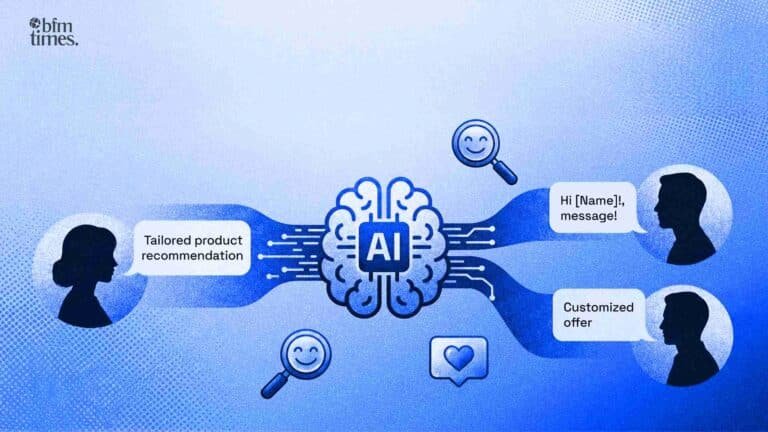
Everyone wants to feel special and valued. Everyone expects companies to understand their tastes, interests, and needs. That is why AI tools for customer personalization have become so important in 2026. Business with customer personalization see up to 40% more revenues. With 71% of consumers demanding personalized interactions, there is no way to ignore it anymore. This blog will cover the best AI customer personalization tools currently available. They will help you establish a connection with your customer base in a smarter, faster and more effective way.
- Why Does Customer Personalization Matter More Than Ever?
- What Are AI Tools for Customer Personalization?
- What Key Features Should You Look for in AI Personalization Tools?
- Which Are the Best AI Tools for Customer Personalization in 2026?
- Insider One
- Braze
- Dynamic Yield
- Optimizely
- HubSpot AI (Breeze)
- Adobe Target and Adobe Campaign
- CleverTap
- Persado
- How Do AI Tools for Customer Personalization Actually Work?
- What Is the Real Business Impact of AI Personalization?
- What Common Mistakes Should You Avoid in AI Personalization?
- How Do You Choose the Right AI Personalization Tool for Your Business?
- What Trends Are Shaping AI Personalization in 2026?
- Conclusion
- Frequently Asked Questions (FAQs)
Why Does Customer Personalization Matter More Than Ever?
Consumers’ expectations have never been so high. Generic messages don’t work anymore. Most people will simply skip ads and marketing emails they do not relate to personally. According to recent statistics, 76% of consumers feel frustrated about the lack of personalized experience.
Nowadays personalization is not just an option but rather a necessity. Companies leveraging AI-powered customer personalization experience higher levels of brand loyalty and better retention rates. Brands that combine artificial intelligence and empathic personalization increase customer acquisition by 33%. Opportunities are numerous. AI tools make it all feasible.
What Are AI Tools for Customer Personalization?
AI customer personalization tools are software platforms based on artificial intelligence technologies. They analyze customer behaviors such as browsing history, purchase behaviors, interactions, etc. Using collected information, AI tools provide personalized messages and offers to customers.
Such platforms operate on multiple communication channels: websites, emails, SMS, push notifications, WhatsApp. Besides, the algorithms behind AI personalization tools adapt in real time. The system learns customers’ changing behaviors and delivers updated offers. With AI tools, businesses are free from guessing customers’ demands; they can be sure their offers will be appropriate and appreciated.
What Key Features Should You Look for in AI Personalization Tools?
Before selecting one of these tools, make sure that you are aware of key features to pay attention to.
- Real-Time Data Processing – A good personalization platform provides instant reactions to customer behavior changes. If your client starts browsing shoes, you should be able to show them personalized recommendations immediately, not several hours later.
- Predictive Segmentation – The tool should be able to predict future customer behavior. This way, the system will create groups based on probable behavior.
- Omnichannel Personalization Capabilities – The platform should support various communication channels, including websites, apps, emails, WhatsApp, etc.
- Integration with CRM and CDP Platforms – Integration with systems like Salesforce, HubSpot, and Segment is crucial for data exchange. Seamless integration results in better quality of the data processing.
- Privacy Compliance – Ensure that the tool complies with privacy laws such as GDPR, CCPA. The tool must have an in-built mechanism for data anonymization and managing consents.
- Automation Abilities – Segmentation, A/B testing, follow-ups and other repetitive activities should be completely automated by the tool. It will save you tons of time and effort.
Which Are the Best AI Tools for Customer Personalization in 2026?
| Tool | Best For | Key Strength | Channels Supported |
| Insider One | Enterprise brands | Omnichannel CDP + AI journeys | Web, App, Email, WhatsApp, SMS |
| Braze | Mid-market teams | Intuitive UI, multi-channel AI | Email, Push, SMS, In-app |
| Dynamic Yield | eCommerce | Real-time predictive engine | Web, Email, App |
| Optimizely | A/B testing focus | Continuous experimentation | Web, App, Email |
| HubSpot AI | SMBs and mid-market | Data enrichment + CRM | Email, Web, CRM |
| Adobe Target | Large enterprises | AI decisioning + analytics | Web, App, Email, Ads |
| CleverTap | Mobile-first brands | Lifecycle marketing + retention | App, Push, Email, SMS |
| Persado | Content-driven brands | Emotionally intelligent copy | Email, Push, Ads |
Insider One
Insider One (formerly Insider) is considered the industry leader in the 2026 Gartner Magic Quadrant for Personalization. It also holds the first place on G2 across 11 categories. This platform includes native Customer Data Platform (CDP), AI segmentation engine, and journeys orchestration. Supported channels include websites, apps, emails, WhatsApp and SMS, as well as push notifications.
Insider One is best suited for mid-market to enterprise-level companies. Its advantage is the wide range of functions. You can start campaigns on many channels without changing audiences’ segments. The platform is also equipped with on-site search personalization function called Eureka. This is an excellent solution for brands that are interested in comprehensive functionality.
Visit Website: insiderone.com
Braze
Braze is a powerful customer engagement platform that personalizes content, offers and full customer journey on the basis of real-time behavior and purchase patterns. Personalized messages delivered by the tool perform great in segmentation and conversions.
The biggest advantage of Braze is that it is quite user-friendly compared to other enterprise-level solutions. The platform operates emails, push notifications, SMS and in-app messaging from a single dashboard. This is an ideal tool for brands who value convenience.
Visit Website: braze.com
Dynamic Yield
Dynamic Yield is a real-time personalization engine. It utilizes predictive models for the creation of unique website content, personalized product recommendations, emails and more. It is great for eCommerce brands because it suggests relevant products for clients instantly.
This tool conducts automatic AI-assisted A/B testing and generates dynamic content. If your aim is fast and accurate personalization, choose Dynamic Yield.
Visit Website: dynamicyield.com
Optimizely
Optimizely is a reliable tool for conducting A/B testing and personalizing content. It helps marketers improve their conversion rate by testing multiple versions of the content. The platform provides detailed customer segmentation that facilitates targeting.
What makes Optimizely stand out is its experimentation focus. While conducting A/B tests and optimizing campaigns constantly, you will get an effective personalization strategy over time. The platform easily integrates with CRM systems.
Visit Website: optimizely.com
HubSpot AI (Breeze)
Breeze is a suite of tools from HubSpot that includes Copilot, Agents, and Intelligence. These tools help marketers create a more personalized experience using enriched data. HubSpot enriches data on more than 200 million buyer and company profiles.
The result is marketers’ ability to produce highly engaging personalized content. HubSpot is suited for small-to-medium businesses looking for a platform with integrated AI personalization features. The learning curve is easy and results are measurable.
Visit Website: hubspot.com
Adobe Target and Adobe Campaign
Another toolset that brings enterprise-level AI personalization is provided by Adobe. Adobe Target does testing and personalizes content across channels. Adobe Campaign handles omnichannel campaigns and smart automation. Together, they create a powerful combo.
They both leverage the same AI called Adobe Sensei, which powers personalization and analytics. If you have an experience in working with Adobe Experience Cloud ecosystem, then you will appreciate this solution even more.
Visit Website: adobe.com
CleverTap
Newcomer to the field that made it to the 2026 Gartner Leader quadrant. Clevertap delivers an extensive set of features such as AI segmentation, experiments, orchestration, and analytics. It integrates with more than 100 marketing technologies.
Clevertap has a strong focus on lifecycle marketing and retention campaigns. As a result, it is perfect for mobile-first companies who need to engage with customers via their mobile apps.
Visit Website: clevertap.com
Persado
If your goal is to create highly personalized messages, then consider Persado. It is an AI-driven tool for creating persuasive emails and push notifications that emotionally resonate with particular customer segments. It uses language AI to generate the best message automatically without any need for testing.
Brands use Persado to personalize their email subject lines and social media content. Persado is great for increasing open rates and conversions.
Visit Website: persado.com
How Do AI Tools for Customer Personalization Actually Work?
Here is a simplified explanation of what goes on under the hood. The steps outlined below illustrate the inner workings of such tools.
- Step 1 – Collect Data: The AI tool collects information about the customer from various sources.
- Step 2 – Build Profiles: Data is collected and combined into a single profile for each user.
- Step 3 – Predict: Using machine learning algorithms, the tool analyzes customer behavior and makes accurate predictions.
- Step 4 – Deliver Content: The tool provides relevant information to users, such as recommendations or offers.
- Step 5 – Optimize: The algorithm learns from the feedback and continually adjusts its predictions accordingly.
This process happens 24/7 without any effort on the part of users.
What Is the Real Business Impact of AI Personalization?
Let us look at what the numbers say. These are the benefits of personalized experience for businesses.
- On average, businesses get between 10 to 30% revenue lift thanks to personalized experience
- Email personalization generates up to 4x more clicks from recipients
- Personalization on web pages increases conversions by 15-25%
- With empathy personalization, companies retain 22% more customers
- AI automation can help businesses automate up to 55% of customer requests
These statistics demonstrate that businesses can benefit greatly from personalized experience. Therefore, investing in personalization technology pays off.
What Common Mistakes Should You Avoid in AI Personalization?
Although the technology is advanced now compared to how it was created back in the day, there are still mistakes businesses make while using AI personalization. Let us consider the most popular errors and learn how to prevent them.
- Over-Personalization – It can be intrusive for customers and they can be repulsed by too much personalization. Finding the balance is important.
- Siloed Data – Siloed data means that AI personalization can deliver inconsistent outcomes. Using the right tool is therefore very important.
- Under-Estimating Mobile – Companies often fail to understand that many interactions take place on mobile channels. Personalized experience on mobile apps and websites plays a significant role.
- Neglecting Testing – Personalization does not end with using the personalization tool. Always test different variants to optimize results. Optimizely will facilitate your task.
- Neglecting Compliance – All personalization tools have to be compliant with GDPR and CCPA. Make sure that you pick the appropriate tool.
How Do You Choose the Right AI Personalization Tool for Your Business?
The process of choosing the right tool can sometimes be challenging due to the uniqueness of every business. Follow these steps to pick the appropriate tool for your business.
- Define Your Objective – Would you like to boost email clicks, convert customers on webpages, or improve customer retention on mobile channels? Having just one objective makes sense.
- Identify Channels – Where do your customers interact with your brand? Use the personalization tool for these channels only.
- Integration Check – Does the personalization solution have integration capabilities with your CRM or CDP? This is crucial for obtaining the desired results.
- Check Pricing – Does the provider of the AI personalization tool offer a free trial or freemium plan? It is important to check the pricing model to ensure it fits your budget.
- Check Provider – Does the provider of this tool offer onboarding and training? This is essential especially if you are considering enterprise solutions.
What Trends Are Shaping AI Personalization in 2026?
Technologies of personalization evolve rapidly, and we are witnessing numerous changes in this field. Let us discuss the latest trends.
- Micro-Personalization – No longer do brands personalize their content based on historical data. Micro-personalization is about delivering real-time responses based on customers’ real-time intentions.
- Voice AI Agents – The use of AI personalization agents becomes increasingly widespread. They help customers with their requests via call or message.
- Generative AI Content- With the advent of generative AI, brands can create personalized visual and textual content in a matter of seconds.
- Predictive Resolution – Predictive analytics helps in resolving problems before they arise, completely transforming customer service.
- Privacy-First Personalization
Conclusion
Personalization has arrived as the future of marketing. No more should customers have to deal with one-size-fits-all strategies of brands. In order to succeed with marketing, businesses should learn about their customers individually and provide them with customized experiences. AI-based personalization tools allow doing just that.
There are various personalized tools in 2026 that include but are not limited to Insider One with its omnichannel personalization capabilities, HubSpot with its integrated CRM solution and 200-million+ buyer data integration, Dynamic Yield with predictive AI capabilities, and Persado that provides messaging infused with emotional intelligence. Pick the right one for your process and channels!
First of all, define the goal. Second, pick the right AI personalization tool for your process and channels. Third, test, optimize, and automate. With the right personalized tool, you can give customers a unique experience.
Frequently Asked Questions (FAQs)
Q1. What are AI tools for customer personalization?
Customer personalization tools powered by artificial intelligence and machine learning analyze a user’s behavioral patterns and preferences on their website and throughout the purchasing journey in order to deliver targeted content, offers, messages, and products.
Q2. Which AI personalization tool is best for small businesses?
For small to mid-sized businesses, one of the top choices among AI personalization tools would be HubSpot (Breeze). It comes with all of the features that come with AI personalization plus CRM functionalities and integrates data from more than 200 million buyer profiles.
Q3. How do AI tools improve customer retention?
AI-powered tools make it possible to predict the customers’ future behavior, deliver personalized messages at a critical moment and offer them relevant experiences, which can result in up to 22% customer retention rate in comparison with conventional marketing efforts.
Disclaimer: BFM Timesacts as a source of information for knowledge purposes and does not claim to be a financial advisor. Kindly consult your financial advisor before investing.