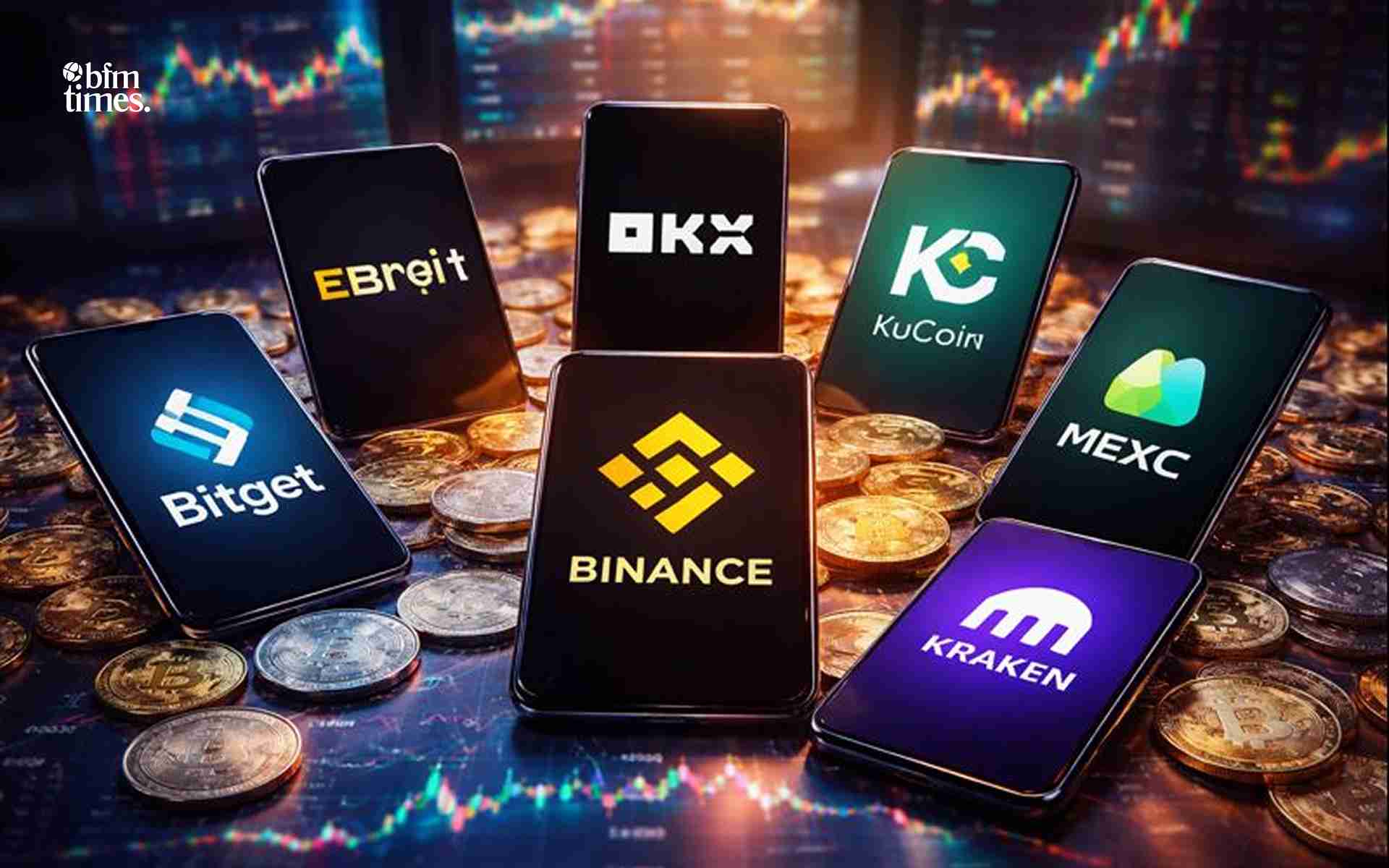


One of the most significant things in your crypto life is to select a suitable trading platform. There is a crypto exchange where you will buy, sell, and trade digital currencies such as Bitcoin, Ethereum, and stablecoins. Not every platform is created the same way.
- Why You Need a Crypto Exchange Guide Before You Start
- Define Your Trading Needs Before You Choose a Crypto Exchange
- Core Features of the Best Crypto Exchange Features
- Security & Custody (Secure Crypto Exchange)
- Liquidity & Order Types
- Fees and Cost Structure
- Supported Coins & Markets
- Fiat On-Ramp & Wallet Integration
- User Experience & Support
- How to Compare Exchanges: An Exchange Comparison Guide
- Exchange Evaluation Checklist
- Choosing a Secure Crypto Exchange: What to Look For
- Mistakes to Avoid When Choosing an Exchange
- Frequently Asked Questions
- What factors should I consider when choosing a crypto exchange in 2026?
- How important is security when selecting a crypto exchange?
- Conclusion
In the following crypto exchange guide, we will take you through all the information you need to know before creating an account, including all the security and fees, depth of liquidity, and fiat on-ramp facilities. Whether you are a beginner buying your first asset or an intermediate trader exploring derivatives vs spot trading, choosing the appropriate crypto trading service can directly affect expenditures, security, and the experience.
Main Topic: Best Crypto Exchanges for Futures & Margin Trading
Why You Need a Crypto Exchange Guide Before You Start
The number of exchanges is in the hundreds all around the world. Some focus on beginners. Others are dealing with sophisticated instruments such as futures contracts or margin. Fee structures differ. Custody models differ. Even regional access to local currencies (USD, EUR, INR, AED, SAR, etc.) is different.
There is no well-organized crypto exchange guide, and it is easy to select according to marketing statements or social media craze instead of such objective factors as liquidity depth, compliance/KYC/AML standards, or custodial model.
This guide is easy to achieve: to ensure you make a rational assessment of exchanges and decide on a crypto exchange based on your needs, risk tolerance, and location.
Related: No KYC wallets: Ultimate Guide 2026
Define Your Trading Needs Before You Choose a Crypto Exchange
Before making a comparison, consider:
- Long-term or active trading?
- Should you have derivatives or spot trading?
- Are you a beginner or an experienced trader?
- Will you be depositing fiat currency?
Spot trading refers to the process of selling and purchasing crypto assets at market rates.
Derivatives trading entails contracts (such as futures or perpetual swaps) based on underlying assets and, in most cases, leverage.
If you’re a beginner:
- Prioritize ease of use.
- Seek powerful wallet incorporation.
- Ensure a simple fiat on-ramp (bank transfer, card, UPI, etc.).
If you’re advanced:
- Check API support for algorithmic trading.
- Evaluate order types.
- Examine the depth of liquidity and fee levels.
When you know what you want, it is a lot easier to make a wise choice of crypto exchange options.
Related: How to Buy Crypto in Presale Stage: A Practical 6-Step Guide
Core Features of the Best Crypto Exchange Features
This is the most significant part of this crypto exchange guide. The following are the fundamental characteristics against which platforms are compared.
Security & Custody (Secure Crypto Exchange)
Asset protection should be a priority for a secure crypto exchange.
Custody model:
- Custodial: The transaction stores your personal keys.
- Non-custodial: You have charge of your own wallet keys.
The majority of centralized exchanges are custodial. This renders the security practices very important.
Look for:
- Two-factor authentication (2FA)
- Most of the assets are kept in cold storage.
- Withdrawal whitelisting
- Proof of reserves transparency
- Bug bounty programs
The use of a secure crypto exchange must offer an explanation of the storage and protection of funds.
Related: Custodial vs Non-Custodial Wallets Explained
Liquidity & Order Types
Liquidity is defined as the ease with which assets can be sold or purchased without influencing price.
High liquidity depth means:
- Tighter bid-ask spreads
- Faster execution
- Lower slippage
Liquidity platforms can act as a low liquidity, resulting in price jumps once a large trade is made.
Check for:
- Market orders
- Limit orders
- Stop-loss orders
- Advanced order types (for active traders)
Liquidity is one of the most desirable crypto exchange capabilities in case you engage in trading on a regular basis.
Fees and Cost Structure
All crypto trading channels are fee-charging.
Common types:
- Maker/taker trading fees
- Deposit fees
- Withdrawal fees
- Spread markups
The common applicable spot trading fee is between 0.1% and 0.5%, based on the platform and type of volume.
Compare:
- Discounts on the holding of native tokens.
- Due to volume-based tier cuts.
- Hidden costs in spreads
Do not consider only headline fees; the cost is important.
Related: What Is Maker Taker Fee?: How Exchange Fees Work
Supported Coins & Markets
Other exchanges list hundreds of tokens. Others focus on major assets.
Consider:
- Are major assets available?
- Is staking offered?
- Do we have a derivatives market?
- NFT marketplaces?
- Offering launchpad or tokens?
Having more choices is not necessarily a good thing. Examine the best crypto exchange features, focusing on relevance and not quantity.
Fiat On-Ramp & Wallet Integration
A fiat on-ramp enables you to trade in conventional money for crypto.
Check:
- Supported currencies (USD, EUR, INR, AED, SAR, and so on).
- Bank transfer support
- Card payments
- Processing times
Review wallet integration as well:
- Are you able to link hardware wallets?
- Does it seamlessly transfer to other wallets?
- Does it support multi-chain transfer?
Integrating wallets helps increase flexibility in the long run.
Related: What Is Cryptocurrency How It Works Explained 2026
User Experience & Support
An interface can be too complicated to be beginner-friendly.
Evaluate:
- Mobile app quality
- Dashboard clarity
- Charting tools
- Customer support channels (live chat, email, ticket system)
An effective crypto trading platform can use clear communication and an effective reply time.
How to Compare Exchanges: An Exchange Comparison Guide
This section serves as your on-the-job exchange comparison guide.
Comparing brand names is not the point, but metrics are.
Step-by-Step Comparison Checklist
- Security record
- Have there been significant security breaches of the platform?
- Is there an audit or evidence of reserve?
- Fee structure
- Compare maker/taker fees.
- Include withdrawal costs.
- Liquidity depth
- Review 24-hour volume.
- Check the order book spread.
- Regulatory compliance
- Is there compliance/KYC/AML of the exchange?
- Is verification of identity obligatory?
- Asset coverage
- Spot only?
- Derivatives?
- Staking?
- Spot only?
For example:
- Platform A: Low cost and poor liquidity.
- Platform B: Better fees, good compliance, and deep liquidity.
- Platform C: Powerful derivatives, weak fiat.
This is a systematic decision framework that should be used as your crypto exchange guide.
Exchange Evaluation Checklist
| Feature | What to Check | Why It Matters |
| Custody/security model | Cold storage %, 2FA, proof of reserves | Protects user funds |
| Fee range | Maker/taker %, withdrawal costs | Impacts profitability |
| Liquidity/depth | Trading volume, order book spread | Reduces slippage |
| Supported assets/markets | Spot, derivatives, staking | Matches user needs |
| Regulatory compliance | KYC/AML, licenses | Reduces legal risk |
| Fiat on-ramp | Supported currencies, payment methods | Easier deposits |
| API support | Automation capability | Advanced trading tools |
Choosing a Secure Crypto Exchange: What to Look For
In any crypto exchange guide, security bears particular attention.
A secure crypto exchange should be selected based on:
- Licensing by large jurisdictions.
- Open compliance/KYC/AML policies.
- Most of the assets are stored in cold wallets.
- Risk reserves or insurance funds.
- Secrecy of the security of the people.
Avoid platforms that:
- Hide leadership teams
- Absence of clear compliance policies.
- Offer unrealistic returns
Security does not only concern technology; governance and transparency are also important.
Related: Best Multi-Chain Crypto Wallets
Mistakes to Avoid When Choosing an Exchange
Even the highly seasoned users commit some errors that may be avoided.
1. Choosing solely based on low fees
The lowest possible fees are attainable at the cost of liquidity or compliance.
2. Ignoring liquidity
Slippage is enhanced by low liquidity depth.
3. Using unverified platforms
Emerging or fashionable transactions do not have a high level of security controls.
4. Neglecting account security
The failure to enable 2FA or withdrawal protection creates risk.
5. Overlooking regional restrictions
Some exchanges limit features based on geography.
Avoiding these mistakes makes your crypto exchange guide process far more effective.
Frequently Asked Questions
What factors should I consider when choosing a crypto exchange in 2026?
You should evaluate security measures, regulatory compliance, supported cryptocurrencies, fees, liquidity, and user experience.
How important is security when selecting a crypto exchange?
Security is critical, so look for features like two-factor authentication, cold storage, proof of reserves, and a strong track record.
Conclusion
To select the appropriate platform, one has to think. Identify objectives, benchmark basic measures, and assess protective measures and fees comprehensively.
The Crypto Exchange Guide offers a checklist in a guide format in order to make informed choices rather than emotional ones. Use it whenever you are assessing a new crypto trading platform.
Disclaimer: BFM Times acts as a source of information for knowledge purposes and does not claim to be a financial advisor. Kindly consult your financial advisor before investing.