


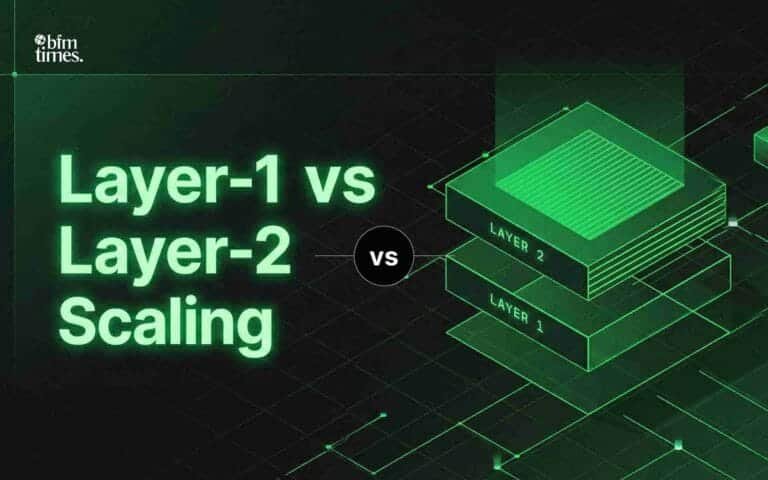
The debate between the Layer 1 vs Layer 2 blockchain solutions is one of the most important conversations in the crypto world today. As the blockchain technology grows & millions of new users join every year, the need for faster & cheaper transactions has increased. It is through the Layer 1 & Layer 2 comparison that all the problems facing the entire blockchain industry can be sorted out. The Scalability in this sense means the ability of a particular system to process many transactions without becoming slow & expensive. Here is a blog post explaining what Layer 1 and Layer 2 blockchains are & the differences between them.
What is a Layer 1 Blockchain?
Layer 1 is the fundamental blockchain architecture upon which the entire blockchain network depends. Layer 1 is the actual core blockchain technology that is responsible for all operations such as transactions, data handling, security, and consensus.
Examples of Layer 1 blockchains include Bitcoin, Ethereum, Solana, and Avalanche. Every single one of them has its unique way of executing transaction operations through its own blockchain network with its own consensus. Layer 1 is the most secure layer of all because of its network consensus system.
Firstly, the issue of scalability is faced by the Layer 1 blockchain. The transaction capacity of the Bitcoin network is 7 transactions per second. Similarly, the transaction capacity of Ethereum network is somewhere around 15-30 transactions per second. However, it is much slower compared to traditional payment systems that process up to 24,000 transactions per second, such as Visa.
What is a Layer 2 Blockchain?
The Layer 2 blockchain is a secondary network which is built on top of a Layer 1 blockchain. It processes transactions off the main chain & then settles the final results back on Layer 1. This approach dramatically increases transaction speed & reduces fees without changing the security of the underlying Layer 1.
Layer 2 cannot be considered a substitute for Layer 1. Layer 1 continues to give security & settlement, but Layer 2 takes care of all the transactional volume with much less expenditure of the time & resources. This interplay between the two layers makes blockchain scalability not only feasible but also achievable.
How Layer 1 Blockchains Try to Scale Themselves?
The Layer 1 blockchain has several methods to improve its own scalability without relying on an external Layer 2. These approaches are known as Layer 1 scaling solutions.
Consensus Mechanism Upgrades
The Ethereum network has made one of the biggest Layer 1 scaling moves in history when it shifted from Proof of Work to Proof of Stake in September 2022. This change reduced energy use by over 99 percent & laid the groundwork for future scalability improvements called the sharding. The new consensus model allows the Ethereum to process transactions more efficiently at the base layer.
Sharding
Sharding involves the splitting up of the blockchain’s database into small chunks referred to as the shards. The shards independently process their own transactions concurrently. The Ethereum roadmap entails the inclusion of danksharding as the long-term scaling solution for Ethereum on the layer 1 architecture. It enables the processing of more transactions & data per second without all nodes having to process everything.
Bigger Block Sizes
Layer 1 blockchains like the Solana & Avalanche use larger block sizes & faster block times in order to process more transactions at the base layer. The Solana processes nearly 65,000 transactions per second with its Proof of History consensus mechanism. This approach trades some decentralization for higher raw performance at the Layer 1 level.
How Layer 2 Solutions Works?
The Layer 2 ecosystem in 2026 includes several different technical approaches. Each one has its own strengths & is suited to different use cases.
Rollups
Rollups are the most prevalent & common Layer 2 solution in 2026. These solutions bundle up many transactions into a single transaction, execute them off chain & then submit the final transaction back on Layer 1. The different kinds of rollups that exist include Optimistic Rollups & ZK Rollups.
The Optimistic Rollup presumes that all transactions are correct by default and only verifies them when a challenge is issued. Optimism & Arbitrum are the protocols that use Optimistic Rollups. On the other hand, the ZK Rollups verify transactions through the use of mathematical algorithms called the zero knowledge proofs.
State Channels
The state channel is a Layer 2 method where two parties open a private channel & conduct many transactions between themselves off chain. The final balance is then settled on Layer 1 when the channel closes. The Lightning Network uses this approach for Bitcoin & allows instant payments with extremely low fees.
Sidechains
The sidechain is a separate blockchain that runs parallel to the Layer 1 & connects to it through a bridge. Polygon started as a sidechain & has evolved into a full ZK powered Layer 2 ecosystem. The sidechain has its own consensus rules but settles finality back to the main Layer 1 chain through checkpointing.
What are the Latest Layer 2 Developments in 2026?
The Layer 2 ecosystem is developing rapidly in 2026. The Ethereum Layer 2 networks now collectively process over 10 million transactions per day, which exceeds the Ethereum mainnet volume. The Base network built by Coinbase has emerged as one of the fastest growing Layer 2 platforms having over 2 million daily active addresses.
The Ethereum Pectra update carried out in 2025 featured EIP 7251 & EIP 7702 updates that helped to enhance the efficiency of the validators & smart accounts. This is useful for both layer 1 & layer 2 systems. The total value locked on all layer 2 Ethereum blockchains went past the $50 billion mark early in 2026.
Why Both Layer 1 & Layer 2 Matter for the Future?
Layer 1 versus Layer 2 is not a fight but rather a collaboration which benefits the whole blockchain environment. Layer 1 gives trust & security that is the value of a blockchain in the first place. Layer 2, on the other hand, brings speed and affordability that make blockchain transactions applicable in everyday life.
The best blockchain systems in 2026 combine both layers effectively. Layer 1 acts as the settlement layer for high value transactions & the Layer 2 handles the millions of smaller daily interactions. This two layer architecture is the foundation of how blockchain will compete with traditional financial systems over the next decade.
Conclusion
It is important to note that there isn’t any kind of competition between Layer 1 & Layer 2. In fact, it is essential to understand their relationship & how they solve the issue of scalability in blockchain which has been hindering its mass adoption all this while. Layer 1 vs Layer 2 design makes blockchain networks both safe and fast. Although Layer 1 provides security and the decentralization concept, Layer 2 provides speed and low costs. The efficiency of Layer 2 networks in 2026 in Ethereum, Bitcoin, & other blockchain systems proves that blockchain technology is finally mature enough to be applied. This layer 1 vs layer 2 approach is not only the system architecture but the overall vision of the decentralized economy.