


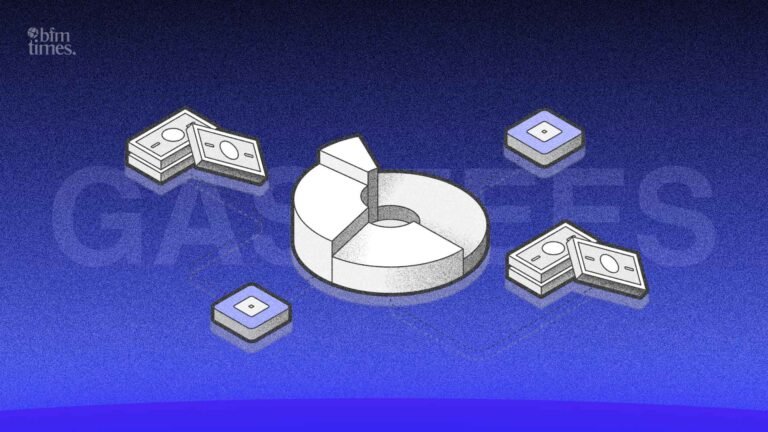
Have you ever tried to send crypto & noticed an extra charge? That extra charge is called a gas fee. Understanding what is gas fee in crypto is important for every blockchain user. It involves sending ETH & the swapping tokens or minting an NFT & gas fees are always part of the process.
They are a core part of how the blockchain networks work. This means a gas fee is a small payment you make to process your transaction on the blockchain. We will cover everything about the gas fees in this blog including what they are & how they work & how they are calculated.
Today in this article we will understand what a gas fee in crypto is & how it is calculated in the simplest way possible.
What Is a Gas Fee in Crypto?
A gas fee is a transaction processing charge on a blockchain network. It is the cost you pay to get your transaction checked & recorded on the blockchain. This works like a service charge for using the network. Gas fees pay the validators or miners. These are the people or computers that keep the blockchain safe & running. It would be impossible to process transactions without gas fees since there would be no reason to do so.
How Does a Gas Fee Work?
Every action on a blockchain needs computing effort. Sending tokens & using a smart contract or minting an NFT all take different amounts of computing power. It is gas that works as the unit to measure this effort. When you submit a transaction you are telling the network that you are willing to pay a set amount to process it. Validators then pick up your transaction & add it to the next block. The more complex your transaction is the more gas it needs. A simple token transfer needs less gas than a DeFi swap or smart contract action.
What Is Gas Fee in Crypto and How Is It Calculated?
We now get into the most important part which is the calculation. Understanding what is gas fee in crypto & how is it calculated helps you plan & save the money on every transaction.
The Basic Formula
The standard formula for calculating gas fees on Ethereum is:
Gas Fee = Gas Units Used x (Base Fee + Priority Fee)
We can break down each part below.
Gas Units (Gas Limit): The maximum amount of computing work your transaction needs is called the gas limit. A standard ETH transfer uses about 21000 gas units. A token swap can use between 100000 & 150000 gas units.
Base Fee: The minimum fee set by the network is called the base fee. It adjusts on its own based on how busy the network is. The base fee rises when the network is full & drops when it is quiet.
Priority Fee (Tip): This is an extra payment you can choose to add. It helps speed up your transaction. Validators focus on transactions with higher tips first.
A Simple Calculation Example
We can use this example to understand the calculation.
The base fee is 20 gwei. The priority fee is 5 gwei. The gas units used are 21000.
Total Gas Fee = 21000 x (20 + 5) = 21000 x 25 = 525000 gwei = 0.000525 ETH.
It is worth noting that 1 gwei = 0.000000001 ETH. Gas prices are shown in gwei for easier reading.
What Factors Affect Gas Fees in Crypto?
The Gas fees are not fixed. They change based on several factors.
- Network Congestion
The more people using the blockchain the higher the gas fee goes. This is like surge pricing in ride apps. These fees spike sharply during the popular NFT drops or DeFi events.
- Transaction Complexity
Simple transfers cost less. The Complex smart contract actions cost more. This is because they need more computing power & more gas units.
- Your Priority Setting
You can choose how fast you want your transaction processed. Setting a higher priority fee moves your transaction to the front of the line. Setting a lower fee means slower processing.
- Time of Day
The Blockchain networks tend to be busier during certain hours. Transacting during off peak hours often results in lower gas fees.
Gas Fees Across Different Blockchains
Gas fees vary greatly depending on which blockchain you use. Here is a current comparison.
| Blockchain | Average Gas Fee (2025) |
| Ethereum Mainnet | approx. $0.44 per transaction |
| Arbitrum (Layer 2) | approx. $0.009 per transaction |
| Polygon | approx. $0.0009 per transaction |
| BNB Chain | $0.05 to $0.20 |
Ethereum gas fees dropped by around 95% between early 2024 & 2025. This was largely due to protocol upgrades & the growing use of Layer 2 solutions like Arbitrum & Polygon.
How to Reduce Gas Fees in Crypto?
There are smart ways to lower what you pay.
- Transact During Off Peak Hours- The Gas fees are lower late at night or early in the morning when fewer users are active.
- Use Layer 2 Networks- The Platforms like Arbitrum & Optimism & Polygon offer much cheaper transactions. They process transactions off the main Ethereum chain & still keep security intact.
- Adjust Your Gas Settings Manually- Most wallets like the MetaMask let you set a custom gas fee. You can pick the slow option to save money when there is no rush.
- Use Gas Trackers- The Tools that track real time gas prices help you pick the best time to transact. It is smart to check gas levels before submitting a transaction.
- Batch Your Transactions- Some platforms allow multiple actions in a single transaction. This can reduce the total gas spent overall.
What is the Future of Gas Fees in Crypto?
The Gas fees are becoming cheaper over time. Ethereum upgrades are making the network more efficient. Layer 2 solutions are taking in a lot of the traffic. We now see everyday users paying much less than before as a result.
DeFi platforms still consume over 40% of Ethereum block space due to the computing needs of their smart contract work. The whole industry is moving toward more affordable & scalable options. Future upgrades & better systems promise even lower fees. This makes crypto more open & reachable for everyone worldwide.
Conclusion
At last we can conclude that the gas fees are small charges paid to keep blockchain networks safe & running & knowing them helps you transact smarter & save more. We now know exactly what is the gas fee in crypto & how is it calculated.
Gas fees are essential to blockchain networks. They keep the network safe & free of spam & fully working. It is the validators & miners who receive these fees for processing your transactions.
Disclaimer: BFM Times acts as a source of information for knowledge purposes and does not claim to be a financial advisor. Kindly consult your financial advisor before investing.