



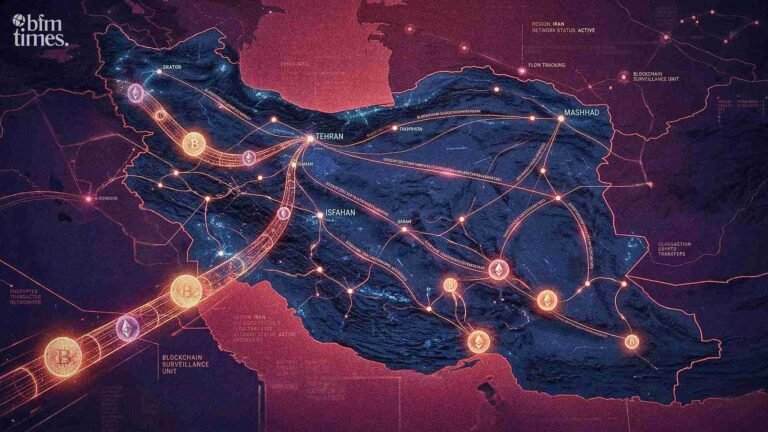
- The internet shutdown did not stop money movement during the Iranian crypto blackout.
- The event became one of the most serious financial developments during the conflict.
- The situation exposed a hidden crypto-based money system working outside Western sanctions & civilian shutdowns.
- The activity started after the February 28, 2026, US-Israeli strikes.
- The events revealed secret crypto systems, protected networks & hundreds of millions of dollars moving across digital borders.
Also Read: Strategy Bitcoin Purchase: MSTR Buys Over 4,000 BTC in Latest Accumulation
- Iran Crypto Blackout: The Moment the Internet Died, but the Money Kept Flowing
- Over 1,100 Active Crypto Nodes Detected During Near Total Shutdown
- Iran $7.78 Billion Crypto Ecosystem Built to Survive Sanctions
- Proxy War Funding Through Crypto Corridors
- U.S. Sanctions Response Too Little Too Late?
- How the Iranian Civilian Population Tried to Cope
- Conclusion
Iran Crypto Blackout: The Moment the Internet Died, but the Money Kept Flowing
The near-total blackout started around 07:00 UTC on February 28, 2026, during the joint US & Israeli military strikes inside Iran. We see that the Cloudflare Radar data show a fast collapse of internet traffic. It recorded a 98% drop in internet activity & HTTP requests across many of the Iranian regions.
The independent internet monitor NetBlocks confirmed that the shutdown came from the government & not from a cyber attack or any other physical network damage. We see that about 90 million Iranian civilians lost access to the global internet within hours. This meant people could not access news, banking, or even any of the communication tools. These civilians struggled in the dark while a secret money network continued to work beneath the surface.
The cyber intelligence company RAKIA started tracking Iranian crypto activity right after the strikes. We see that the firm quickly found large amounts of money leaving crypto wallets that were connected to Iran. It showed tens of millions moving in the first hours & later the total reached hundreds of millions. These flows were confirmed by RAKIA founder & CEO Omri Raiter. The company explained that the money kept leaving Iranian crypto accounts in large waves.
Over 1,100 Active Crypto Nodes Detected During Near Total Shutdown
The most surprising discovery from the RAKIA report is not only the large money movement. We see that the system also continued to operate even when the public internet was almost stopped working.
The national internet level dropped to about one percent of the normal traffic during the blackout. We see that RAKIA researchers still found more than 1,100 active crypto nodes that were running inside Iran.
The RAKIA cyber & the AI research leader, Tom Malca, explained the meaning of it very clearly. We see that these nodes require very strong internet bandwidth, steady power, & the clear permission to keep working from the government. This detail shows that these nodes were not normal retail crypto users.
The most important fact becomes clear from this discovery. We see that these crypto nodes stayed online because someone allowed them to stay active. This means a decision was made to keep the financial systems running while all the civilians stayed offline.
Where Were These Nodes Located?
The majority of these crypto nodes were located in the Tehran-Qom corridor. We see that this region includes many of the Iranian government centers & even the IRGC institutions. These nodes also appeared in smaller groups across some of the cities such as Isfahan, Mashhad, Tabriz & Kermanshah.
The location pattern reveals a clear signal. We see that these areas match known centers of political & the military authority in Iran. These locations do not look like normal civilian crypto activity.
| Detail | Data |
| Internet connectivity during the blackout | ~1% of normal levels |
| Active crypto nodes that were detected | 1,100+ |
| IRGC crypto inflows (2025) | Over $3 billion |
| Iran’s total crypto ecosystem (2025) | $7.78 billion |
| Economic cost of the shutdown | $35.7 million per day |
| Blackout duration (as of March 10) | 240+ hours |
| A drop in the online sales | 80% |
Also Read: Iran Crypto Market in 2026: War, Sanctions, and the $7.8B Digital Economy
Iran $7.78 Billion Crypto Ecosystem Built to Survive Sanctions
The Iran crypto blackout is part of a much longer story. We see that Iran built a digital money system which was designed to survive the global sanctions.
The blockchain research company Chainalysis estimated that the Iranian crypto ecosystem reached $7.78 billion in activity during 2025. We see that this shows a large financial system that works outside any of the traditional banking networks.
The research also shows that the Iranian central bank collected at least $507 million in USDT during 2025. We see that this action aimed to support the national currency & also help finance trade activity. These efforts failed because the Iranian rial lost more than 96% of its value against the US dollar quickly.
The number of Iranian crypto users continues to grow. We see that around seven million people in Iran use crypto from a population of nearly 92 million. These figures show that between January & July 2025, crypto flows tracked by TRM Labs reached about $3.7 billion.
Proxy War Funding Through Crypto Corridors
The RAKIA investigation also found crypto transfers linked to networks connected with Iran-backed groups. We see that these transfers involved the activity which was linked to Lebanon & Yemen, which are important areas in Iran’s regional proxy conflict.
The RAKIA analysis shows that these crypto paths helped them fund operations connected to proxy groups. We see that the same routes also moved personal wealth connected to some of the powerful individuals.
What Moved During the Blackout
The following transfers were detected during the blackout period.
- Proxy network funding transfers linked to Lebanese & Yemeni Iran-backed groups.
- Personal capital movement by the people connected to the IRGC leadership.
- Stablecoin reserves such as USDT are moving to protect their value during the currency collapse.
- Bitcoin transfers through wallet clusters connected to the IRGC.
- Regime financial reserves used to support military operations.
U.S. Sanctions Response Too Little Too Late?
The United States has taken steps to slow down the Iranian crypto operations. We see that the blackout events raise some of the serious questions about the success of those efforts.
The US Department of the Treasury sanctioned crypto exchanges connected to Iranian actors on January 30. We see that this marked one of the first major actions against the full crypto platforms, which were tied to sanctions evasion.
The policy aimed to break financial networks connected to Tehran. We see that large amounts of money still flowed weeks later during the blackout period. This result shows that the financial system remained actively operational & were protected.
How the Iranian Civilian Population Tried to Cope
The IRGC financial nodes stayed active while ordinary Iranians faced a difficult situation during the blackout.
The people looked for new ways to connect & also to move money without normal internet access. We see that satellite internet systems & the offline messaging tools became possible solutions for crypto transfers.
The Starlink satellite internet system connected to Elon Musk became an important topic during the shutdown. We see that many people have asked for Starlink access to restore their internet communication inside Iran.
The blackout period also triggered rising demand for Bitcoin inside the country. We see that many users have withdrawn funds from local exchanges to personal wallets due to fear of financial instability.
The difference between these groups becomes clear. We see that the regime used crypto as a financial power tool while civilians used it as a survival method.
Suggested: Best Tools for Crypto Price Tracking
Conclusion
The Iran crypto blackout is more than just a normal cryptocurrency news story. We see that it shows how governments can use decentralized digital finance to avoid any of the global pressure.
The event showed that about 90 million Iranian civilians had lost internet access while the hidden financial networks stayed active. We see that these networks moved hundreds of millions of dollars without any interruption.
The event also reveals a new stage in global financial conflict. We see that the struggle over sanctions sovereignty & the digital finance is entering a far more complex era.
Disclaimer: BFM Times acts as a source of information for knowledge purposes and does not claim to be a financial advisor. Kindly consult your financial advisor before investing.
What happened during Iran crypto blackout?
Despite a nationwide internet shutdown, reports claim hundreds of millions of dollars in cryptocurrency were transferred from Iranian-linked networks.
Why did Iran impose an internet blackout?
Authorities restricted internet access during protests and geopolitical tensions, reducing national connectivity to a fraction of normal levels.
How were crypto transactions possible during the blackout?
Experts believe certain networks, private connections, or state-linked infrastructure continued operating even while public internet access was largely blocked.