



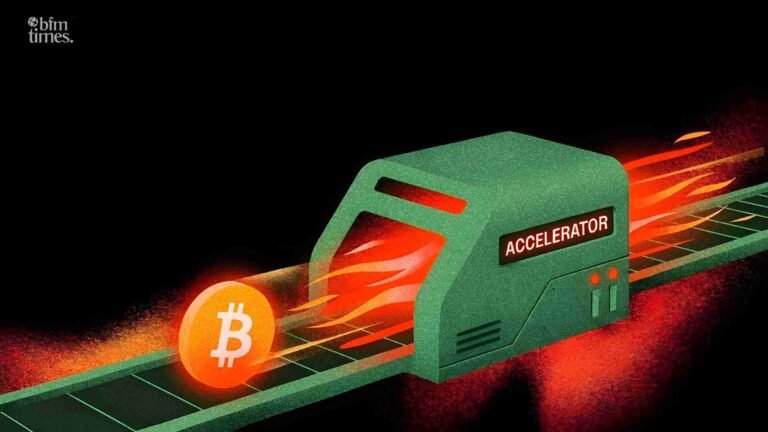
The decentralization and security of Bitcoin are widely acclaimed, yet users sometimes face a frustrating challenge: a stalled transaction. The Bitcoin network cannot accept more transactions per block, which makes the competition for the block space inevitable. When the network is overloaded, low-fee transactions may take hours or even days to be processed in the mempool. This is where a Bitcoin transaction accelerator becomes involved.
Mechanics of the Bitcoin Mempool
To understand an accelerator, one must first learn about the mempool. The area where transactions without a confirmation wait is called the mempool or memory pool. Every time you send Bitcoin, your transaction goes to nodes in the network. Until there is someone among miners to include transactions in the next block, it is stored in their mempool.
Miners are financially incentivized to prioritize transactions that have the highest fees. If you charge too little when the network is busy, miners will simply disregard your request in favor of more lucrative ones. Your transaction remains unconfirmed, and your money is effectively in limbo. An accelerator is a special service used to jump-start this stalled process.
What is a Bitcoin Transaction Accelerator?
A Bitcoin transaction accelerator is a service offered by mining pools or third-party services that assists in prioritizing a specific transaction ID. With these services, a user can increase the chances that their transaction will be incorporated into the next available block, even when the initial fee was lower than the current market rate. The services serve as an interface between the common user and the extensive mining activities that stabilize the network. Although the typical Bitcoin protocol uses a blind auction to determine fees, accelerators offer a second, frequently manual, route to confirmation.
The Operation of Acceleration Services
Most accelerators operate in one of two main ways: rebroadcasting or direct mining pool inclusion. The first method is rebroadcasting. Other free services simply accept your transaction ID and re-advertise it to a large number of nodes around the world. This reminds the network that the transaction exists and ensures it has not been removed from the mempools of individual nodes. This is useful, but it does not actually change the fee, thus limiting its usefulness when the network is highly congested.
The second and more effective method is direct priority inclusion. This is normally provided by services that are owned by or collaborate with large mining pools such as ViaBTC or Binance Pool. Upon sending your transaction ID to such services, the mining pool will place it on their private list of ‘must-include’ transactions. The next time that particular pool manages to mine a block, they will add your transaction, irrespective of the low fee. Since these pools contribute a large proportion of the total network hash rate, your likelihood of confirmation in a few hours is greatly enhanced.
Comparison of Free and Paid Services
The accelerator market is split into free and paid tiers. Free accelerators are user-friendly and are most often used by casual users, but they have serious limitations. For example, numerous mining pools offer a few free slots per hour on a first-come, first-served basis. These slots are usually filled within a few seconds after the hour starts, and users have to be very accurate in their timing.
Paid services, however, provide a more certain guarantee. Users are charged a fee, usually in Bitcoin or using a credit card, to have their transaction placed at the head of the queue. The cost usually depends on how many virtual bytes there are in the transaction itself and on network congestion. For those sending or receiving a significant amount of money, it is more convenient to use services that ensure confirmation.
Native Solutions for Stalled Transactions: RBF and CPFP
Accelerators are helpful, but the blockchain network also contains some solutions from its native components. The two most common are Replace-By-Fee (RBF) and Child-Pays-For-Parent (CPFP). Replace-By-Fee enables a sender to republish their transaction with an increased fee. If the initial transaction was recorded as RBF-enabled in the wallet, nodes will substitute the old transaction with the new one. This is usually the cheapest method of accelerating a transfer since you only pay the difference in fees.
Child-Pays-For-Parent is a method that the recipient employs. If you are awaiting an unconfirmed payment, you can send a new transaction with the pending amount and charge an extremely high fee. Miners will want to receive the high fee in the new transaction, but to receive it, they have to verify the original parent transaction. This ‘packages’ the two together for the miner.
How to Navigate the Dangers of Third-Party Services
There are risks when using an accelerator. The greatest threat is the existence of scams. Your transaction ID is all you need when using a legitimate accelerator. If a site requests your private keys, seed phrase, or any login credentials to ‘sync’ your wallet, it is a phishing attack. Moreover, due to the irreversibility of Bitcoin transactions, once you pay for an acceleration service, there is rarely a way to get a refund in case the transaction fails to complete as quickly as promised.
The Future of Accelerators
The need for transaction management tools will continue to rise as more people adopt Bitcoin, and block space is scarce. On-chain transactions will never be outside the fee market, although Layer 2 solutions such as the Lightning Network are designed to address the issue of scalability. Transaction accelerators provide an important backup option for users, making mistakes or being in situations with sudden increases in network load. It will help maintain the flow of Bitcoin digital gold, whether for free or for a fee.
What is a Bitcoin transaction accelerator?
It is a service that helps prioritize and speed up unconfirmed Bitcoin transactions.
How do Bitcoin transaction accelerators work?
They either rebroadcast transactions or directly include them in mining pool priority lists.
Are Bitcoin transaction accelerators safe to use?
They are safe if legitimate, but users should avoid services asking for private keys or sensitive data.
Disclaimer: BFM Times acts as a source of information for knowledge purposes and does not claim to be a financial advisor. Kindly consult your financial advisor before investing.