



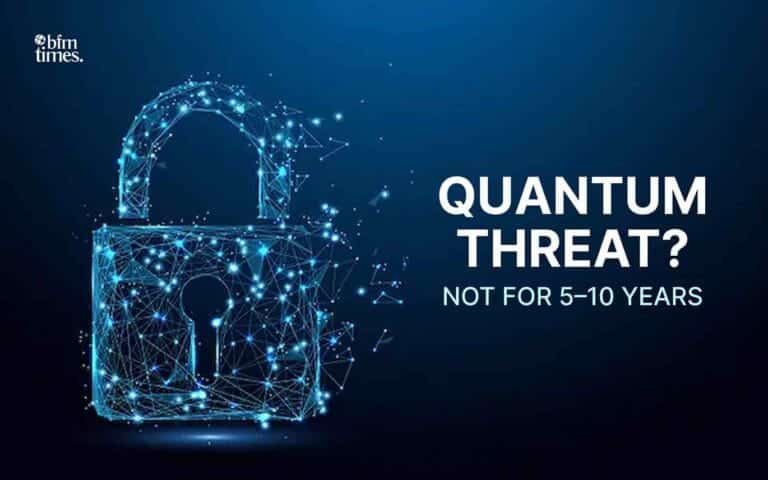
- Bitcoin Core Developer Jameson Lopp thinks that it would take at least 5 to 10 years to make Bitcoin quantum-proof.
- He believed that the current quantum tech isn’t capable of decrypting BTC transactions.
- Ethereum also lacks quantum proofing in its near-future upgrades.
- Quantum computing could enable the decryption of wallet passwords from blockchain addresses.
Bitcoin Core Developer Accepts Bitcoin is Way Behind in Quantum Proofing

Bitcoin Core developer Jameson Lopp, one of the top contributors to maintaining the Bitcoin blockchain, has publicly stated that we might not see quantum resistance in BTC for the next 5 to 10 years. Lopp also said that the current quantum computing technology is incapable of decrypting BTC, i.e., obtaining the private keys (therefore passwords) from the public keys. However, to address the worst-case scenario, they will monitor developments in quantum tech.
Lopp also added that there would be an unprecedented migration of funds, which we believe is a reference to a mass migration to a newer Bitcoin Blockchain. Doing so, BTC will see the largest hard fork in its history. To date, hard forks have been more like splinter groups, such as BTC Cash and Bitcoin SV.
The statement shows a grave disparity in quantum proofing for Bitcoin compared to other chains like Algorand, which are already quantum-proof.
Current Quantum Computers aren’t a Threat, For Now
Lopp’s belief that the current quantum computing isn’t capable of posing any threat to Bitcoin has been resonating in the current blockchain development landscape. Even larger chains like Ethereum have made decentralization a top priority, while keeping quantum-proofing for a later date. The latest Pectra series of upgrades in Ethereum focuses mainly on scaling and decentralization.
At present, only a few organizations can afford to build a quantum computer due to the sheer cost involved and the technical know-how required. However, if we look at the journey of computers from the first generation to the current one, the development of affordable, mass-market quantum computers isn’t far off.
Further, if rogue groups like Lazarus, which are believed to be backed by the North Korean government, get their hands on these computers, they would become a threat to everyone using Bitcoin.
Quantum Computing Poses These Risks to Bitcoin Users
The most significant risk from quantum computing is its speed. Unlike traditional computers, quantum computers can process data at a vast scale, which means that even by trial and error, a BTC public key would eventually yield a private key, leading to the complete draining of that address or wallet.
Frequently Asked Questions
What exactly is Quantum Computing?
Quantum Computing refers to the use of quantum particles, such as electrons and photons, to perform complex calculations that are nearly impossible for traditional computers, which rely on magnetic domains.
Did Satoshi Nakamoto see Quantum Computing as a threat?
Satoshi Nakamoto saw the ability of Bitcoin developers to maintain and develop the blockchain over time, which is why he stepped away. Although he did not mention quantum computing, he would have relied on the community as a whole to address the issue.
Disclaimer: BFM Times acts as a source of information for knowledge purposes and does not claim to be a financial advisor. Kindly consult your financial advisor before investing.