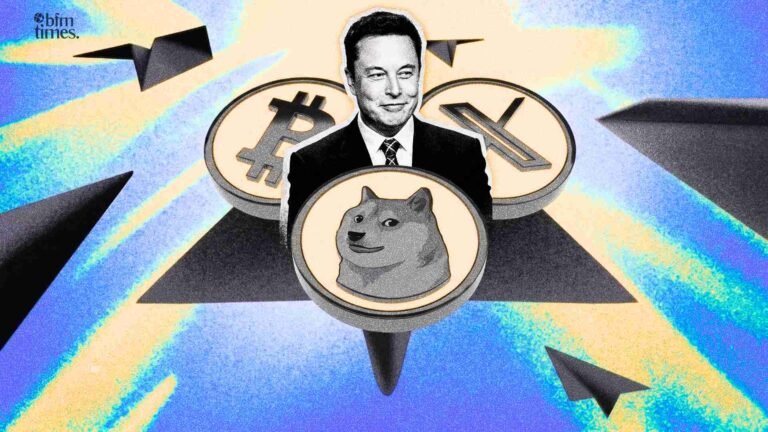
Elon Musk is among the most impactful personalities in the digital asset space, who mainly uses and promotes Dogecoin (DOGE) as his favorite currency to use in small transactions and the currency of the people. Although he holds large amounts of Bitcoin (BTC) and Ethereum (ETH) in his personal and corporate portfolios, the Dogecoin ecosystem is his primary active use and publicity focus.
Decision on Dogefather: Dogecoin as an Alternative Coin
The year is now 2026, and Elon Musk continues his efforts to promote Dogecoin as an alternative coin compared to those that have higher technical capabilities or cost. Even if Bitcoin is popularly described as “digital gold” or money, Elon Musk believes that Dogecoin is more suitable for everyday transactions. His choice is based on the inflationary nature of the coin, where spending is promoted over hoarding, and its relatively low transaction costs in comparison to the Ethereum mainnet.
The coin is practically applied by Elon Musk throughout his business empire. Tesla also accepts Dogecoin to purchase a broad assortment of merchandise, and The Boring Company lets commuters in the Las Vegas Loop pay with the asset to ride. Most notably, SpaceX has affirmed the successful launch of the DOGE-1 lunar mission, a satellite launch that was fully funded using the cryptocurrency. This action was aimed at proving that digital assets could support the large-scale industrial and aerospace logistics.
Institutional Strategy: Ethereum Holdings and Bitcoin
In addition to the open promotion of memes, Musk has an advanced institutional strategy in crypto via Tesla and SpaceX. By the beginning of 2026, Tesla continues to be among the largest corporate Bitcoin holders globally with a balance sheet of about 11,509 BTC worth more than 1.1 billion. SpaceX is in second place as a significant private owner of more than 8,200 BTC.
Elon Musk has also verified that he personally owns Ethereum, but has previously criticized the high fees on the network known as gas. His own approach seems to be a buy-and-hold approach to large assets and Dogecoin to active experiments in P2P payments. It is worth mentioning that although there are thousands of tokens bearing his name or the name of his pets, like Floki Inu, Musk has made it clear that he does not own or promote such spin-off projects.
The Next Frontier: X Money and Native Integration
The hype over 2026 about X Money, the financial services division of the X social media platform, is feverish. As the integrated payment rails are publicly rolled out, many analysts believe that Dogecoin will be a native clearing layer in micro-transactions and creator tipping.
The adoption of crypto as a mainstream everything app would be a huge change in terms of speculative trading to utility. Musk has indicated that the idea is to make payments as simple as sending an email, and Dogecoin has fast block times, which makes it a leading candidate to fulfill this role.
Federal Securities Law and Regulatory Frameworks
The legal environment of crypto endorsements by Musk has changed a lot. On March 17, 2026, the Securities and Exchange Commission (SEC) released a historic interpretation of the status of different digital assets.
SEC Token Taxonomy
According to the new 2026 guidelines, the SEC classifies assets into three major groups:
- Digital Commodities: Assets such as Bitcoin and Dogecoin, whose value is determined by automated network mechanics and not a centralized management team, are generally subject to CFTC regulation as commodities.
- Digital Collectibles: Tokens that represent memes or culture that are not sold as investment contracts are not usually subject to the normal securities registration.
- Tokenized Securities: All assets that feature a pooled venture, in which the investors anticipate gains on the managerial work of others, are firmly under the SEC control.
Disclosure Requirements
Musk still has a point of friction with section 13(d) of the Exchange Act. This law requires the timely disclosure of “beneficial ownership” when an individual acquires more than 5% of a company’s equity. Although this is mostly applicable to shares such as Tesla or X, the SEC has been more vigilant in investigating the impact of celebrity shilling on market fairness. The existing laws demand that any paid advertising of a security be disclosed, but the decentralized system of Dogecoin has traditionally given Musk greater freedom than he has when talking about Tesla stock.
Which cryptocurrency does Elon Musk support the most?
Elon Musk actively supports Dogecoin as his preferred cryptocurrency for everyday transactions.
Does Elon Musk own Bitcoin and Ethereum?
Yes, he holds Bitcoin and Ethereum as long-term investments through personal and corporate portfolios.
Why does Elon Musk prefer Dogecoin over other cryptocurrencies?
He prefers Dogecoin due to its low transaction fees and suitability for small, daily payments.
Disclaimer: BFM Times acts as a source of information for knowledge purposes and does not claim to be a financial advisor. Kindly consult your financial advisor before investing.