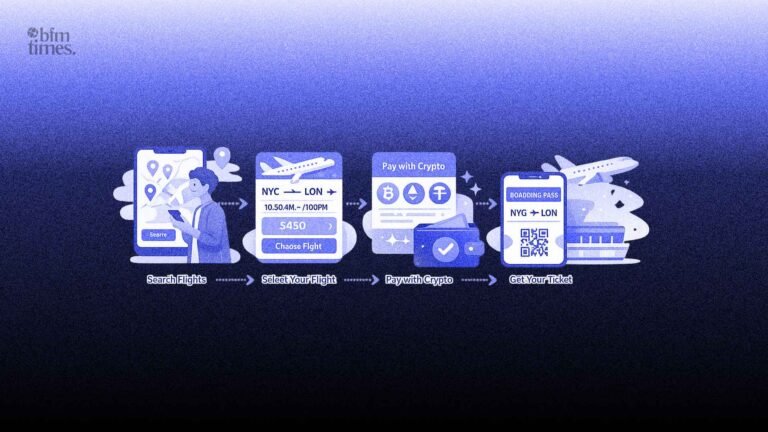


Money is moving faster than ever before. AI in digital payments is no longer a future concept as it is happening right now. The technology is catching fraud in real time & this also helps in enabling voice-activated transactions across the country. This shift is redefining how India & the world pay for goods & the services. The heart of this revolution is UPI, which stands for the Unified Payments Interface & it has grown into the world’s largest real-time payment network. This infrastructure is becoming much smarter every year as AI gets more deeply embedded into it. The future of digital payments looks faster & it’s far more personal than anything we have seen before.


- How Did UPI Become a Global Payments Giant?
- What Are Agentic Payments & How Does AI Pay on Your Behalf?
- How Is AI in Digital Payments Tackling Security Challenges?
- How Is AI Helping UPI Go Global & Power Cross-Border Payments?
- Where Are AI & Digital Payments Headed in the Coming Years?
- What Challenges Does AI Still Need to Overcome in Digital Payments?
- Conclusion
- Frequently Asked Questions
In this article, readers will gain insights into AI in Digital Payments: The Future of UPI Systems featured on BFM Times.
Also read: Robo Advisors: How AI Manages Your Investments
How Did UPI Become a Global Payments Giant?
UPI was developed by the National Payments Corporation of India in 2016. It has shown extraordinary growth since the time of its launch.
By December 2025, UPI has processed over 21.63 billion transactions in a single month. This was a 29% increase year on year. As of 2025, UPI accounts for 84% of all digital payments in India. It processes more than 640 million transactions every single day & it still stays slightly ahead of Visa in the global transaction volume.
India now holds 50% of the total digital transaction volume in the world. UPI has also expanded to 12 or more countries with QR payments now active in Singapore & the UAE & France & Bhutan & Sri Lanka. This is not just a payment system anymore. The UPI network has become a global financial benchmark that other countries look up to.
What Are Agentic Payments & How Does AI Pay on Your Behalf?
The next major wave in AI in digital payments is called agentic payments. This is where AI agents complete all the full payment tasks on behalf of users with very little human input needed at all.
An AI agent in this context can browse options, & then compare prices & select the best payment method based on your personal preferences & then it completes the transaction all on its own.
Razorpay showcased this technology at the AI Impact Summit 2026 in collaboration with NPCI. The demo showed how a conversational AI assistant operating through voice or text could discover products, compare merchants & lastly complete UPI payments fully on its own.
NPCI & Razorpay & OpenAI have also partnered to look into AI-based payment use cases, including safe & much more personalized AI in digital payments commerce through conversational checkout experiences.
Two new UPI features make this technically possible for real-world use.
UPI Reserve Pay allows users to block their funds for a future transaction. The payment triggers automatically when set conditions, like a price limit, are met by the system. An AI agent can use this feature to complete the purchases only when the price is right for the buyer.
UPI Circle allows users to authorize another person or an AI agent to start payments within defined spending limits. It was originally built for family delegation & this feature fits perfectly with the needs of fully autonomous AI payment agents.
How Is AI in Digital Payments Tackling Security Challenges?
AI improves efficiency across the board & it also raises important security questions at the same time. Allowing AI agents to start UPI transactions is a major step forward & it requires very strong safeguards to work safely.
Experts point out that multi-layered authentication & AI governance rules must be built into every payment flow from the start. User authorization must be clear & easy to verify at all times. Risks like fraud triggers & identity theft & data misuse all need strong policy rules to keep users protected.
The government has also set up the National Cybercrime Reporting Portal & a dedicated helpline at 1930 to support users who face digital financial fraud. The Department of Telecommunications launched the Chakshu platform, which allows citizens to report suspected fraudulent communications easily.
AI governance is not optional in this space. It is the foundation on which the next phase of AI in digital payments must be built & maintained going forward.
How Is AI Helping UPI Go Global & Power Cross-Border Payments?
AI in digital payments is also helping UPI grow internationally at a fast pace. India joined Project Nexus in 2024, which is a cross-border payments effort by the Bank for International Settlements. It is expected to make UPI work with real-time payment systems across Southeast Asia by 2025 & 2026.
Google & NPCI signed an agreement for UPI expansion outside India, aiming to make international transactions smooth for Indian travellers abroad. WhatsApp is also getting ready to bring international payment features using UPI infrastructure to its users. By 2028 & 2029, RBI & NPCI plan to expand UPI to 20 countries as part of the Viksit Bharat 2047 goals for the nation.
AI will play a big role in managing currency changes & compliance rules & risk checks across all these international payment paths.
Where Are AI & Digital Payments Headed in the Coming Years?
The numbers tell a very clear story about where things are going.
India’s digital payments market was valued at 6.83 billion USD in 2025. It is expected to reach 33.5 billion USD by 2034, growing at a CAGR of 16.1% per year. UPI transaction volumes are expected to go past 120 billion annually in the coming years. India is on track to become a 1 trillion USD digital economy by 2030, which is a massive milestone.
AI in digital payments will be at the center of this growth by powering smarter fraud prevention & more personal experiences & fully independent payment workflows. The next ten years of digital payments will not be just about speed & volume. They will be about intelligence & trust & security above everything else.
What Challenges Does AI Still Need to Overcome in Digital Payments?
Digital literacy is still uneven across India. Many users in rural & low-income areas find it hard to use basic functions like QR scanning & PIN setup & understanding fraud alerts. AI solutions must be built with these users in mind & not just for tech-savvy urban consumers who are already comfortable online.
Network reliability also remains a problem in remote areas with poor connectivity. UPI 123PAY was built specifically to handle payments through interactive voice response for users with basic phones & limited internet. AI in digital payments must push these inclusive ideas even further to reach every corner of the country.
Regulatory rules must also keep pace with what AI can do now. Policymakers & banks & fintech players all need to work together to set clear rules on accountability & data sharing & consumer protections in an AI-first payment world.
Conclusion
AI in digital payments is turning UPI from a fast transaction tool into a smart & independent financial system. The change spans from real-time fraud prevention to voice-activated purchases & AI agents that pay on your behalf. India has already built the most powerful digital payments network in the world. With AI in digital payments at its core, the next chapter will be about making this system smarter & safer & more open to every user. It will serve a vendor in a rural market just as well as a consumer shopping on a global platform. The future of UPI is not just digital. It is intelligent & built for everyone.
Also read: AI vs traditional banking creates powerful shift in fintech
Frequently Asked Questions
What is AI in digital payments & how does it work with UPI?
AI in digital payments uses smart technology to make transactions faster & safer for all users. It helps UPI detect fraud in real time & verify user identity & complete payments through voice commands with no manual input needed at all.
Is UPI safe to use with AI-powered systems?
Yes, UPI is safe to use with AI-powered systems available today. The NPCI provides banks with AI & machine learning based fraud monitoring tools that work around the clock. These tools detect suspicious activity & block fraudulent transactions before they go through to completion.
What is the future of AI in digital payments in India?
The future of AI in digital payments in India is very strong & full of great possibilities. India’s digital payments market is expected to grow from 6.83 billion USD in 2025 to 33.5 billion USD by 2034 at a steady pace. AI will power smarter fraud prevention & more personal payment experiences & fully independent payment systems across every part of the country.
Disclaimer: BFM Times acts as a source of information for knowledge purposes and does not claim to be a financial advisor. Kindly consult your financial advisor before investing.