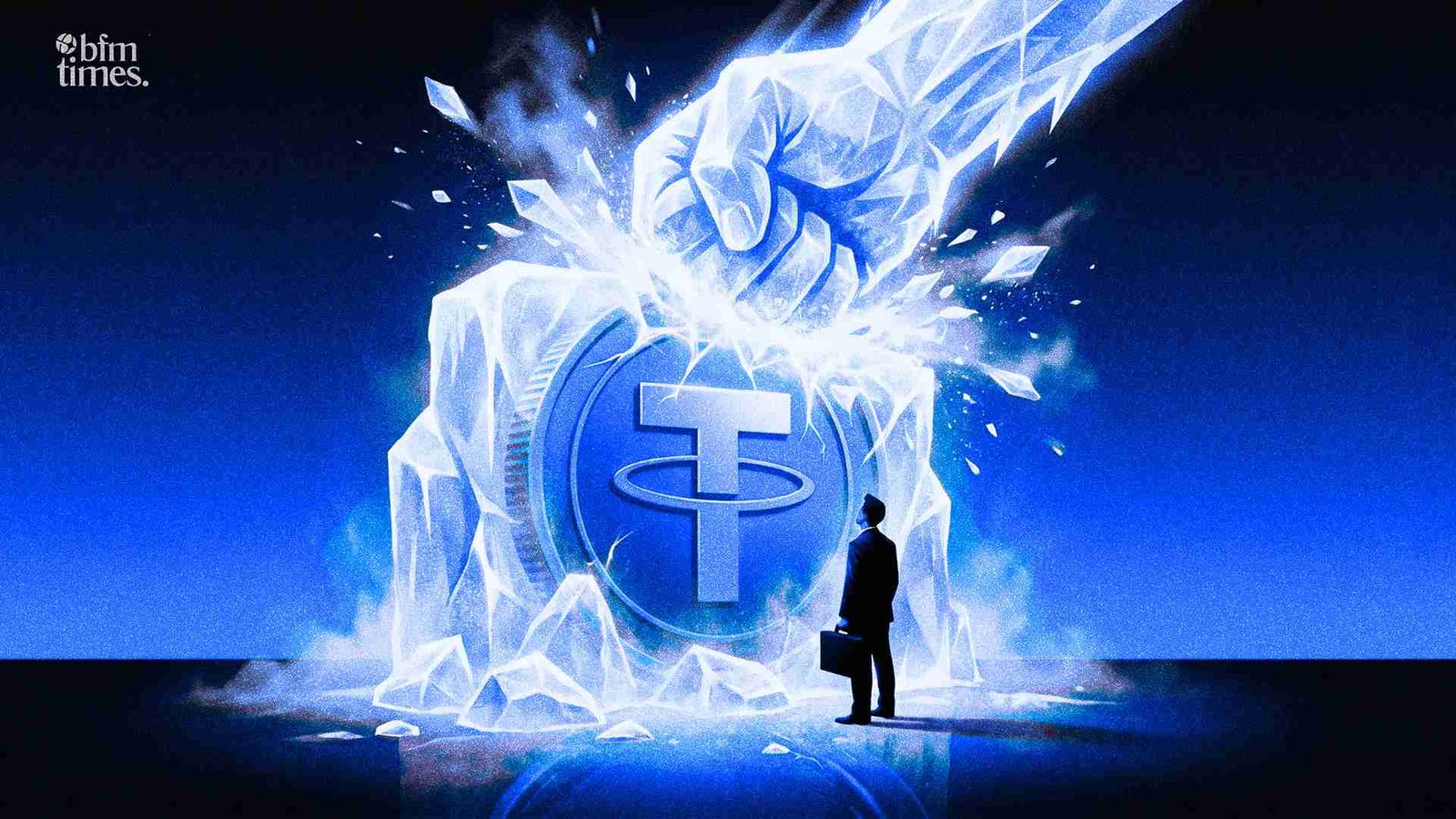



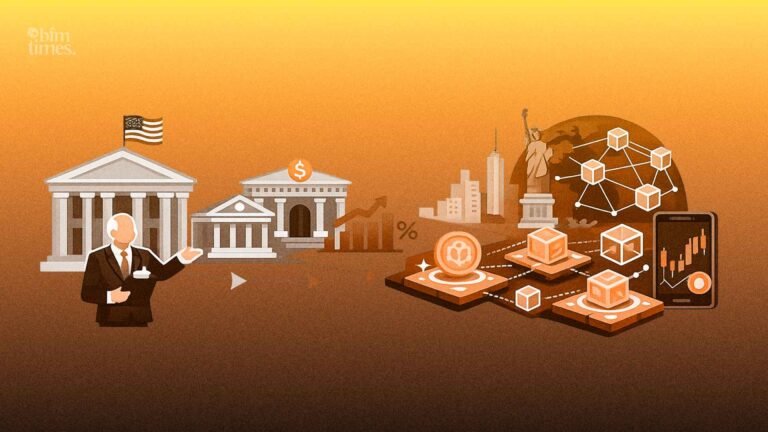
- Market Transformation: SEC Chairman Paul Atkins states that the whole financial market structure in the U.S. will be transformed to blockchain-based tokenization in the next two years.
- Improved Transparency: Tokenization will address the existing problems of shareholder tracking, which are characterized by a lack of transparency, so that companies will be aware of who their investors are at any given time.
- Settlement Efficiency: The shift will move away from $T+1$ (Trade date plus one day) settlement to $T+0$ (instant settlement), which will severely limit systemic risk.
- Regulatory Pivot: Atkins described the last regulatory period as one of being “athwart the marketplace” and indicated that the SEC is currently becoming proactive in its embrace of these innovations in order to make the U.S. competitive.
- Risk Mitigation: On-chain markets will reduce the time between trade execution, payment, and delivery, turning the global financial system into a de-risked system.
WASHINGTON, D.C. — In an unprecedented interview that has caused shockwaves in the financial industry, as well as the digital asset industry, Securities and Exchange Commission (SEC) Chairman Paul Atkins has announced that the tokenization of the U.S. financial system is not only inevitable, but imminent. In an interview with Maria Bartiromo on Mornings with Maria, Atkins gave a bold timeline and stated that the largest capital markets in the world will switch to blockchain technology in a short 24 months.
Atkins described the concept of tokenizing an underlying security on-chain with smart contracts or tokens as “tokenization.” “The way the world will be, maybe not even in a decade, maybe even less, maybe a couple of years down the line.”
Out of Darkness to the Blink of an Eye
The vision of the Chairman is to correct what he says is a fundamental problem in modern equity markets: the so-called “opacity of ownership.” With the existing legacy system, companies can hardly know who their own shareholders are because of the number of intermediaries and custodians involved in traditional bookkeeping.
The SEC is seeking to establish a transparent, real-time ledger by shifting these assets on-chain. According to Atkins, this change would bring about a lot more transparency on the location of this security, and the guesswork that is present in corporate governance and shareholder communications will be removed.
The End of the Settlement Gap
The greatest technical challenge that Atkins has overcome, perhaps, is the so-called “risk gap” that was formed due to the time lag in settlement. Although the industry has recently transitioned to a T+1 settlement cycle, Atkins proposed tokenization to allow T+0—instantaneous clearing and settlement.
“That is always the distance between clearance and settlement, and then delivery and payment, that brings risk into the system,” said Atkins. He argued that on-chain execution of $DVP$ (Delivery Versus Payment) and $RVP$ (Receipt Versus Payment) would effectively de-risk the markets by making sure that assets and funds change hands at the same time.
A Radical Change in Posture
The interview was also a clear departure for the SEC from its past strategy of regulation by enforcement. Atkins acknowledged that historically the agency had been a bit behind the market, and during the last few years, it had been “standing athwart the marketplace” as innovations were being introduced.
“That’s no more,” Atkins said. “We’re actually embracing it. We must be welcoming it to ensure that the United States is on the frontline.”
This rhetoric change is timely for the U.S. digital asset industry, which has long lamented the absence of clear rules of the road. As Atkins has noted, until recently, the U.S. and Communist China were the only two large powers that seemed to be heading towards rendering certain crypto-related actions practically unattainable. The agency is currently under his leadership, positioning the U.S. to become the world’s crypto capital.
Road to a Digital Superpower: Regulatory Reversal
The remarks by Paul Atkins are a complete reversal of the SEC after the exit of the former administration. Regulatory uncertainty saw a huge exodus of capital and innovation to offshore jurisdictions such as Dubai, Singapore, and the EU throughout 2024 and 2025.
The recently announced Project Crypto initiative by the SEC is an attempt to update 80-year-old securities regulations to support digital commodities, stablecoins, and tokenized real-world assets (RWA). Large institutional investors such as BlackRock and Franklin Templeton already have tokenized money market funds on the market, but the most recent remarks by Atkins indicate that the SEC is about to make a significantly bigger leap: the tokenization of the entire $50 trillion U.S. stock market.
Also Read: List of All SEC Regulations on Crypto After Trump Became President (2025-2026)
Frequently Asked Questions
What does tokenization mean at the SEC?
The issuance of a digital representation of a traditional security (such as a stock or bond) on a blockchain is referred to as tokenization. These digital tokens are controlled by smart contracts, which automate compliance and settlement.
What is the benefit of $T+0$ settlement to the typical investor?
At the moment, it takes one business day ($T+1$) to have the cash completely cleared when you sell a stock. Instant settlement ($T+0$) would imply that you could have access to your money immediately, and the brokerage firm would not need to pledge against the pending trade, which could reduce the fees.
Does this imply that all cryptocurrencies have become legal?
Not necessarily. Atkins explained that a tokenized security is nonetheless a security and should comply with SEC regulations. The agency has, however, recently shifted to a taxonomy where many native tokens (such as Bitcoin and Ethereum) are characterized as digital commodities and not securities.
What is the reason why the U.S. is reversing its position?
The movement is mainly motivated by the urge to maintain the United States as the leader in financial technology in the world. The U.S. was at risk of losing its position as the leading capital market in the world, as other nations were building definite structures.
What are the risks of on-chain markets?
Although tokenization minimizes settlement risk, it creates technical risks, including vulnerabilities in smart contracts and the requirement to have high-quality oracle data. To deal with these blockchain-specific issues, the SEC is in the process of developing safety standards.
Disclaimer: BFM Times acts as a source of information for knowledge purposes and does not claim to be a financial advisor. Kindly consult your financial advisor before investing.