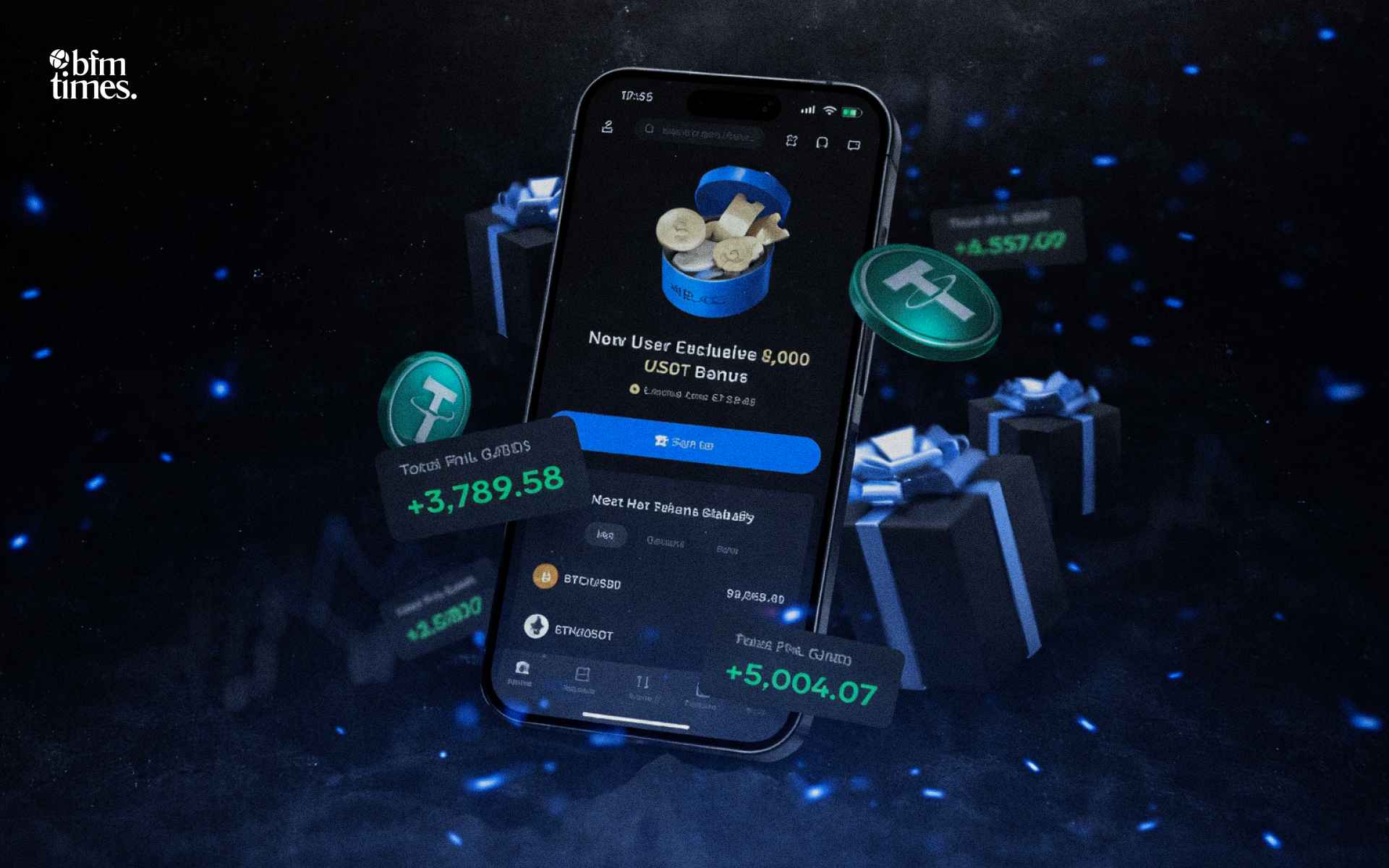






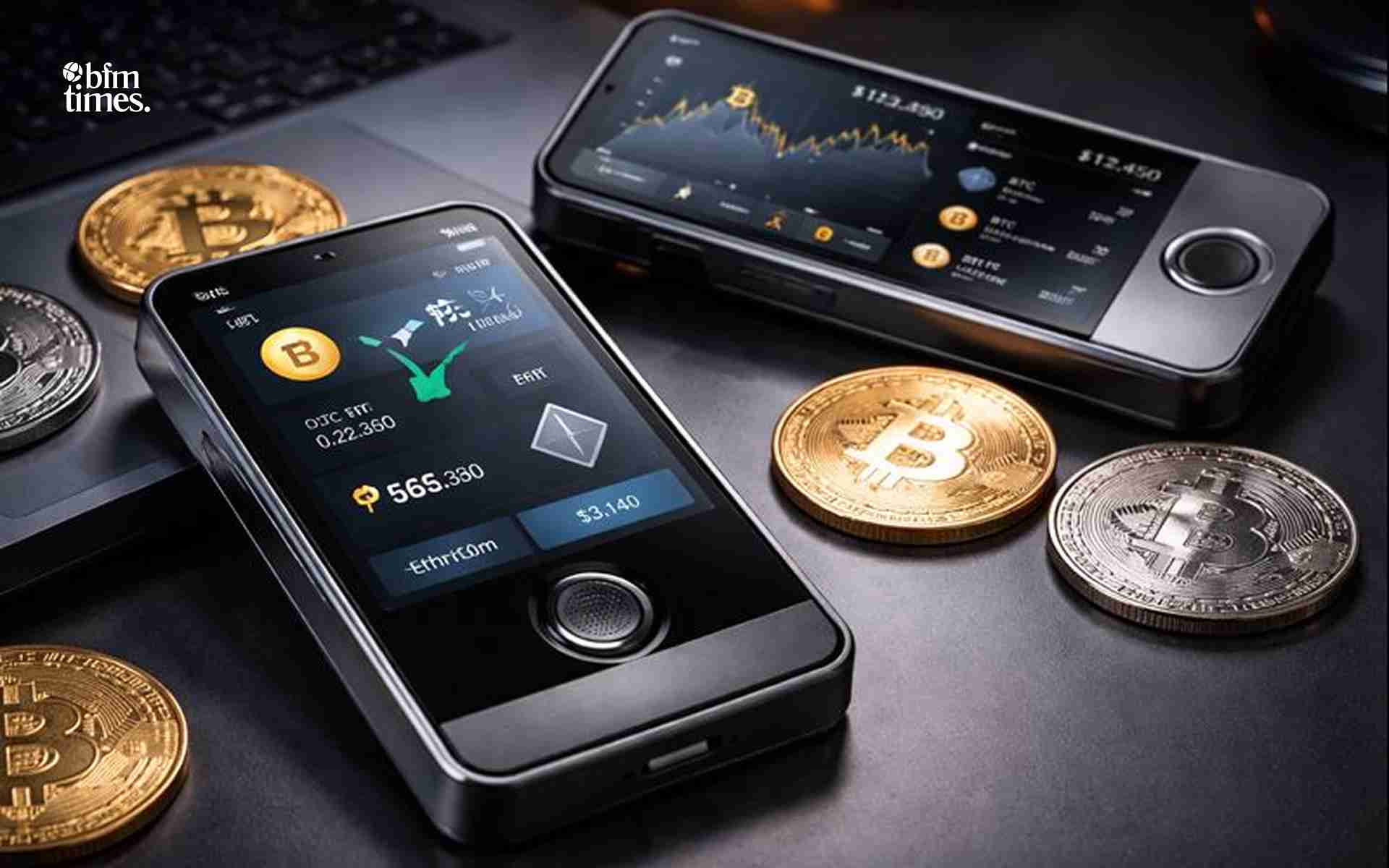
Crypto Wallets with Built-In Exchanges allow users to exchange tokens in the wallet interface without transferring their funds to a centralized exchange. The purpose of these tools is to integrate self-custody and straightforward on-chain swapping to make it easier for users of everyday crypto and on-chain participants in DeFi. Wallets that support exchange functionality are becoming more comprehensive and now combine DEX aggregators, fiat liquidity routing, fiat on-ramps, and multi-chain support, but they also come at tradeoffs in terms of fees, slippage, security risks, and cross-chain access. This guide disaggregates the mechanics of in-wallet swaps, their differences with centralized exchanges, and the five wallets that are most reliable for the profile of most users in 2026.
- What are wallets with built-in exchange features?
- Crypto wallets exchange vs. centralized exchanges: what’s the difference?
- How built-in swaps work (DEX aggregators, liquidity & slippage)
- All-in-one crypto wallets: who should use them?
- Top 5 wallets with built-in exchange
- 1. Exodus
- 2. Trust Wallet
- 3. Atomic Wallet
- 4. Coinbase Wallet
- 5. MetaMask
- Swap crypto wallets: fees, speed, and limits
- Crypto wallets with swap: security & self-custody risks
- Exchange enabled wallets: supported chains & assets
- How to choose the right wallet with built-in exchange
- Common risks & best practices
- When to use built-in swaps vs DEX websites
- Hardware wallet integration with swap features
- Cross-chain swaps explained (and their risks)
- Gas fees vs swap fees: what you’re really paying
- Conclusion
What are wallets with built-in exchange features?
Wallets with built-in exchange features are self-custody wallets that allow users to swap one crypto asset for another inside the wallet app itself. The wallet does not need to go to a third-party exchange or DEX site; instead, liquidity providers and DEX aggregators are connected through the wallet.
Practically, such wallets can be considered an easy-to-use shell over decentralized infrastructure:
- DEX aggregators arbitrage between several sources of liquidity in search of competitive prices.
- Direct swaps are carried out and implemented by the user directly out of their wallet address.
- Fiat on-ramps enable customers to purchase crypto in the wallet on cards or bank transfers (usually with the help of third-party providers).
- Bridges or cross-chain liquidity networks are used as cross-chain swaps (where available).
In this model, the private key remains controlled as well as the self-custody; however, convenience is compromised in the form of fees, routing transparency, and execution control.
Crypto wallets exchange vs. centralized exchanges: what’s the difference?
| Factor | In-wallet swaps | Centralized exchanges |
| Custody | User controls private keys | Exchange holds funds |
| KYC | Often not required for swaps | Typically mandatory |
| Speed | Depends on network congestion | Instant internal trades |
| Fees | Network + aggregator markup | Trading fees + withdrawal fees |
| Control | Full self-custody | Platform custody risk |
| Risk | Smart contract and wallet risks | Custodial, insolvency risk |
A crypto wallet exchange model is focused on composability and control. Liquidity providers react on-chain, and users retain assets in their own wallets. Centralized exchanges are fast and have high liquidity, but a third party is trusted with the custody and compliance procedures.
Neither model is strictly better. The wallet-based swaps are appropriate for those users who appreciate control and privacy. Centralized platforms are appropriate for traders and consider the speed, extensive liquidity, and sophisticated forms of orders.
Hidden trade-offs users overlook when swapping inside wallets
Custody and KYC are the most compared issues. Still, these trade-offs are usually overlooked by the user:
- No order books: You cannot place limit orders; swaps are at market price.
- No partial fills: Large trades are filled in large blocks, which enhances slippage.
- No internal netting: There is no internal netting, so the centralized exchanges net trades internally, and wallets settle on-chain each time.
- Liquidity fragmentation: New tokens and smaller chains receive a wider spread.
- Limitations on price preview: When you confirm a quote, it might not be the same.
These frictions render in-wallet swaps most suitable for convenience and moderate amounts of trade, rather than precision trading.
How built-in swaps work (DEX aggregators, liquidity & slippage)
The majority of in-wallet swaps are based on such DEX aggregators as 1inch or 0x. Trades are divided among several liquidity pools and DEXs to minimize slippage and enhance price execution using these systems.
Key mechanics:
- Routing: Aggregators will compare prices between liquidity providers.
- Slippage: Due to low liquidity tokens or large trades, the price impact increases.
- Gas fees: Network execution costs users network fees.
- Cross-chain swaps: This can include bridges or liquidity networks such as Thorchain, but this makes them more complicated and risky.
- MEV risk: Front-running can occur on a public blockchain unless such protection is in place.
The knowledge of these mechanics will enable users to calculate the actual price of convenience using in-wallet swaps.
How routing algorithms choose liquidity (and why prices differ between wallets)
Swaps that use different DEX aggregators do not necessarily route in the same way. Every wallet implements its routing logic and partner set, which might vary:
- Which liquidity pools are queried
- The use of RFQ (Request-for-Quote) providers.
- The priority is between price execution and gas optimization.
- Enabling MEV-protection routes is enabled by default.
Consequently, two wallets at the same time can have different final prices for the same pair of tokens. That is why the users are likely to encounter minor price differences between the swap quotes provided by various wallet applications.
Key takeaway:
Price-neutral swaps are not in-wallet swaps. The quality of the execution depends on the wallet configuration options.
All-in-one crypto wallets: who should use them?
All-in-one crypto wallets are intended to appeal to users who desire storage, swaps, and basic access to DeFi in one interface.
Best fit personas:
- Beginners: rudimentary UX, in-app purchases, and replacements.
- Multi-chain users: ETH, BSC, Solana, and Polygon all in one.
- DeFi users: Swiftly swapping and then interoperating with protocols.
Who should be cautious:
- Slip-sensitive large-volume traders.
- Users who require advanced types of orders.
- Anyone transferring meaningful value within a cross-chain.
Convenience is a fact; however, the more complicated the activity you are engaged in, the more you gain from knowing what goes on behind the interface.
Top 5 wallets with built-in exchange
Selection criteria:
Track record of security, multi-chain, provenance of swap providers, transparency, and documented fee mechanics.
1. Exodus
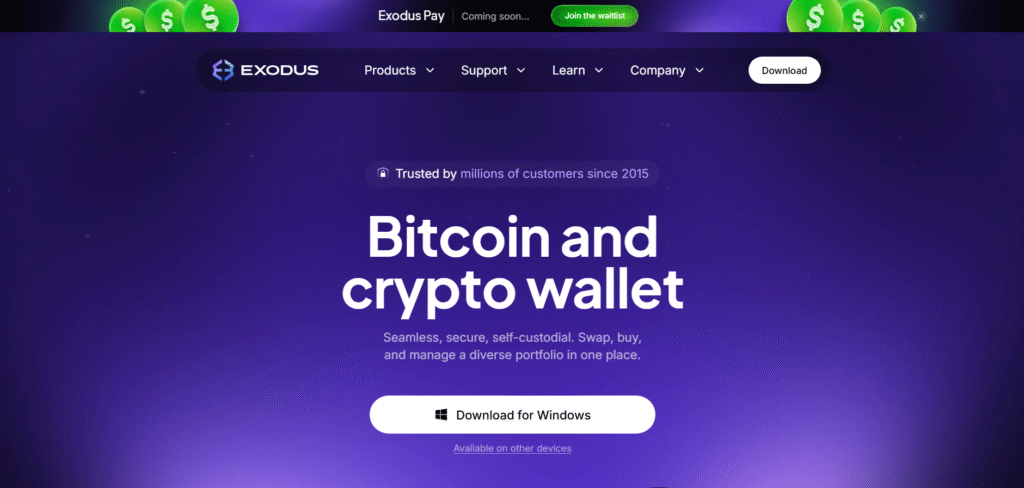
- Overview: A wallet that is popular among desktop and mobile users and is easily used.
- Built-in exchange mechanics: Stocks, third-party swap providers, and DEX routing (precise routing might differ by area and asset).
- Fees & pricing model: Network fee + provider’s markup; smaller liquidity pairs might be more.
- Supported assets: Multi-chain support of various types with BTC, ETH, Solana, Polygon, and many more.
- Security model: Non-custodial, locally held private keys, no publicized significant on-chain exploit of wallet infrastructure (swap providers are third-party).
- User experience: Simple interface; one of the easiest swap flows in the hands of a beginner.
- Limitations: Fiat on-ramps are to be KYCed through partners; swap price transparency is different.
- Simple and easy to use, with fee issues a secondary consideration.
For all the details, hit up their official website: https://www.exodus.com/
2. Trust Wallet
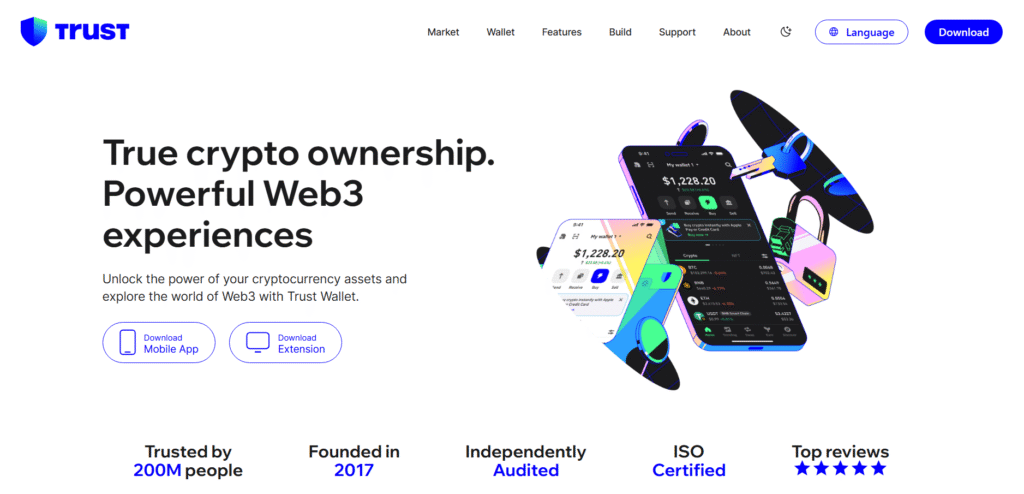
- Overview: Mobile-first wallets are prevalent in EVM chains.
- Built-in exchange mechanics: Relies on DEX aggregators and built-in swap providers of on-chain swaps.
- Fees & pricing model: Network charges + routing charges; slippage control is chain-specific.
- Supported assets: Solana and Solana support.
- Security model: non-custodial; open integrations expose the customer to phishing vulnerabilities.
- User experience: mobile UX is smooth; there is an in-built DApp browser.
- Limitations: less desktop experience; the swap UI is less visible to routing.
- Good for mobile users interacting with DeFi apps.
For all the details, hit up their official website: https://trustwallet.com/
3. Atomic Wallet
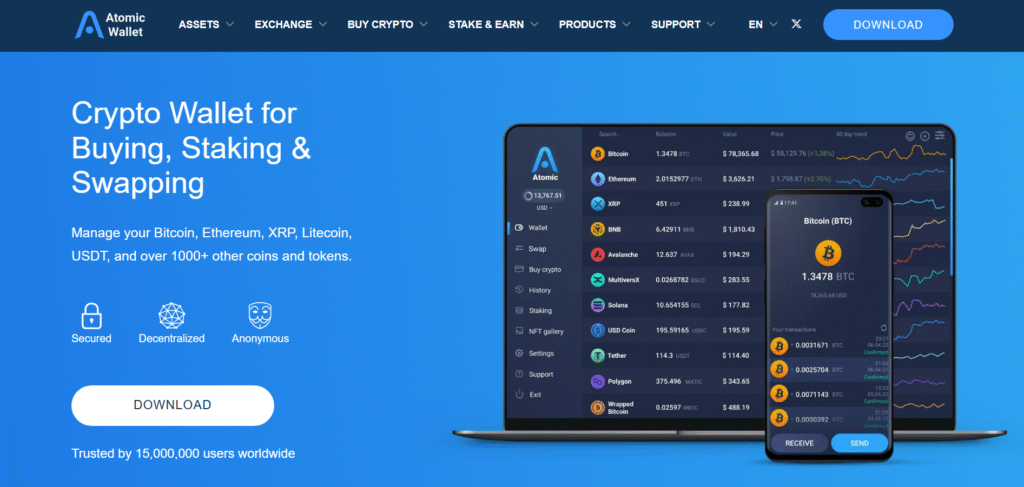
- Overview: Large asset desktop and mobile wallet.
- Built-in exchange mechanics: Swaps with third-party providers; routing logic not so transparent.
- Fees & pricing model: Provider markup + network charges; the spreads may be evident.
- Supported assets: Hundreds of tokens in leading chains.
- Security model: Non-custodial; there have been security incidents in the larger ecosystem that underscore the worth of operational security (wallet software is self-custody).
- User experience: Workable but not at the level of newer wallets.
- Limitations: Poor transparency in routing; fiat services are KYC.
- Ideal users: Should be used by users with more focus on asset breadth than on swapping optimization.
For all the details, hit up their official website: https://atomicwallet.io/
4. Coinbase Wallet
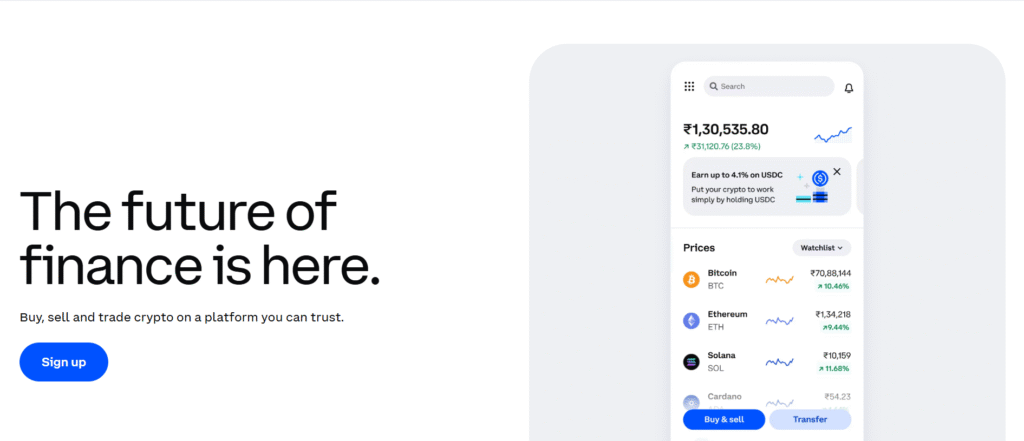
- Overview: Separate non-custodial wallet on top of the Coinbase exchange.
- Built-in exchange mechanics: swaps through DEX aggregators; fiat-on-ramps.
- Fees & pricing model: Network fees + aggregator spread; purchase of fiat is subject to a service fee.
- Supported assets: Powerful EVM support; growing multi-chain service.
- Security model: Non-custodial; it interferes with hardware wallets.
- User experience: Clear interface; mainstream users have a good onboarding.
- Limitations: Features such as fiat must have KYC; others are region-restricted.
- Excellent for users who are centralized exchange users and wish to have self-custody.
For all the details, hit up their official website: https://www.coinbase.com/en-in
5. MetaMask
- Overview: A DeFi EVM wallet that is widely used.
- Built-in exchange mechanics: MetaMask Swap is a collection of DEXs and RFQ providers.
- Fees & pricing model: Network charges + MetaMask service charge; slippage is customizable.
- Supported assets: Primarily EVM chains; BTC support through bridges/wrapped assets.
- Security model: Non-custodial; often targeted by phishing because it is popular.
- User experience: User-friendly, but powerful.
- Limitations: Cross-chain swaps are restricted; not Solana-native.
- Best for DeFi power users who desire routing control.
For all the details, hit up their official website: https://metamask.io/
Swap crypto wallets: fees, speed, and limits
Swapping crypto wallets makes the process easier, but combine lots of expenses:
- Network gas fees: Given to miners/validators.
- Aggregator/service charges: Wallets usually impose a small fee.
- Slippage: More illiquid pairs.
- Speed: It is subject to chain congestion, not real-time, as is the case with CEX.
- Limits: Certain exchanges impose a minimum amount of swaps.
In small and infrequent swaps, convenience can frequently override marginal differences in fees. In bigger trades, the manual routing in DEXs can be superior to the execution.
Crypto wallets with swap: security & self-custody risks
Crypto wallets that use swap maintain control over the personal key, although the risk of theft exists:
- Phishing: Fraudulent wallets and switch requests are typical.
- Approval risks: The token approvals are unlimited.
- Forgeries: Aggregators can bring fake assets to the fore.
- MEV: The exposure to the public mempool can be exposed to sandwich attacks.
- Bridge risk: Bridge risk is an additional smart contract and operational risk in a cross-chain swap.
The hardware wallet integration, approval revocation, and token contract verification are the mitigation strategies.
Exchange enabled wallets: supported chains & assets
Wallets are now supported in Exchange:
- ETH & EVM chains: Ethereum, BSC, Polygon, Arbitrum.
- Solana: Available in wallets such as Exodus and Trust Wallet.
- BTC: Typically through wrapped assets or third parties.
- Cross-chain swaps: Less and more risky.
Native cross-chain liquidity is still not integrated in 2026. The majority of wallets are based on bridges or special networks, which are more complex and have more failure points.
How to choose the right wallet with built-in exchange
Checklist:
Type of chains you use (EVM-only or multi-chain)
- Fee transparency
- Slippage controls
- Hardware wallet support
- KYC requirements for fiat on-ramp.
- History of security-related events.
- UX maturity
Match the wallet to your activity pattern, not the other way around.
Common risks & best practices
- Start with small test swaps.
- Establish low slip limits.
- Periodically revoke token approvals.
- Apply the hardware wallet integration where it is enabled.
- Do not take unverified contracts of obscure tokens.
- Double-check cross-chain routes.
When to use built-in swaps vs DEX websites
Inbuilt swaps are best used in fast conversions and for beginners. Specialized DEX interfaces are more transparent and provide more sophisticated controls on larger trades.
Hardware wallet integration with swap features
Certain wallets enable signing swap transactions through hardware devices so that their private keys are not shown, and their convenience is not lost.
Cross-chain swaps explained (and their risks)
Cross-chain swaps are based on liquidity networks or bridges. These introduce execution layers and security assumptions that are nonexistent in single-chain swaps.
Gas fees vs swap fees: what you’re really paying
The users incur network gas and aggregator spreads. Always cross the quoted rate with a reference DEX price.
Conclusion
Crypto Wallets with Built-In Exchanges have become useful in daily crypto activity. The present generation of wallets capable of exchanging on-the-fly provides a convenient experience to self-custody users, though the charges, slippage, and cross-chain risk are all matters of consequence. Novices might prefer ease of use, while users of DeFi might prefer the routing control and integration of hardware wallets. As wallet-native swaps evolve, transparency around routing, fees, and security assumptions will matter more than raw convenience.
Disclaimer: BFM Times acts as a source of information for knowledge purposes and does not claim to be a financial advisor. Kindly consult your financial advisor before investing.